Sign in. It’s quick, free and it’s up to you.
An account is an optional way to support the work we do. Find out more.
Sign in. It’s quick, free and it’s up to you.
An account is an optional way to support the work we do. Find out more.
“I’M SUE POTTER. I read about the Visible Human in the newspaper, and I want to donate my body. I want to be cut up.”
At 5.15am on 16 February 2015, 87 year-old Susan Potter passed away from pneumonia at a hospice in Denver in the US.
Her death breathed life into a project that could only be realised following her passing, and began her active involvement in a medical collaboration that had been 16 years in the making.
This week, National Geographic magazine published the results of the entire project, showcasing Potter’s digital resurrection and her impact on the future of medicine for decades to come.
Potter knew the scientists wanted to freeze her body, cut it into pieces and take photographs to show the world.
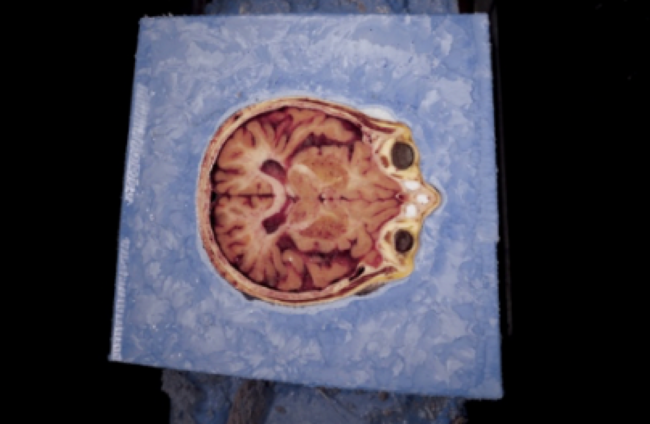
‘The Immortal Corpse’ describes how she then did become the highest-resolution virtual cadaver to date. It also look at the reasons behind her decision to donate her body to science, as well as the dissection process.
The Visible Human Project attempted to detail the workings of the human body by freezing Potter’s body, sawing it into blocks, slicing it 27,000 times, and photographing it.
“That was my last will and testament,” Potter tells the magazine. “To leave something behind that would have an impact on the whole human race.”
Delving into why people donate their bodies to science after they die, we learn that she described her body as “always ready for donation”.
Other stories in the issue include ‘Giving Life Can Still Be Deadly’, looking at why despite medical advances, the US remains one of only two developed countries where the rate of women who die from pregnancy is increasing rather than falling.
Meanwhile, ‘Every Body is Unique’ is a deep dive into the world of precision medicine, showcasing the area of individualised healthcare treatments at the edge of the medical frontier.
And in ‘Can Ancient Remedies Be Tomorrow’s Cures?’, readers get a glimpse of how Traditional Chinese medicine, one of the most ancient forms of healthcare is impacting the future of medicine.
The ‘Future of Medicine’ can be read online now here.

To embed this post, copy the code below on your site







have your say