Sign in. It’s quick, free and it’s up to you.
An account is an optional way to support the work we do. Find out more.
Sign in. It’s quick, free and it’s up to you.
An account is an optional way to support the work we do. Find out more.
LAST UPDATE | 10 Sep 2020
RESTRICTIONS ON VISITS to households in Dublin are a key recommendation from the National Public Health Emergency Team (NPHET) following a meeting this afternoon.
It follows a spike of Covid-19 cases in the capital. Public officials have recommended to Government that only six people, from two other households, instead of three other households will be allowed, TheJournal.ie understands.
The Government has said that recommendations will not be announced until next week, with Ministers warning that any restrictions in Dublin must be justified if they are more drastic than other European capitals. It’s up to the Government to decide to agree to NPHET’s recommendations, or to make additional recommendations.
The opening of all pubs in Dublin on 21 September may also be dependent on the spread of Covid-19 in the capital.
If accepted by the Government, the measures would be introduced for three weeks in Dublin.
NPHET’s recommendations will be now be prepared for the Cabinet sub-committee on Covid-19 which will consider it.
No action from government today on tightening restrictions on household visits in Dublin. Current plan is for Cabinet to consider NPHET advice - which has not been formally given yet - on Tuesday. Govt keen not to rush decision, get communications right
— Christina Finn (@christinafinn8) September 10, 2020
It comes after public health officials confirmed 196 new cases today, including 107 cases in Dublin.
On Tuesday, NPHET reported 307 new cases in Ireland, including 182 cases in Dublin, giving rise to concern that the capital could see similar restrictions to those implemented in Kildare, Laois and Offaly.
Of the last 1,055 cases reported in Ireland over the past seven days, over half (565) have been in Dublin.
Speaking last night, NPHET warned that Covid-19 is spreading at a much faster rate in Dublin than elsewhere in the country. If people don’t reduce their contacts it could mean the number of cases in the capital would double every 14 days, it said.
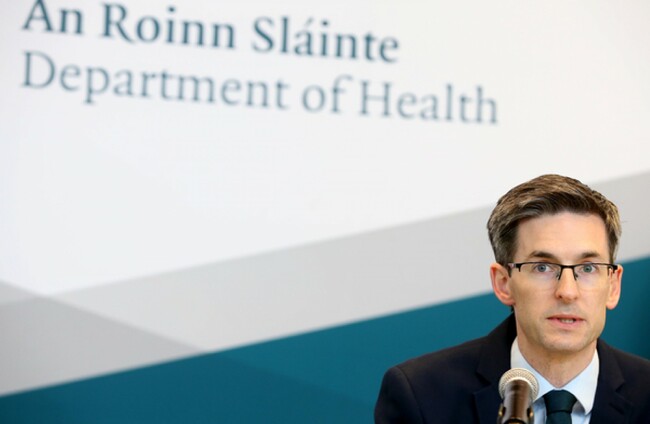
Acting Chief Medical Officer Dr Ronan Glynn said “if it all possible” family gatherings with multiple people from different households, such as communions and christenings, should be stopped for the next few weeks.
One senior public health source had indicated to TheJournal.ie that NPHET is likely to recommend restrictions on visiting households in Dublin to the Cabinet sub-committee on Covid-19, but will stop short of stricter measures like Garda enforcement or business closures.
‘Drastic’
Tánaiste Leo Varadkar yesterday said that NPHET will have to justify any further restrictions it may propose for Dublin or Limerick – which has also seen a rise in Covid-19 cases – that are more “drastic” than those in place in other European cities.
Last week, Dr Glynn said there has been a consistently high number of cases in Dublin West, Dublin North West and Dublin Central.
It was reported yesterday that the Government is also considering implementing measures seen in Glasgow where restrictions have been enforced in certain postcodes.
The Scottish Government imposed restrictions on Renfrewshire and East Dunbartonshire on Monday and continued existing measures in Glasgow, East Renfrewshire and West Dunbartonshire for at least a further seven days.
The measures bar people from visiting other households in these areas and also prohibit them from visiting homes in other Local Authorities.
However, it has since become clear to NPHET that cases in Dublin are now widely distributed, and that a large proportion of cases have spread through community transmission.
‘Balancing Act’
Meanwhile, new data from the Health Protection Surveillance Centre (HPSC) shows there have been 2,018 outbreaks of Covid-19 in private households – including 122 new outbreaks reported in the last week.
An outbreak is defined by the HSE as either two or more confirmed cases of Covid-19 in a particular setting or two or more cases of illness with symptoms consistent with Covid-19 where at least one person is a confirmed case.
One source indicated that the data for Dublin does not currently justify strict measures seen implemented in Kildare, Laois and Offaly last month.
At its peak, Kildare’s 14-day incidence was 200 per 100,000. Dublin is currently around 70 per 100,000.
Similarly, the rate in Belfast is higher than Dublin – 100 per 100,000 – and many capitals in Europe are currently seeing a high incidence of Covid-19.
However, there are already concerns that if restrictions on households and on gatherings are not adhered to in Dublin, stricter measures could follow.
The question for NPHET today was about striking a balance to ensure people in Dublin limit their social contacts and follow public health advice.
With restrictions on household visitors in Dublin on the cards, the main message NPHET and the Government will send out is that people need to limit their contacts in order to stem the spread of Covid-19 in the capital, and to prevent stricter measures.

To embed this post, copy the code below on your site











have your say