Sign in. It’s quick, free and it’s up to you.
An account is an optional way to support the work we do. Find out more.
Sign in. It’s quick, free and it’s up to you.
An account is an optional way to support the work we do. Find out more.
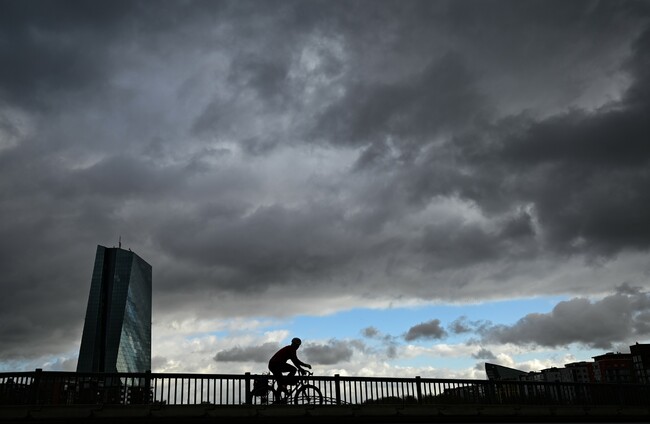
THE EURO ZONE is facing into a more prolonged recession than previously expected with the prospect of a sharp economic rebound in 2021 receding, according to the European Central Bank.
A resurgence of the virus since the summer months has weakened growth forecasts for the euro area into next year.
Consequently, the ECB has downgraded its projections for 2021.
The details are contained in the ECB’s second biannual financial stability review of the year, published this morning.
“Economic activity contracted sharply in all euro area countries in the second quarter of 2020, with countries more affected by the pandemic and associated containment measures facing the sharpest GDP falls,” according to the report.
“The easing of measures as of late spring brought about a rebound in economic activity. Nevertheless, with the recent resurgence in new infection rates and the related reimplementation of social distancing measures in many countries, the economic recovery in the euro area has lost momentum more rapidly than expected.”
“Professional forecasters now expect that the euro area economy will not exceed pre-pandemic GDP levels until 2023.”
The ECB now expects the combined economies of the single currency area to grow by just 4.7% in 2021, down from the 6.2% it pencilled in during the summer.
Support measures
In a stark warning to policymakers, the ECB says that prematurely winding down emergency policy supports could prolong the recession even further.
Ireland and countries across the euro zone introduced a suite of wage subsidies, emergency unemployment payment schemes and business grants at the outset of the pandemic.
These supports “pre-empted an even deeper contraction”, according to the report, but will eventually need to be withdrawn.
However, “an abrupt end to the ongoing measures could give rise to cliff effects and result in a more severe economic contraction than during the first wave of the pandemic,” the central bank says.
The downside of those measures is that euro zone member states have taken on significant amounts of debt since the start of the year.
According to the report, “In order to fund the fiscal response to the pandemic, governments have issued close to €1 trillion of net debt in the first ten months of 2020.”

To embed this post, copy the code below on your site















have your say