Sign in. It’s quick, free and it’s up to you.
An account is an optional way to support the work we do. Find out more.
Sign in. It’s quick, free and it’s up to you.
An account is an optional way to support the work we do. Find out more.
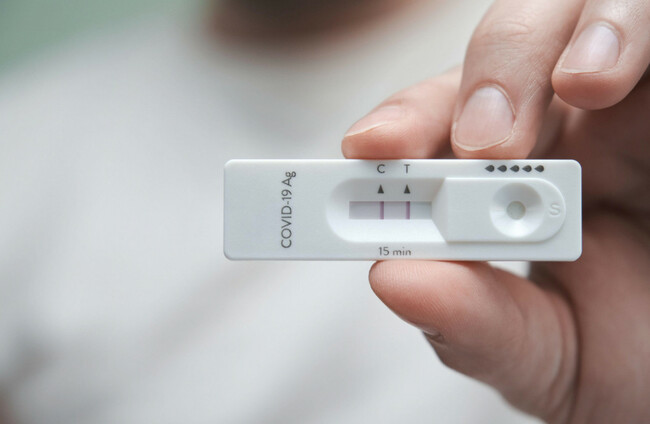
THE PUBLIC ARE being advised to stay at home for 48 hours after Covid-19 symptoms are resolved, as July saw an upsurge in cases.
The latest HPSC figures show there were 419 new Covid cases between 23 July and the 29th, representing a 51% increase on the previous week.
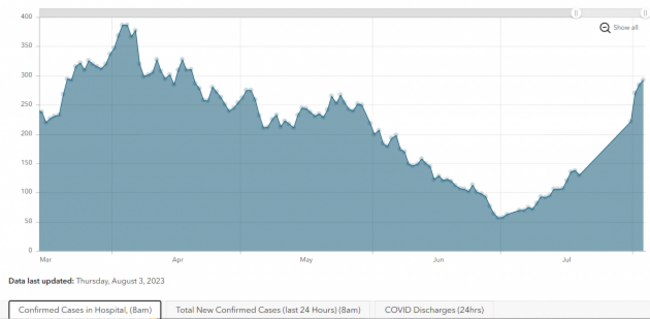
Hospital admissions for the virus are also on the rise, and St Luke’s Hospital in Kilkenny has had to suspend visiting, except for those attending the maternity unit and in other exceptional circumstances.
The HSE has issued a statement which says that Covid-19 cases were trending down in Ireland in May and June, but that they started to rise again at the end of June.
While the increase in patients admitted to ICU has been small (ten people as of 3 August compared to three patients on 1 July), a spokesperson for the HSE said that, as has been the case in previous Covid-19 waves, if cases continue to increase so will hospital and ICU admissions.
We are also likely to see outbreaks in hospitals, nursing homes, and other healthcare settings if cases keep increasing.
Therefore, the National Health Protection Service has urged vulnerable settings to review their infection control measures.
They also stressed the need for handwashing and covering coughing to protect those at greatest risk from the illness.
Unless someone is in a specific risk group, they will not receive a Covid-19 test unless a GP or healthcare worker recommends them for one.
“However, if you have any symptoms of Covid-19 and feel unwell, you should stay at home until 48 hours after your symptoms are mostly or fully gone, stay away from work and avoid crowded indoor spaces,” the spokesperson added.
They stated that vaccination remains our “best protection against severe complications” that can arise from Covid-19.
This autumn the new Covid-19 booster programme and the seasonal flu programme are to be rolled out, and eligible groups will be invited to get them free of charge.
GPs have been noticing an increased incidence of Covid-19 in the community, the Irish College of General Practitioners (ICGP) has stated.
Dr Scott Walkin, ICGPs lead on antimicrobial resistance and infection control, and a GP in Sligo, said that it is difficult to get a reliable estimate of the rate of Covid-19 cases in the community, as not all cases are being reported to the Health Protection Surveillance Centre.
“However, anecdotally, GPs noticed an increased incidence of Covid-19 in the community in July. We believe this could be due to new variants of Covid-19, called XBB and related variants,” Dr Walkin said.
“Current vaccines give people good protection against severe illness variants. Current vaccines give people good protection against severe illness. The current vaccines are not specifically tailored to the XBB variants, and some breakthrough infections appear to be happening now,” he added.
Dr Walkin said that updated vaccines, designed for these new variants, are likely to be available to manage a winter surge.
The ICGP is encouraging people who have a cough, cold and/or sore throat symptoms to stay at home until their symptoms have been resolved for 48 hours.
“For those feeling feverish, paracetamol will help,” Dr Walkin said.
He added that anyone who is feeling concerned about severe symptoms including onset of shortness of breath should contact their GP by telephone for advice.
You can report having Covid-19 here, which will help the health service to keep track of cases.

To embed this post, copy the code below on your site















have your say