Sign in. It’s quick, free and it’s up to you.
An account is an optional way to support the work we do. Find out more.
Sign in. It’s quick, free and it’s up to you.
An account is an optional way to support the work we do. Find out more.
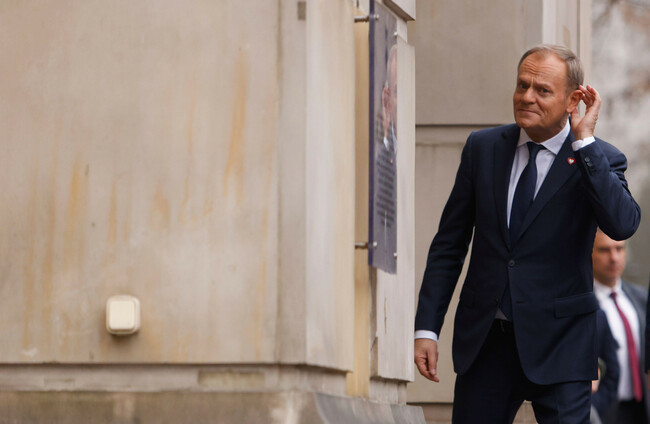
DONALD TUSK’S LONG-AWAITED dream to oust the Law and Justice (PiS) party from the Polish parliament came true on Monday after the parliament elected him as the next Prime Minister, ending eight years of governance from far-right, anti-EU party.
Tusk had billed the parliamentary elections as the “last chance” to save democracy in Poland. Putting the liberal opposition in power will bring a huge political shift and counter the PiS’s years of hardline nationalism, the former Polish PM and President of the European Council contends.
PiS increased its nationalist rhetoric in its campaign and even entered a row with its war-torn neighbour Ukraine, despite huge Polish solidarity with Kyiv in the face of the Russian invasion.
However, this wasn’t the only time PiS misjudged the public narrative in recent years – it was also accused of fuelling anti-EU sentiment by overriding European legislation and attempting to disrupt the bloc’s legislative processes.
Tusk, during the election campaign, called for major protests across the country so Poles could defend their European status.
“We have to save Poland, no-one will do it for us,” Tusk told the crowds who gathering in Warsaw, Krakow, Poznan and other cities with EU and Polish flags.
Previously the head of government from 2007, he was in office for seven years, which made him the longest-serving Prime Minister in democratic Poland.
Active on social media, Tusk frequently takes shots at PiS leader Jaroslaw Kaczynski – his longtime bitter enemy.
Kaczynski holds Tusk morally responsible for the death of his twin brother Lech, who was president at the time, in an air crash in Russia in 2010.
Tusk was prime minister when the crash – an accident according to investigators – wiped out a large chunk of the Polish establishment. Conservatives accused Tusk’s then government of negligence in preparations for the presidential visit.
He held power in Poland until 2014 when he went to Brussels to serve as leader of the European Council.
As chief, he handled crises including migration, Greece’s economic plight and tough Brexit negotiations, Tusk went onto serve as chief of the European People’s Party – the centre-right EU political group.
After learning English from scratch, he won a reputation for plain speaking with a penchant for colourful phrasing, most notably during Brexit when he warned “there will be no cakes on the table for anyone, there will be only salt and vinegar”.
During the Brexit process he was often viewed as Europe’s most feared politician by Britain, clashing on a number of occasions with Boris Johnson and other British leaders as they tried to sort out how the deal would go.
Staunchly against Brexit, after the final deals were made and the United Kingdom began their must-desired secessions, Tusk returned to domestic politics and put in a successful bid for Civic Coalition party-leader.
While in Brussels, Tusk had become increasingly worried about what was happening in Poland – claiming in his acceptance speech as he took over in 2022 that “true evil” had taken over Poland and that his oppositional alliance were ready to “fight this evil”.
Tusk said his return was dictated by the conviction that Civic Platform is “necessary as the force … that can win the battle with Law and Justice over Poland’s future.”
“There is no chance for victory without the Platform,” Tusk said.
He said he also had a sense of responsibility for the party he had founded and led for many years before taking on the position of EU Council head in 2014.
With Tusk’s plan in motion, it’s up to him now to live to the responsibility he has placed upon himself and to maintain the large support he gained in pre-election anti-government rallies.
Includes reporting by © AFP 2023

To embed this post, copy the code below on your site













have your say