Sign in. It’s quick, free and it’s up to you.
An account is an optional way to support the work we do. Find out more.
Sign in. It’s quick, free and it’s up to you.
An account is an optional way to support the work we do. Find out more.
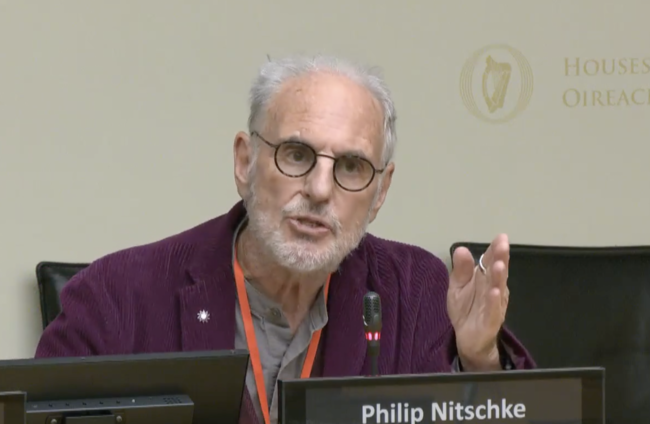
A FORMER MEDICAL doctor from Australia who came to Dublin last November to give a workshop on how to obtain drugs which are illegal in Ireland for what he terms as “DIY deaths” appeared before the Oireachtas Assisted Dying Committee to give expert testimony.
Philip Nitschke was presented as a doctor at the committee, and a member of the committee referred to him as a member of the medical profession.
However, Nitschke holds the title ‘Dr’ in relation to a PhD in physics, and has not been a medical practitioner for years.
Nitschke appeared before the committee in person on 28 November last year. He told members that he was asked to “comment on the Australian experience” in relation to assisted dying. He told them that he was the first doctor to be allowed to administer a legal lethal injection to a patient on a voluntary basis in 1996, but he did not give any details on the suspension of his license by the country’s medical board 10 years ago.
The Medical Board of Australia (MBA) suspended his license in 2014 after an emergency meeting of the board to discuss allegations that he had counselled a 45-year-old man who was depressed but otherwise healthy, to take his own life.
The man had attained an illegal drug to end his life after attending a workshop hosted by Nitschke. Nitschke had argued that he was not acting as the man’s doctor during the workshop and therefore did not have a duty of care to him.
A court initially upheld the MBA’s decision to suspend Nitschke’s medical licence, but this was overturned following a Supreme Court appeal.
The MBA subsequently said it would reinstate Nitschke if he agreed to end his work with Exit International – an organisation that describes itself as giving guidance on ‘assisted suicide’ – and agree to never offer counsel on euthanasia again.
However, he opted to burn his medical registration cert and leave Australia and to continue his work with the group from a new base in Amsterdam.
Kerry TD Michael Healy-Rae, who chairs the Assisted Dying Committee, told The Journal that, at the time, he had been unaware Nitschke was hosting the Dublin workshop in which he demonstrates the “practical steps” involved in a “DIY death”.
Healy-Rae said that he was also unaware that Nischke is no longer a practising doctor, or that his registration had been subject to court rulings in Australia.
However, Healy-Rae added that he cannot speak for all of the committee’s TDs on this matter.
Nitschke is often referred to as ‘Dr Death’, and he has used the name himself in the title of a show he brought to the Edinburgh Fringe Festival in 2015.
The workshops he offers in different countries, including in Dublin, have come under fresh scrutiny after a recent Sky News investigation revealed that he gives people advice on how to plan their suicides, and specifically on the experience they will have using different poisons.
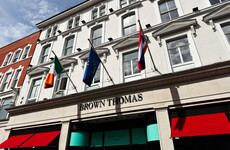
Nitschke was in Dublin last November giving one of these workshops in a venue in Dublin city centre, which he says was attended by a crowd of 50-100 people. The workshop cost up to €60 to attend.
During the same visit he also spoke to the TDs and senators who are looking into the possibility of assisted dying legislation being introduced in Ireland.
He made no reference to the Dublin workshop during the committee hearing. However, during the session he did start naming drugs which are illegal in Ireland that can be used to end someone’s life.
When this happened, Senator Ronan Mullen interrupted and questioned whether this was wise, considering the committee meeting was being publicly livestreamed.
Mullen asked: “Did we have a discussion at some stage at the committee about whether we were going to talk about drugs in open session? Does it raise issues about the vulnerability of people who might be watching?”
Healy-Rae briefly suspended the meeting in order to check the record on whether such a discussion had taken place.
When the meeting resumed, and the livestream came back on, Healy-Rae said that the committee discusses dying, including suicide, and that “support information can be found on the committee’s webpage”.
During the meeting Nitschke said that he believes that anyone who is of age and has the capacity who wants to end their life should be assisted, and have access to “the best drugs”.
He also clarified that he believes this should be the case for those who want to die for “non-medical reasons”.
Speaking today, Healy-Rae said the committee is considering potential legislative or policy changes related to assisted dying in a strictly “medical context”.
Speaking to The Journal today Nitschke said that the average age of the people who attend his workshops is 75, and that anyone under 50 has to provide a reason as to why they are there. Organisers ask attendees in advance for proof that they are aged 50 or over. Those who have serious illnesses can be of any age.
The Australian, who began these workshops over 10 years ago, said he visits Dublin to host them at least once or twice a year.
Sky News reporter Sadiya Chowdhury, who was present at the workshop in November, said that Nitschke showed “poisonous substances” on a screen, which were ranked in order of convenience, availability and painfulness.
Chowdhury reported that when the workshop got to the point where he was about the demonstrate his “practical steps for a DIY death”, Nitschke asked her to stop filming.
He said that in some cases he has been sent footage of people who have attended his workshops ending their lives, and that he has watched the video footage to collect evidence on the efficacy of different drugs.
There was some public criticism of Nitschke’s appearance at the committee in the wake of the session, with the Pro Life Campaign Ireland tweeting its opposition to his inclusion in a tweet in early December.
If you have been affected by any of the issues mentioned in this article, you can reach out for support through the following helplines. These organisations also put people in touch with long-term supports:

To embed this post, copy the code below on your site










have your say