Sign in. It’s quick, free and it’s up to you.
An account is an optional way to support the work we do. Find out more.
Sign in. It’s quick, free and it’s up to you.
An account is an optional way to support the work we do. Find out more.
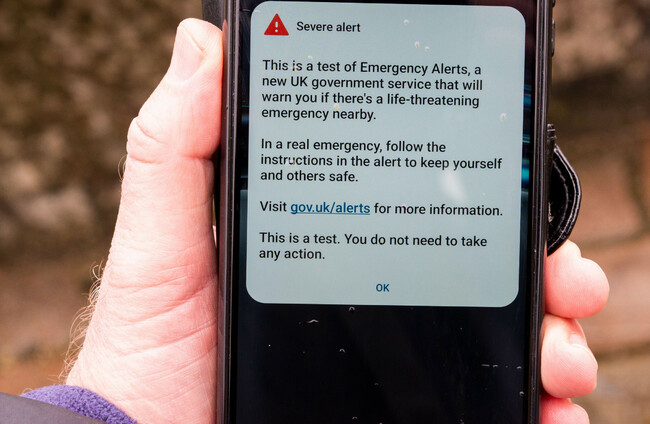
A PLAN TO implement a text messaging system for large-scale emergencies has been delayed by more than a year to give the Government time to employ advisors for the project at a cost of €850,000.
Last year, The Journal reported that a Public Warning System (PWS) was expected to be introduced by November this year ’at the latest’, but due to extensive procurement, engagement and implementation procedures, the project has been delayed by 13 months.
The delay could be even longer, however. According to a statement from a spokesperson for the Department of Environment, Climate and Communications, the real work of the project, such as developing the systems and engaging with mobile phone networks, has yet to even begin.
The system sends messages to citizens who may be near a possible natural disaster or terror attack to let them know how and where to stay safe, and to prevent the spread of misinformation.
All EU member states are required to introduce a Public Warning System under a recent directive. Ireland’s version of the system will be SMS-based, sending a text message directly to people’s phones when needed.
One of two inter-departmental groups working on the project – which, under EU law, has no strict deadline – recommended that external advisors be employed, according to the Department of Communications.
A Government advert posted in April says that the State will pay €850,000 for the advisory services. Their roles on the project will include extensive engagement with a range of stakeholders including mobile networks.
A Department spokesperson told The Journal that an implementation timeline for the PWS will only determined once the advisors are employed in September. Applications for the job closed last month.
The advisors will be needed for advice and support in planning, testing, running and maintaining the PWS, the spokesperson said.
So far, they added, one working group, chaired by the Office of Emergency Planning, is developing the appropriate policies and procedures for the use of the PWS. The other group suggested advisors be employed.
Since 2012 both Apple and Android have used similar technology to send out emergency alerts, mainly in the US.
The Government first discussed plans to introduce a PWS back in 2010.
The European Union implemented a PWS scheme for its member states in 2018, named Reverse-112.
Since renamed EU-Alert, Ireland would join Germany, Netherlands, Greece, Spain and other EU countries when the system comes into force.

To embed this post, copy the code below on your site













have your say