Sign in. It’s quick, free and it’s up to you.
An account is an optional way to support the work we do. Find out more.
Sign in. It’s quick, free and it’s up to you.
An account is an optional way to support the work we do. Find out more.
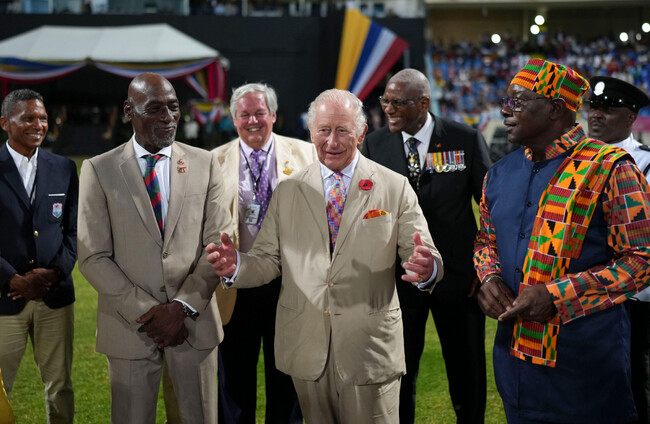
BRITAIN’S ROLE IN the transatlantic slave trade is at the centre of a growing political dispute ahead of a Commonwealth summit in the Caribbean, with regional leaders insisting that an apology alone would not be enough.
British Prime Minister Andy Burnham has said he is open to discussing a formal apology on behalf of the state, but has ruled out financial reparations.
That position has drawn criticism from both Caribbean leaders seeking compensation and Conservative leader Kemi Badenoch, who argued that an apology would encourage further demands for payments.
The debate comes as King Charles prepares to open the Commonwealth Heads of Government Meeting in Antigua and Barbuda on Tuesday.
The King is expected to address slavery with “unflinching honesty” and “sincere sorrow”, according to Buckingham Palace, but is not expected to apologise.
Some Caribbean governments have renewed their calls for Britain to acknowledge its role in the enslavement and sale of millions of people and provide reparations.
Barbados Prime Minister Mia Mottley led a group of Caribbean leaders who launched a slavery reparation manifesto at a conference in Ghana in June.
Antigua and Barbuda’s Prime Minister Gaston Browne said the political difficulty of securing agreement in Britain did not remove the need for compensation.
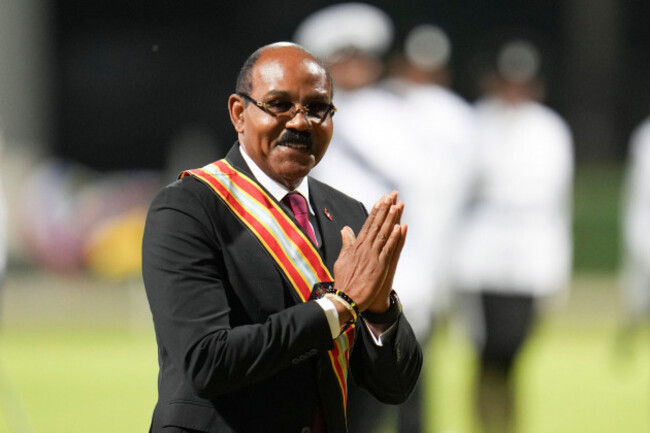
“I understand the politics in the UK, in which it may be a difficult proposition for him to agree to any form of reparations, but that just does not negate the need for reparations,” Browne told ITV News.
He said Caribbean countries were not “coming for Britain” and suggested funding could come from its overseas development budget.
St Lucia’s Prime Minister Philip J Pierre, who chairs the Caribbean Community bloc, has also welcomed the offer of talks while challenging the exclusion of reparations.
“A dialogue that begins by placing reparations outside the room cannot be a complete dialogue,” Pierre said.
Writing in The Guardian, Burnham said his government was offering a “structured dialogue” with those affected by the transatlantic slave trade.
“Listening to calls for a formal apology on behalf of the British state will form an important part of this process and I am open to them,” the prime minister wrote.
Burnham also expressed “sorrow and regret for the pain and suffering of so many millions of people”, but argued that British people today should not be “held liable for historical wrongs, however heinous, that happened in a different age under different laws and in which they played no personal part”.
He instead proposed efforts to help countries service their debts over longer periods and at better rates.
Chancellor John Healey defended considering an apology, saying it did not mean accepting financial liability.
Badenoch, however, told Sky News that an apology was “a lever to wedge open the door to ask for cash”.
Andy Burnham risks putting "pressure" on the King with latest comments about the UK potentially apologising for slavery, Kemi Badenoch tells Fraser Nelson. Speaking on Sky News, the Tory leader says Burnham "has been putting his foot in his mouth since he became prime minister". https://t.co/H0NNbPKFMY
— Sky News (@SkyNews) November 1, 2026
“What I’m worried about is that this Chogm summit is yet another opportunity for people to start asking Britain for money because of the slave trade,” Badenoch said.
Liberal Democrat leader Ed Davey supported an apology but opposed compensation payments. He also criticised cuts to overseas aid, saying Britain should support people experiencing economic injustice.
Buckingham Palace said Charles would confront the “most shameful aspects of the past” in his opening address.
However, a spokesperson said it would not be appropriate for him to address specific British government policy while speaking as head of the Commonwealth.
The speech is expected to focus primarily on practical cooperation between the organisation’s 56 member countries.
Charles has previously described slavery as an “appalling atrocity” which “forever stains our history”, speaking at the ceremony marking Barbados’s transition to a republic in 2021.
The debate also comes alongside questions about the monarchy’s continuing role in the Caribbean.
Browne said he respected the King but wanted Antigua and Barbuda to become a republic, adding that the decision ultimately belonged to its people.
With reporting by PA

To embed this post, copy the code below on your site








have your say