Sign in. It’s quick, free and it’s up to you.
An account is an optional way to support the work we do. Find out more.
Sign in. It’s quick, free and it’s up to you.
An account is an optional way to support the work we do. Find out more.

Content warning: This article contains references to suicide, self-harm and methods of suicide, which some readers may find distressing. Helplines are available at the end of this article.
‘I DON’T ACTUALLY WANT to die’.
These were the words written by a young Irish woman on one of the darkest corners of the internet.
There, her death was not only encouraged, but also facilitated. The sinister forum she used in the final months of her life is currently banned in other parts of the world – including the UK. But here in Ireland, it is freely accessible.
Emily, not her real name, was a young woman from the Leinster area who had joined the site, which glorified suicide, two years prior to her death.
In many posts she documented her struggle with depression and suicidal ideation. She also talked about her love for her family, friends, animals and music.
But instead of being signposted to mental health support services, anonymous and faceless accounts – including those claiming to be based in Ireland – guided her to illegal online dealers.
The Mexican man who supplied Emily with the toxic substance used to take her own life, is now in prison after being convicted of illegally importing the controlled drug into the US.
However, the site which took advantage of her vulnerability, and helped facilitate her death, is still in operation. And those living in Ireland don’t even need to sign-up to the forum to view its harmful content.
The Journal Investigates has found that many of those using it – including dozens of Irish accounts – are being directed to obtain either toxic or illegal substances with the sole purpose of aiding suicide.
Our investigation, which extensively examined coroners reports as well as data from the Health Research Board (HRB) and National Poisons Information Centre (NPIC), found that two of these substances have been implicated in the deaths of at least 34 people in Ireland in the last number of years.
The majority of these deaths were later ruled as suicide by a coroner.
Campaigners today warn that vulnerable people are being drawn into an environment where ending their lives is presented as the only answer, and today call for the State to follow the UK’s banning of the forum.
Investigations like this don’t happen without your support… Impactful investigative reporting is powered by people like you.
The Journal Investigates has examined hundreds of posts made by the forum’s users who identified themselves as living in Ireland.
The content, posted between 2019 and this year, reveal a sinister network in which people discussed suicide in highly practical terms.
They sought information about substances, sellers, deliveries and customs controls. They asked whether suppliers would ship to Ireland and whether parcels might be detected by customs officials, gardaí or family members.
Some discussed disguising packaging, collection points and parcel forwarding services. Others offered to privately share information about suppliers.
One poster claimed that a parcel containing a toxic substance had reached Ireland without being opened by customs.
The users did not only speak about the procurement of highly dangerous substances. Many went into great detail about other ways to end their lives, too distressing and harmful to publish.
Some users did urge others to delay their plans, talk about what they were experiencing or reconsider. But those interventions existed alongside detailed discussions about methods, locations, preparation and access.
Many posts expressed an immediate or advanced intention to die. In many of the responses, posted by faceless accounts which appear to have been operating on the site for many years, they encouraged those in distress to follow through on their plans.
The posts alone do not prove that every plan was carried out. Nor can every claim about a delivery, seller or death be treated as fact.
However, The Journal Investigates has verified that at least two Irish people who used the forum did go on to end their own lives.

One of those people was Emily, who was found dead in 2022.
The Journal Investigates has uncovered from posts she made on the forum that, prior to her death, she had been directed to an online seller based in Mexico. She claimed to have obtained an illegal substance from him on two occasions.
The young woman referred to the seller through a coded name, also used by other members of the forum. Emily did not go into detail of how she made contact with this individual.
However, our investigation has found that users were directed to make contact with the man, who operated under the alias ‘Alejandro Vasquez’, via email.
We can today reveal that Alejandro Vasquez is in fact Daniel Gonzalez-Munguia, a Mexican national who ran an international online business supplying the controlled drug to vulnerable people who he knew had the sole intention of ending their lives.
Last year, the 42-year-old pleaded guilty to one count of importing a controlled substance into the US. He had been extradited from Mexico by US authorities in 2025 to face the charge after an extensive and lengthy investigation by Homeland Security.
In US federal court records obtained by The Journal Investigates, it was established that Gonzalez-Munguia ran the illegal business from his home in the Mexican city of Puebla.
In the documents, prosecutors outlined how he sold and distributed the drug via post to hundreds of individuals worldwide, including in Illinois, the US state where he was eventually convicted.
Over a decade, the Mexican man used encrypted and anonymous email accounts, international money transfer services and parcels deliberately disguised as cosmetic products to conceal contents from customs authorities.
Examinations of his financial accounts show that almost $530,000 passed through accounts linked to him, and his activities, over a 10 year period.
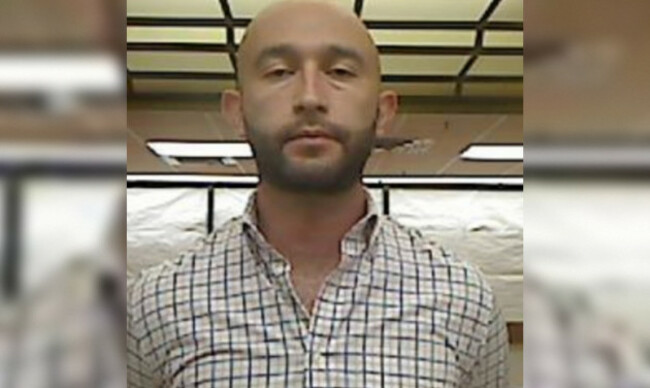
The court records state that many of Gonzalez-Munguia’s customers died after consuming the drug he supplied to them.
When he was indicted, the US Attorney’s Office for the Northern District of Illinois stated that the investigation had an Irish dimension.
In a statement released last year, it said law enforcement agencies in Ireland were among authorities in 11 countries that had provided “valuable assistance” to investigators.
However, a spokesperson for An Garda Síochána told The Journal Investigates that it had no record of providing assistance or conducting investigations involving Gonzalez-Munguia.
We also asked the Department of Justice if it had been contacted by US authorities about the Mexican man’s activities. A spokesperson responded by saying the department does not comment on individual cases.
The US Attorney’s Office subsequently told our team there was no information in the public record concerning Ireland or any Irish victims beyond the country’s inclusion in its list of assisting jurisdictions.
A spokesperson also confirmed that in October last year, Gonzalez-Munguia was sentenced to 17 years in a federal prison. He is not expected to be released until 2035.
An inquest into Emily’s death was held in 2023. A copy of the coroner’s report, seen by The Journal Investigates, returned a verdict of suicide.
However, it did not establish how Emily came to be in possession of the highly restricted drug she used to end her life.
It is also unclear from the inquest report whether any criminal investigation was carried out into how she obtained it.
However, Emily’s last post on the site – written on the evening of her death – detailed the substance, where she obtained it from and the codename used on the site for the man later identified in court documents as Gonzalez-Munguia.

Anna Nikolin-Caisley knows the devastation caused by so-called suicide forums all too well.
In May 2024, she lost her 17-year-old son Vlad, whom she lived with in the UK, to suicide after he joined the same forum used by Emily. He was also directed to illegal online dealers before taking his own life.
The Hampshire woman’s campaign work helped push the forum under the scrutiny of the UK’s media regulator.
Last year, Ofcom fined the forum’s provider £950,000 for online-safety breaches and warned it could seek a court order requiring UK internet providers to block access.
Now, when UK users attempt to access the forum, including those in Northern Ireland, they are met with a message blocking access to the site. However, that is not the case in the Republic of Ireland.
Speaking to The Journal Investigates, Nikolin-Caisley called on Ireland’s online regulator Coimisiún na Meán to take similar action.
The way I see it, and other bereaved families see it, is that our children did not die from suicide. They were groomed to take their own lives.
In a statement to The Journal Investigates, Coimisiún na Meán said it is “actively engaging with the service in question” and is reviewing its compliance with the EU Digital Services Act.
Under the Act, online platforms are generally regulated by the Digital Services Coordinator in the EU country where they are headquartered or have appointed a legal representative.
However, where a platform has neither, any of the EU’s 27 national coordinators, or the European Commission, can exercise powers to regulate it.
The spokesperson said that, following engagement with other European regulators and the European Commission, Coimisiún na Meán’s supervision team is now in contact with the service.
“Under the supervisory model of regulation, Coimisiún na Meán first engages with services on issues of concern,” the spokesperson said.
Where those concerns are not addressed and there is evidence of a possible breach of the Digital Services Act, the matter may be referred to the regulator’s investigation and enforcement teams for a formal investigation, the regulator said.
Coimisiún na Meán also confirmed it can apply to the High Court for an access-blocking order, although the spokesperson stressed that this power is available “only as a last resort”.
Nikolin-Caisley said her son would still be alive if he had not joined the forum.
“Vlad wanted to belong,” she said. “But they (forum users) were feeding into all his insecurities. ‘You will never fit in. Life is not worth it. You’re fighting a lost battle.’
“Vlad needed hope. He needed friends. He needed to feel that he belonged. He wanted to have a life. The forum just took every last bit of hope away from him.”
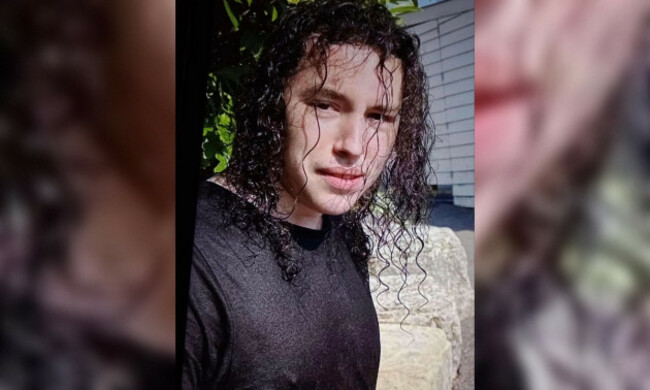
Between 2015 and 2022, the HRB identified 24 poisoning deaths involving the same drug taken by Emily. Sixteen of those deaths were recorded as suicides.
The remaining eight were not broken down by verdict category. It is therefore unclear whether they were recorded as accidental poisoning, undetermined deaths, misadventure, open verdicts or another classification.
Data separately obtained from the HRB by The Journal Investigates on a second substance advertised on the forum, recorded 10 poisoning deaths linked to it between 2019 and 2022. The majority of those who died were male.
Annual figures were withheld because the National Drug Related Deaths Index suppresses totals of five or fewer to protect the identities of those involved.
The figures end in 2022, with the HRB said data for 2023 would not be available until the end of 2026, while information for 2024 and 2025 is not yet available.
Earlier this year, The Journal Investigates attended the inquest into the death of a 40 year-old man. He died in 2023 after consuming the same toxic substance used by Vlad Nikolin-Caisley
After returning a verdict of suicide, coroner Frank O’Connor said he understood the substance had probably been purchased online, possibly from abroad, and referred to activity aimed at identifying those supplying it.
He described the availability of the toxic substance online as “a very insidious matter” and said it was “extremely immoral” to offer it to vulnerable people.
It is unclear where the man, who was from the Munster area, obtained the substance, or if he was a member of the same forum where it is regularly advertised.
The Journal Investigates also examined a a number of other coroner’s reports involving deaths linked to the same substance.
They include a 32-year-old woman who was found dead at her home in the Leinster area in 2020.
An inquest into her death revealed she had purchased the substance online. Her death was recorded as suicide.
The same year, a 24-year-old man, also from the Leinster area, died in hospital after he ingested the same chemical.
Gardaí found evidence on his phone of suicidal thoughts and research into methods. His banking records showed a purchase from a website selling the substance.
According to the documents, an earlier shipment of the same substance to the young man had been stopped by customs because it did not contain the dangerous goods documentation required for transport.
A container of the substance was later found concealed in his bedroom, the report said. His death was recorded as suicide.
In another death, involving a 31-year-old man, gardaí told an inquest that officers found the toxic substance and a laptop, near his body. His death was recorded as suicide.
In all three cases, no formal recommendation concerning online chemical sales, customs controls or access to the substance was recorded.
In a statement to The Journal Investigates, An Garda Síochána confirmed it had previously carried out welfare checks on individuals in Ireland identified in another international investigation into the sale and supply of this chemical.
“In a small number of cases An Garda Síochána has identified that the persons subject of the welfare check were deceased,” a spokesperson said.
In all of these cases An Garda Síochána is assisting the local coroner with the preparation of an investigation file for a Coroner’s inquest into the sudden death.
Gardaí added they have not established any direct link between the information received and the sudden deaths concerned.
They added that the products involved are not illegal in Ireland and can be purchased for “legitimate purposes”. No criminal investigation has been opened in relation to any of the incidents, they said.

Dr Paul Corcoran, head of research at the National Suicide Research Foundation (NSRF), said the anonymity and scale of the internet should not be treated as an excuse for inadequate regulation.
He said: “It’s simple – if there is evidence that harm is being caused by a website, there have to be consequences. They can’t be allowed to continue to cause harm.”
A 2023 review by the NSRF found that online suicide and self-harm spaces can provide understanding, connection and support to people who feel isolated.
But those same environments may also normalise or promote suicidal behaviour and expose users to new and potentially lethal methods.
Corcoran said people experiencing suicidal thoughts were especially vulnerable to sources presenting suicide as a solution.
“Even a person who is well can make bad decisions based on information or guidance that they receive. That can be about anything, from the way they drive to the way they behave or the lifestyle habits they have.
Especially when a person is vulnerable in terms of their mental health and they are experiencing suicidal thoughts, they are extremely vulnerable.
Corcoran said people in distress should instead be shown that support is available, that there are alternatives and that they can reach out to someone they trust for help.
“That is the avenue we want people to go down – not having websites that are dedicated to suggesting other avenues.”
Corcoran says that Ireland faces a challenge in dealing with these platforms.
“Sometimes we look to the EU to help,” he said. “I think the EU has generally been quite good in terms of protecting people on the internet, whether that is through data-protection issues or controls on the use of our data.
“You would hope that the EU would take a strong stance, like Ofcom has.”
Reporter: Patricia Devlin • Editors: Susan Daly & Christine Boland • Social Media: Cliodhna Travers • Main Image Design: Lorcan O’Reilly

To embed this post, copy the code below on your site












have your say