Sign in. It’s quick, free and it’s up to you.
An account is an optional way to support the work we do. Find out more.
Sign in. It’s quick, free and it’s up to you.
An account is an optional way to support the work we do. Find out more.
LAST UPDATE | 1 hr ago
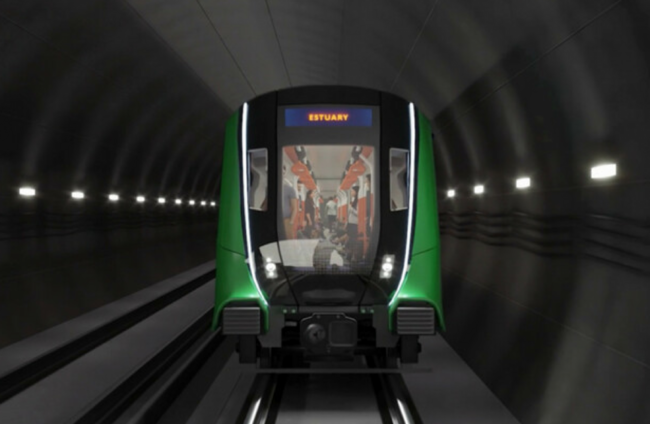
METROLINK IS TO become operational between 2036 and 2038 and will cost the state up to €17.75 billion.
Government ministers this morning signed off on the next stage of the MetroLink project, paving the way for private companies to bid for the construction and operation contracts of the 19km Dublin railway.
During a Transport Infrastructure Ireland (TII) technical briefing today, TII chief executive Lorcan O’Connor said the final price is not known until the tender is granted.
“It’s important to state the tenderers will establish the true market price,” O’Connor said.
MetroLink interim director Michael Flynn said heavy construction on the project will begin in 2028, while MetroLink is expected to carry passengers between 2036 and 2038.
The project will cost between €14.4 billion and €17.5 billion in total, with the current midpoint cost estimate of the project standing at €15.75 billion – significantly more than the initial estimate of €9.5 billion.
If the project meets the midpoint estimate of €15.75 billion, the largest expense will be direct costs which amount to €7.92 billion. Land and property is to cost €760 million, indirect costs €1.46 billion, risk allowance €3.49 billion, and €2.16 billion has been estimated for inflation.
Speaking to reporters outside Government Buildings, Transport Minister Darragh O’Brien said a detailed business case, including cost-benefit scenarios will be published this week.
He confirmed that enabling works are planned for 2027 with major construction and tunnelling to begin in 2028.
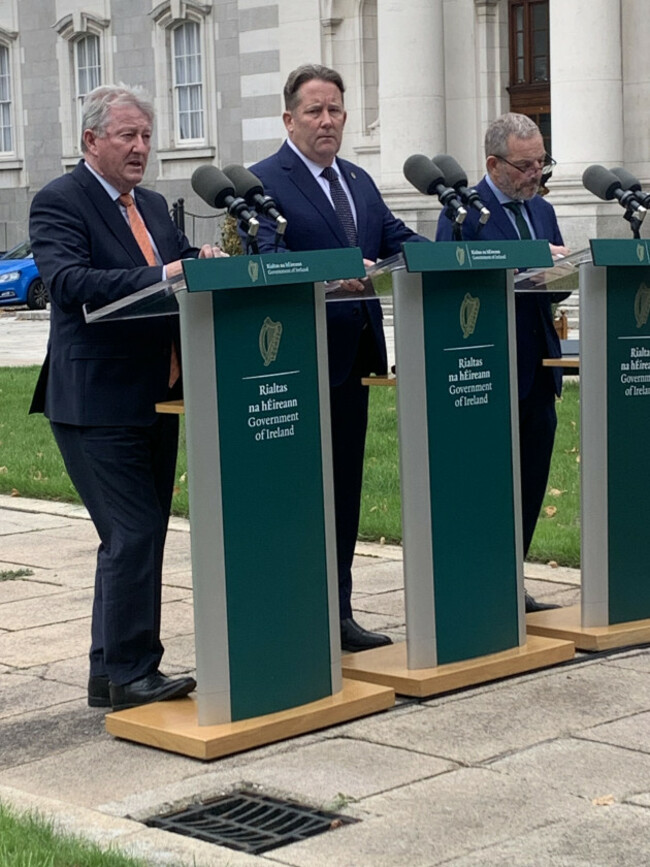
The minister was questioned about what safeguards will be built into the contract to ensure the overruns and delays of the National Children’s Hospital project are not repeated.
O’Brien said he “fully gets” that due to the previous experience with some projects, one in particular, which experienced significant overruns, that there are concerns.
However, he said: “That’s not the space that we’re going to be in. We want to deliver this on time. We want to deliver this on budget, and deliver the benefits for our people… this is something that has been waited for by tens of thousands of people right the way across the city and county of Dublin and beyond.”
“Timelines will be set out very clearly, and the criteria of the contracts will be set out when the tender documents are published,” said the minister, stating that work on the contract won’t be completed for a few months.
“It critically important that this project is managed and delivered on time and in budget,” said O’Brien, who said the contract, when it is published, will outline the cost management and delivery on time stipulations.
The MetroLink interim director said the primary drivers causing costs to increase from the initial estimate are increased costs, design development, the impact of the planning process, inflation and a “further evolution of the risk approach”.
The second-largest increase in cost estimate is for risk allowance, which Flynn said is due to “uncertain times” we are in with conflict in the Middle East.
For every €1 spent, MetroLink is estimated to return between €1.13 and €1.95 to the economy.
Flynn said the project is to operate on 100% renewable energy, carry 20,000 passengers per hour per direction and enable the delivery of 77,000 homes.
New Zealander Seán Sweeney, the former MetroLink boss, stepped away from the role in April of this year.
Asked about finding his replacement, the transport minister said they are in the process of recruiting for a new chief executive and senior team.
He said he got on very well with Sweeney, telling reporters: “I didn’t appoint him. I inherited him. He did a good job. He brought the project through planning. He is a very direct guy.”
The minister said there has been a lot of interest in the role.
Last week, it was announced that a contract worth up to €550 million to oversee the construction of MetroLink had been awarded to the engineering and consultancy consortium Jacobs and Aecom.
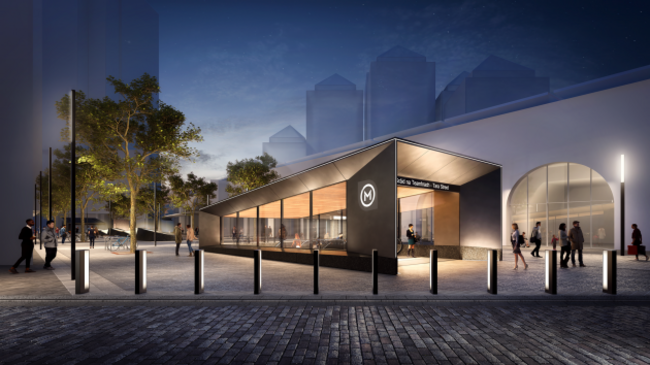
MetroLink, previously called Metro North, is a proposed, partly underground rail line that will link Dublin Airport with the city centre, as well as other rail and Luas lines.
The completed line will travel from Swords to Dublin city centre in approximately 25 minutes and will be capable of carrying up to 20,000 passengers per hour in each direction.
With additional reporting from Sophie Finn and Christina Finn

To embed this post, copy the code below on your site















have your say