Sign in. It’s quick, free and it’s up to you.
An account is an optional way to support the work we do. Find out more.
Sign in. It’s quick, free and it’s up to you.
An account is an optional way to support the work we do. Find out more.
THE DÁIL WAS on recess this week for the midterm break, leaving us with some extra time to turn our minds to issues that usually don’t last long in the relentless 24-hour news cycle.
One thing that was in the news last week that merits another look was the resignation of Social Democrat councillor Peter Melrose, and what it says about local government more broadly.
Melrose was elected to Kildare County Council in the 2024 local elections and tendered his resignation approximately halfway through his five-year term.
Explaining his decision to walk away from elected local politics, Melrose, who is also a primary school teacher, said the volume of work involved in being a councillor had grown to an “unsustainable level”.
He said balancing both jobs, along with his family life as a husband and father, had become “an unmanageable task”.
Melrose argued that the role of a local councillor has evolved significantly and that reforms are needed to make local democracy work better for communities.
Specifically, he said councillors need greater decision-making powers, more oversight on executive actions and remuneration that reflects the full-time nature of the role.
He isn’t alone in this way of thinking – reforming local government has long been discussed by generations of politicians, but apart from a few tweaks around the edges, little has changed.
Melrose’s last point in particular, about the pay earned by councillors, is significant.
Many would argue the low salary attached to the role is a key reason local democracy is not functioning as it should be – councillors are expected to be on call almost 24/7, but the pay does not correspond with the workload.
Currently, councillors get paid €31,742 annually, and before July 2021, it was even lower at €17,000 (On top of this, councillors can claim for vouched expenses up to a maximum of €4,200, along with an unvouched “petty cash” allowance of €960).
This level of pay means that for many who take up the role, it is viewed as a part-time job on top of another professional post.
But as Melrose highlighted, the work attached to the role often requires much more time than a typical part-time gig.
The Moorhead report in 2021 found that approximately 65% of councillors had an additional job on top of their role as a councillor.
Without going through each of Ireland’s current 949 councillors’ declarations of interests, it is difficult to say exactly how many of them treat it as a full-time job and how many treat it as a part-time one.
One councillor who does consider it to be a full-time role is Green councillor on Dublin City Council Michael Pidgeon.
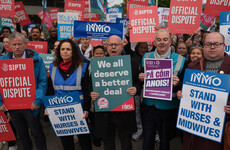
Pidgeon left a full-time role as head of communications for the Irish Nurses and Midwives Organisation in 2021 to dedicate his time fully to his role as a councillor.
Speaking to The Journal, Pidgeon explained that this decision meant he essentially took a pay cut of between 60 and 70% but that he felt it was the right call as he was working 80-plus hours a week and was struggling to do both jobs well.
On what it is like to live on the councillor’s income alone, Pidgeon said:
“I can make it work now, but it’s not really something to sustain for a long time, to be honest.
“At some point my love of the job will be overtaken by financial reality.”
In his view, while the pay has improved a lot since 2021, the system is sort of now caught between two models.
“If you do the job part-time, it’s likely an okay additional wage. But if it’s full-time, it’s not really workable in the long run. And that will make it hard to attract a good range of people into the roles in future.
“I don’t really like complaining about it, because in this job you see how hard done by many people are.
“And none of us wants to hear politicians moaning about how hard they have it – ultimately this is something I chose. But the pay does have knock-on consequences for the city,” Pidgeon said.
He believes that what ends up happening, as a result of people treating it like a part-time job, is that a lot of councillors spend their time dealing with individual constituent issues, and don’t have time to engage in wider city-level policy.
“Ideally you’d ensure that councillors have the time to do both, and I think the city would improve because of it,” he said.
Data published this week by Maynooth University lecturer Adrian Kavanagh shows that since the 2024 local elections, approximately 14 of the 949 councillors have stood down from their roles mid-term (1.5%).
A further five have passed away in that time, while 72 have been elected or nominated to the Dáil or Seanad.
Even though 1.5% of councillors resigning for a variety of reasons may not seem like a significant number, research has shown that the time commitment and pay are the two top reasons that put people off the role.
If we want a system of local government that truly delivers for local communities, a good starting point would be adequately paying the people who choose to represent them.

To embed this post, copy the code below on your site











have your say