Sign in. It’s quick, free and it’s up to you.
An account is an optional way to support the work we do. Find out more.
Sign in. It’s quick, free and it’s up to you.
An account is an optional way to support the work we do. Find out more.
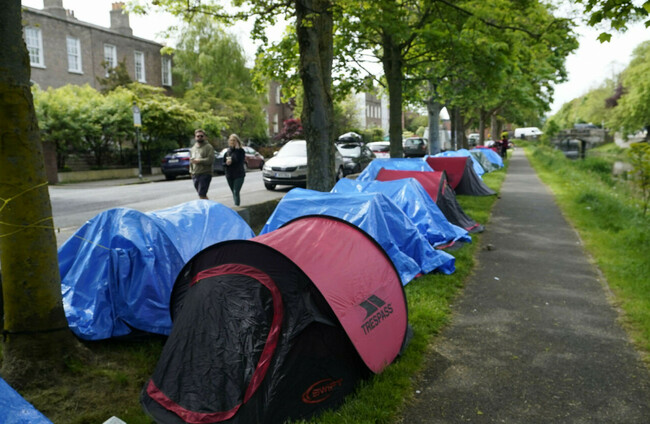
THE IRISH GOVERNMENT cannot avoid responsibility for providing adequate conditions to asylum seekers even in cases where there is a large influx of people seeking international protection, according to a member of a European court.
The European Court of Justice’s Advocate General Laila Medina has found that EU member states cannot use ‘force majeure’ – or an abnormal event beyond the control of a state – to “justify its failure to provide basic needs” for people seeking protection.
The case was taken by an Afghan national and an Indian national, who had applied for international protection two years ago.
This finding from the advocate general is an opinion and not a final decision.
The case will now go to the European Court of Justice for ruling.
Details of the case outlined that the men were denied housing and were deemed ineligible for daily allowances, leaving them homeless on the streets of Dublin.
This was despite EU directives entitling the men to housing, food and allowances upon reception in Ireland.
The Irish Government’s case was that the breaches arose from exceptional circumstances – an influx of asylum seekers to these shores – which they said amounted to “force majeure” under EU law.
But Medina said that an EU member state cannot invoke force majeure as a defence. While force majeure may apply for a time, it cannot be longer than a reasonable period of time.
The EU court has now concluded that the right to dignity is fundamental and that any EU member state will have infringed EU law if it fails to meet the basic needs of people applying for international protection.

To embed this post, copy the code below on your site
















have your say