Sign in. It’s quick, free and it’s up to you.
An account is an optional way to support the work we do. Find out more.
Sign in. It’s quick, free and it’s up to you.
An account is an optional way to support the work we do. Find out more.
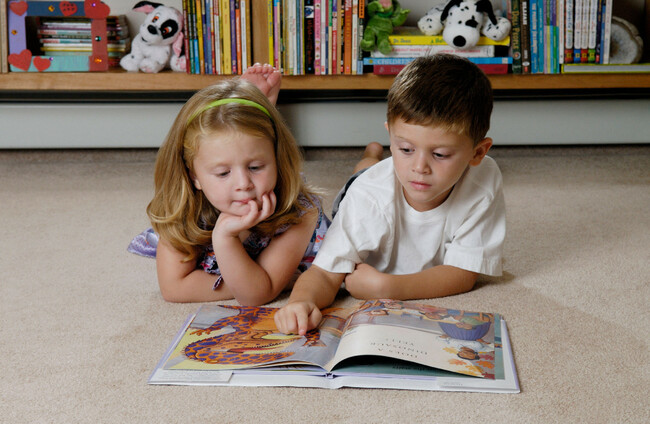
THE AVERAGE NUMBER of books owned by a child on the island of Ireland has dropped to just 23.
That’s a drop of seven from just two years previous, in 2023, when the figure stood at 30.
The findings were published today in the annual report of charity and arts organisation Children’s Books Ireland.
This year’s report was extended to include Northern Ireland for an overall picture of behaviours and attitudes to reading across the whole island of Ireland.
The report is based on data collected in December 2025 in a nationally representative online survey and the findings capture data for some 1,197 children.
While the average book ownership figure for children is 23, half of children on the island of Ireland own 15 books or fewer.
Only 17% of children own more than 50 books.
Children’s Books Ireland also pointed to a gender gap in book ownership, with girls owning an average of 24 books, compared with 21 for boys.
Meanwhile, over half of parents cite digital devices as the biggest barrier they face when reading or sharing books with their children.
Children’s Books Ireland has warned that young people are “opting for screen time over story time”.
However, 43% of parents also indicated that the cost of books was a key factor impeding on their reading, while 33% cited time pressures as a barrier to spending time reading with their children.
Elsewhere, half of parents said it was a “challenge” to find “appropriate and enjoyable” books for their children and despite valuing the importance of reading, close to a quarter of parents feel that reading with their child is a “chore”.
On the back of these findings, Children’s Books Ireland said it will focus “firmly on promoting reading for fun and enjoyment” and “separate home reading and storytelling from literacy skills and learning to read at school”.
It added that “reading together should be a moment of calm, relaxation and togetherness, without the pressure of academic achievement”.
The research also found that while 43% of children read on a daily basis, this rises to two-thirds when the child comes from a home where the parents or guardians read daily.
Children’s Books Ireland noted that adults, especially those in the home, are “obvious role models as they can set a positive example for young people by nurturing a love of reading”.
Elaina Ryan, CEO of Children’s Books Ireland remarked that the latest research shows that parents and guardians play a “crucial role” in shaping children’s reading habits.
She added that while there is widespread understanding that reading is important for children’s wellbeing, “families are faced with barriers to regular reading, including rising financial pressures, a lack of time and constant competition for theirs and their children’s attention from our own everyday devices”.
Ryan said that in the coming years, the focus of Children’s Books Ireland will be to help parents find excellent books for their children to enjoy from birth through the teenage years.
She added: “With the possibility of an EU-wide social media ban on the horizon, families could consider introducing small, consistent actions to bring reading for fun into their homes on a daily basis.”
She advised setting aside “just 15 minutes to read together, sharing an audiobook on a car journey, visiting your local library every fortnight or creating a space for books at home can nurture a positive and powerful culture of reading at home”.

To embed this post, copy the code below on your site















have your say