Sign in. It’s quick, free and it’s up to you.
An account is an optional way to support the work we do. Find out more.
Sign in. It’s quick, free and it’s up to you.
An account is an optional way to support the work we do. Find out more.
Updated at 5.38pm
TAXPAYERS COULD NEVER again be forced to bail out banks deemed “too big to fail” if new rules forcing global lenders to keep bigger safety buffers are brought in.
The Financial Stability Board (FSB) has unveiled plans to shore up the ability of mega banks to withstand economic shocks like the ones which echoed through the world’s banking system during the global financial crisis.
The global banking watchdog wants 30 “pillar” banks, including Ulster Bank parent the Royal Bank of Scotland, to boost the funds they have in reserve.
They would need to have as much as 20% of their total assets, adjusted for how risky the investments were, ready as back up for any losses they suffered in the future.
No Irish banks are on the list.
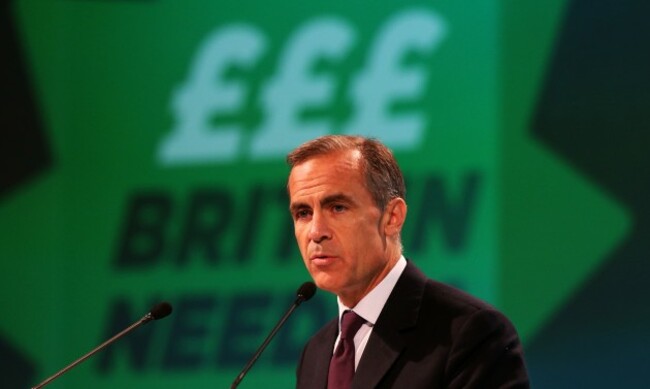
FSB chairman Mark Carney, who also heads the Bank of England, said an agreement on international loss-absorbing standards for the 30 banks would be “a watershed in ending ‘too big to fail’ for banks”.
Once implemented, these agreements will play important roles in enabling globally systemic banks to be resolved without recourse to public subsidy and without disruption to the wider financial system,” he said.
Over €164 billion pumped into Irish banks
Billions in taxpayers’ funds were spent propping up failing banks across the world as the collapse of debt-ridden institutions in the US and Europe stoked fears the world’s financial system could collapse.
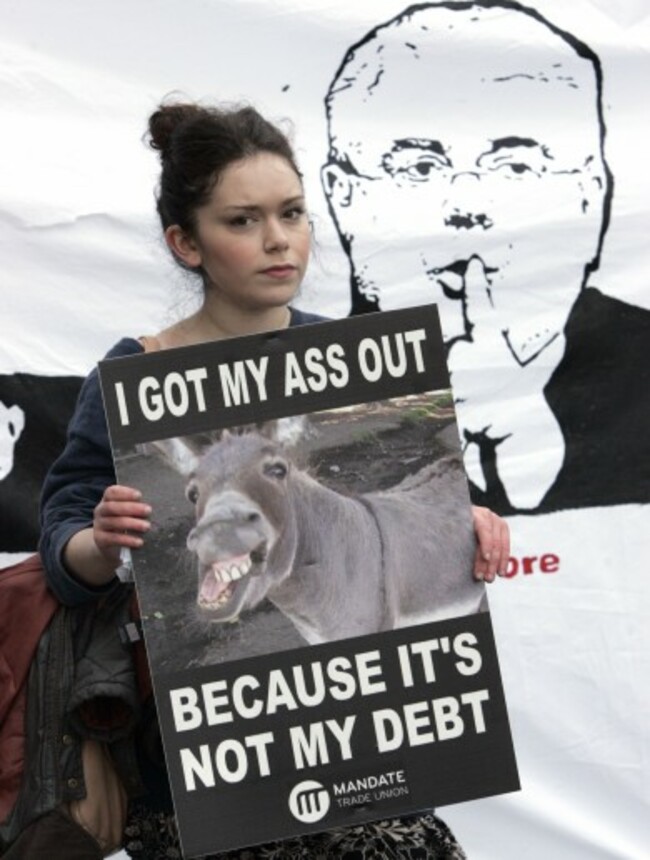
In Ireland, over €64 billion was pumped into the nation’s six banks by the Central Bank on top of more than €100 billion that came from the the European Central Bank (ECB).
The snowballing bank bailout in turn drove the government into the troika’s arms after then-ECB president Jean-Claude Thrichet threatened to withhold emergency funding if Ireland didn’t agree to the scheme.
The FSB said the changed rules for big banks, combined with other measures, should get rid of the “implicit public subsidy” global financiers enjoyed when they borrowed money.
It also hoped the move would also “incentivise” banks’ creditors to keep a closer watch on how much risk the pillar banks were taking and create a more level playing field in the international financial scene for smaller institutions which didn’t have the same implied government support.
The proposals, which will be put out for feedback until February next year, and have been widely welcomed by European officials, although Linklaters partner David Ereira told Reuters the new rules alone wouldn’t be enough to stop “too-big-to-fail” banks.
‘Significant deficiencies’ in how Irish banks were run
Meanwhile, in a speech today, the Central Bank’s head overseer, Sharon Donnery, said “significant deficiencies in corporate governance” had been identified in analysing what caused the Irish banking crisis.
“There are now core governance standards under which credit institutions licensed or authorised by the (Central Bank) must operate,” she said.
“Of course, we must not lose sight of the goal of good governance which is to support sound and effective oversight and a culture of ethical behaviour and challenge.”

To embed this post, copy the code below on your site










have your say