Sign in. It’s quick, free and it’s up to you.
An account is an optional way to support the work we do. Find out more.
Sign in. It’s quick, free and it’s up to you.
An account is an optional way to support the work we do. Find out more.
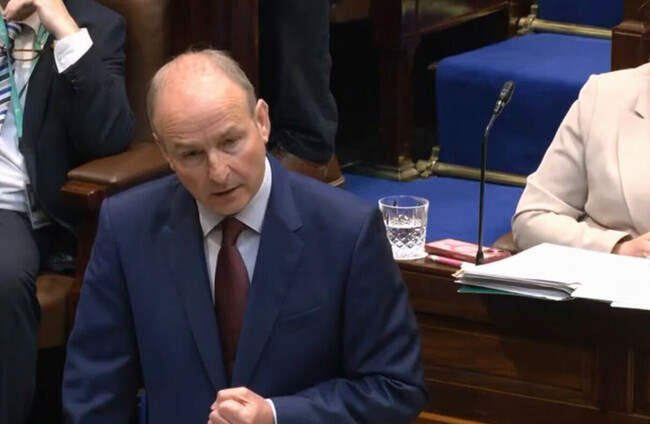
THE TAOISEACH HAS said the government will act on a recommendation from a judge that there should be a new offence on the statute books for when a public official perverts the course of justice not by criminality, but by “serious dereliction” of duty.
It comes after an inquiry’s highly critical findings into how child abuser Bill Kenneally’s crimes were handled by State agencies.
The final report of the South East Commission of Investigation, published on Tuesday, said two then-senior gardaí were responsible for a “dereliction of duty” in how they investigated Kenneally in the 1980s.
Despite confessing to senior officers in December in 1987 that he had abused boys, Kenneally walked free, continued to abuse, and would not face justice until he was imprisoned in 2016.
In his report, retired High Court judge Michael White said it was crucial to “distinguish between incompetence and serious dereliction of duty requiring criminal sanction”.
The issue should be referred to the Law Reform Commission for “urgent consideration”, the judge concluded.
Speaking in the Dáil today, Labour Party leader Ivana Bacik asked the Taoiseach to take heed of the inquiry chairman’s recommendations.
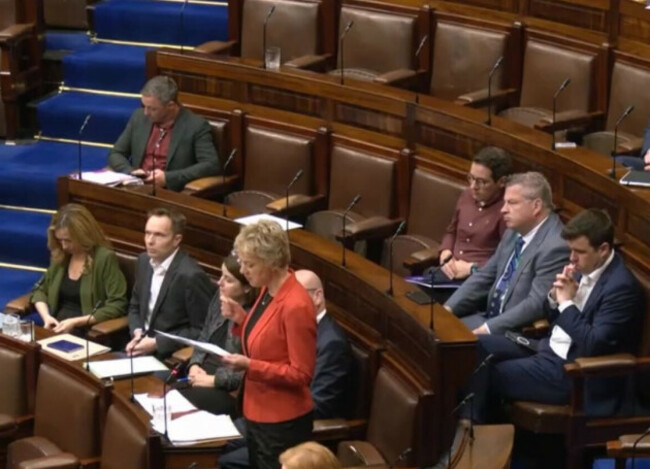
Bacik said that many organisations, including gardaí, the HSE and Fianna Fáil, were criticised in the report, with gardaí in particular the group that “should have been protecting” Kenneally’s victims.
“Bill Keneally tortured young boys over many years in unfathomable ways, he exploited his position of authority to abuse them. He ensured their silence through blackmail and intimidation,” Bacik added.
Responding during Leaders Questions, Martin said that Kenneally had “caused immense trauma and suffering” in his years spent abusing children.
“The judge has been very clear about his central finding about a failure and dereliction of duty in relation to the way An Garda Síochána dealt with this,” Martin said, “particularly in 1987 when the perpetrator Bill Kenneally himself was in the garda station.”
Martin added that the inquiry “doesn’t have a finding of a cover-up” or a “finding of collusion”, instead containing a finding of dereliction of duty.
However, he said he accepted there was a “need to reform the law” on public office offences and said the justice minister will “now be pursuing it with the Law Reform Commission” following the judge’s findings.
Justice minister Jim O’Callaghan is set to meet with survivors of Kenneally’s abuses in the coming days.
Discussions are underway to hold a meeting before the end of this week.
A law firm acting on behalf of several survivors of Kenneally’s crimes had claimed during the tribunal that the acting chief superintendent in Waterford at the time, Sean Cashman, committed collusion and perverted the course of justice due to how he handled Kenneally’s abuse in the 1980s.
The commission did not agree with those claims, finding that there was “no evidence of widespread collusion”, while acknowledging that this is “not to underestimate in any way the seriousness of the dereliction of duty” in the original investigation.
It added that the “serious failure” to investigate the matter properly in 1987 and 1988 had “devastating consequences” for victims.
The commission also found that prima facie evidence did not exist in 2013 – during the second, successful garda investigation that jailed Kenneally – to enable gardaí to refer a case to the Director of Public Prosecutions to charge Cashman with perverting the course of justice.
No such offence existed in Irish criminal law, according to the Commission.

Cashman – who was the highest ranking officer in Waterford Garda Station at the time in 1987 – had met with Kenneally following complaints from local families that the accountant had abused their sons.
However, no charges resulted from the 1987 investigation.
White, the judge, said the inquiry found there was confusion whether a common law offence of the nature of misconduct in public office had been carried over into Irish law post the 1937 Constitution. This document had replaced the earlier constitution dating back to the foundation of the Free State in 1922.
“Framing an offence of that nature presents its own challenges. How high do you set the bar of criminal liability? How do you distinguish between incompetence and serious dereliction of duty requiring criminal sanction,” White said.
While the judge said there was “no doubt Bill Kenneally received objectively favourable treatment” in the initial investigation, he said it did not amount to an offence.
When he appeared before the public inquiry, Cashman had stressed that there was “no cover-up”, saying he had received assurances from Kenneally that he would seek psychiatric help for his offending.

To embed this post, copy the code below on your site













have your say