Sign in. It’s quick, free and it’s up to you.
An account is an optional way to support the work we do. Find out more.
Sign in. It’s quick, free and it’s up to you.
An account is an optional way to support the work we do. Find out more.
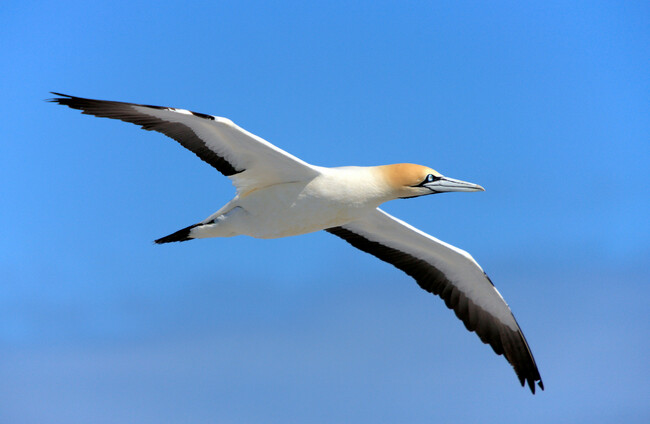
AN UPTICK IN cases of avian flu in wild Irish sea birds is prompting experts to call on the government to ensure that carcasses are disposed of quickly and carefully to prevent the disease from spreading to other animals.
Reports of Avian Influenza A (H5N1), a contagious virus also known as bird flu, have increased in recent weeks, particularly among gannets – a large, white bird known as Ireland’s largest breeding sea bird.
Usually found near the sea, some of the deceased birds have been spotted on beaches, but others have been discovered further inland.
BirdWatch Ireland and Social Democrats biodiversity spokesperson TD Jennifer Whitmore have both raised concerns about gaps in how the carcasses are handled.
The Department of Agriculture says that 60 cases of avian flu have been identified in wild sea birds at a number of locations across the country – though this could be higher given that not all deceased birds are notified to the department.
Speaking to The Journal, BirdWatch Head of Communications Niall Hatch said that the organisation has received a “very high volume of phone calls” about the presence of dead and dying seabirds.
“Some of those seabirds are actually being found some distance inland, which is also extremely unusual. Something is disorienting them to cause them to come inland,” Hatch said.
He said the conservation group is concerned that the Department of Agriculture has overly focused on the protection of kept poultry in its response to the flu cases, as opposed to the impact on wild birds.
In a statement, the department said that keepers of poultry and captive birds should implement “stringent” biosecurity measures to limit the risk of the disease spreading.
It also advised keepers and pet owners to be familiar with the signs of avian flu and to closely monitor their birds. Any suspected cases should be reported to the local Regional Veterinary Office.
If someone finds a deceased bird, the advice from the Department of Agriculture is:
“The Department of Agriculture, Food and the Marine carries out year round avian influenza surveillance sampling in poultry and wild birds in order to inform its risk assessment of the threat posed to poultry and captive birds,” the department said.
“In areas where Highly Pathogenic Avian Influenza has already been confirmed in wild birds, it may not be necessary to collect further birds for sampling as this may not further inform the epidemiological situation. Where dead wild birds are not required for surveillance purposes, responsibility for the collection/disposal of dead birds rests with the landowner.
“Any potential issues in relation to public health or the enjoyment of local amenities posed by the presence of dead wild birds in publicly owned areas, such as beaches, are for the local authorities in conjunction with public health colleagues in the Health Protection Surveillance Centre (HPSC) and the Health Service Executive (HSE).
“If you find a sick or dying wild bird, these can be reported to the relevant local authority in the case of publicly owned lands or the landowner in the case of privately owned lands. Where dead birds are on public land, it is the responsibility of the local authority to safely dispose of the carcasses.”
As autumn slips in, the migration of waterfowl to Ireland puts birds such as swans, geese and ducks at risk of bird flu, Hatch said.
“It could spread to their populations very rapidly and absolutely decimate them, which would be terrible.
“Ireland has a moral and legal obligation to protect those flocks of wild birds.”
BirdWatch is calling for the establishment of a dedicated taskforce focused on responding to the flu cases. One area in particular that needs attention is the handling of the birds’ carcasses.
“If the carcasses are lying on beaches and so on, what happens is that many other animals will naturally scavenge on that, so you have the crows and gulls but also foxes and rats will be feeding on those and dragging them away and could spread the infection,” Hatch said.
Similarly, Social Democrats biodiversity spokesperson Jennifer Whitmore said that the carcasses should be dealt with quickly to avoid the spread of infection and distress to members of the public who encounter them.
She has written to Minister for Agriculture Charlie McConalogue and Minister of State for Heritage Malcolm Noonan to call on the ministers to prioritise action on the issue.
Whitmore said there needs to be a “national, coordinated effort in relation to the safe collection and disposal of these birds”.
The Wicklow-based TD said that the local county council is starting to collect birds found on public land but that less clear assistance is available in cases were birds are found on private land, such as in a garden.
“On all our local forums, in Wicklow, there have been people putting pictures up and putting reports up. There have been reports of dogs being seen rolling around near the carcasses and there is a risk of this being spread to pets,” she said.
“We need people to just be so careful not to go near them and don’t let their dogs near them, just on the off-chance. I don’t think it’s very likely but it does happen, so you’d want to prevent that.
“That’s why it’s so important to get rid of them and get rid of them quickly.”

To embed this post, copy the code below on your site















have your say