Sign in. It’s quick, free and it’s up to you.
An account is an optional way to support the work we do. Find out more.
Sign in. It’s quick, free and it’s up to you.
An account is an optional way to support the work we do. Find out more.

THE GOVERNMENT’S BUDGET announcement today prompted a series of claims from opposition TDs about what it did – or didn’t – do.
From accusations of broken promises to leaving people worse off than before, here are three of them
In one announcement today, finance minister Simon Harris said the carbon tax rate would be cut from €63.50 to €48.50 per tonne of CO2.
Harris also confirmed that scheduled carbon tax increases will not go ahead for the remainder of the government’s term, marking a significant reversal of the long-standing policy of annual rises.
It was planned that the rate of carbon tax would be raised to €78.50 per tonne by May 2027.
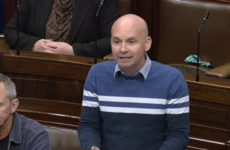
Aontú leader Peadar Tóibín criticised the budget as disappointing – but particularly singled out the government’s announcement about carbon tax on home heating oil.
“We were promised carbon tax would be deleted on Home Heating oil,” he posted on X, lamenting that the measure would “only be reduced by 25%”.
Flat budget delivery. We were promised carbon tax would be deleted on Home Heating oil. Twill only be reduced by 25%. Nothing on fuel for: people who have to drive to work. farmers producing of food. people who transport goods & people. on highest electricity prices in Europe.
— Peadar Tóibín TD (@Toibin1) October 6, 2026
He later repeated the claim on the floor of the Dáil.
But the government never promised that it would “delete” carbon tax on home heating oil.
There had been some indication that the government was considering a temporary pause on the tax, but Tánaiste Simon Harris also previously responded to speculation by saying that the issue of carbon tax had yet to be decided.
Tóibín also claimed that the government has done nothing for car commuters, logistics workers or farmers.
However, the government announced that the temporary reduced fuel excise rates currently in place will be extended until the end of February. They were due to lapse at the end of October.
We asked Tóibín for clarity on his claim, but he has not responded to The Journal’s inquiries at the time of writing.
People Before Profit TD Paul Murphy was also among those to criticise the budget in the aftermath of today’s announcement.
He hit out at a tax exemption on granny flats that are rented out for up to €16,000 annually, which is available to landlords under the Rent-a-Room scheme.
“If you have a shedsit, it’s now called a ‘Designated Auxiliary Dwelling’ and you don’t have to pay any taxes on it!” he wrote on X.
A tenner a week for ordinary people in #Budget27 while corporations get €186 million in Capital Gains Tax reductions, €120 million in R&D tax credits. And if you have a shedsit, it's now called a "Designated Auxiliary Dwelling" and you don't have to pay any taxes on it!
— Paul Murphy 🇵🇸 (@paulmurphy_TD) October 6, 2026
The term “shedsit” refers to structures such as garden cabins which are built on the grounds of a residential property, but are separate from a person’s main house.
The Government today announced new tax rules on accommodation built next to people’s homes.
“One of our successful incentives to add supply is the Rent a Room scheme and we are building on that in this Budget by increasing the tax-free threshold a homeowner can earn from €14,000 to €16,000,” Harris told the Dáil.
“This is aimed at incentivising more people to rent out more rooms within their homes.”
He said the Rent a Room Income tax relief would be extended to include newly installed granny flats that are between 32 and 45 square metres in area.
It means that landlords can now earn €16,000 for renting out granny flats before they have to pay tax. But they will have to pay tax on income above this.
In response to The Journal’s queries, Murphy accepted that landlords who charge more than €16,000 would need to pay taxes on that excess.
“I presume most will be tax-exempt entirely,” Murphy wrote. “Others will pay tax on a small proportion of the income.”
Immediately after the two ministers spoke, Sinn Féin leader Pearse Doherty accused the government of “spin” on the floor of the Dáil when it came to home heating oil.
He said that families relying on the Fuel Allowance would be worse off next year, despite the government highlighting an increase in the payment.
“Do you know what that means for a family out there? Even with this €5 increase, they’re going to be €12 worse off,” Doherty said.
He explained that the Government had shortened the Fuel Allowance season by four weeks, and pretended that it was bailing people out by increasing the payment by €5.
Are people actually going to be worse off?
The standard Fuel Allowance season runs for 28 weeks, from September to April, during which extra payments are made to eligible recipients.
These include many people aged 66 or over, as well as people who qualify for certain types of welfare, such as Jobseeker’s Allowance.
In March, the government announced that the fuel allowance season for 2026 would be extended by four weeks in response to the energy crisis as a result of the war in Iran, meaning recipient families would receive extra financial support.
However, the government did warn that that measure, as well as reduced rates of tax on motor fuels announced that day, would be temporary.
Rather than reducing the fuel support season, the government has let an extension to the fuel allowance season lapse back to the standard length.
“Pearse in the Dáil said that people relying on the Fuel Allowance would be worse off as a result of this winter compared to last winter,” a spokesperson for Sinn Féin told The Journal.
Doherty is correct that people will receive €12 less this year than last year.
Over 28 weeks, the new allowance of €43 per week will give people a total of €1,204; that compares to €1,216 they received over 32 weeks this year (which includes the four-week extension).
“He said this budget should be judged on whether it made people better off,” the email from Sinn Féin read. “The reality is vulnerable households relying on the fuel allowance will be worse off.”
“Most people see this as a cynical move to present a cut as new funding.”
However, while people will technically receive less over the coming Fuel Allowance season, the claim omits the fact that the government will not be repeating a once-off extension from this year.
The Journal’s FactCheck is a signatory to the International Fact-Checking Network’s Code of Principles. You can read it here. For information on how FactCheck works, what the verdicts mean, and how you can take part, check out our Reader’s Guide here. You can read about the team of editors and reporters who work on the factchecks here.

To embed this post, copy the code below on your site















have your say