Sign in. It’s quick, free and it’s up to you.
An account is an optional way to support the work we do. Find out more.
Sign in. It’s quick, free and it’s up to you.
An account is an optional way to support the work we do. Find out more.
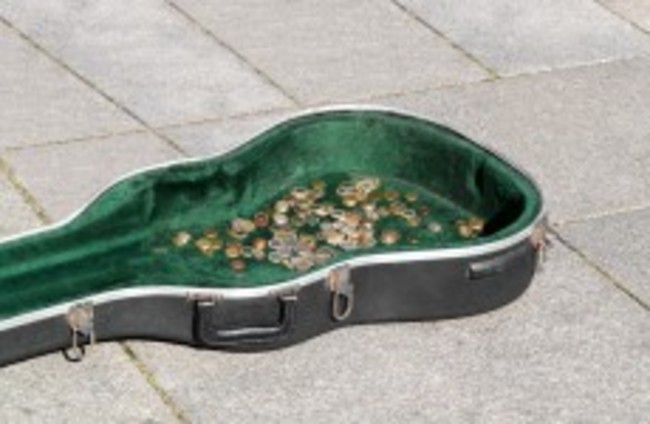
PROPOSED CHANGES TO Dublin’s bye-laws would see gardaí with the power to arrest ‘bad’ buskers if they flout the law.
Under the control of street performers revised draft bye-laws, if a garda is of the opinion that a person or persons is committing or has committed an offence under the bye-laws, they may arrest that person without warrant.
On Wednesday 29 January the Arts, Culture, Leisure and Community Strategic Policy Committee will meet at Dublin’s city hall to discuss the changes to the control of street performers bye laws for 2014.
Art form
In the report on the draft control of street performers bye-laws for the strategic policy committee, it is noted that “street performance is a time honoured art form in Dublin City Centre which enhances the character of the city and adds to its attractiveness and colour”.
But it notes that “in recent years an increase in the number [of] complaints” have given rise to a call for this art form “to be regulated at least to some degree”.
The recommended bye-law changes include:
Under the proposed bye-law amendments, if a garda is of the opinion that a person or persons is committing or has committed an offence under the bye-laws, they can confiscate any equipment used in the committing of the offence.
If they demand the person’s name and address, and if they are given false or misleading information, the culprit can be fined up to €1,900.
In 2013, members of the public made 21 submissions during a two-month public consultation period on the bye-laws.
No submissions opposed the bye-laws; 19 supported the bye laws, with 17 of these requesting more stringent regulation; two neither supported nor opposed them.
One submission described a ban on drums as “discriminatory”, while a band submitted in their suggestion that an “outright ban on drums should be modified”.
A number of submissions favoured reduced amplification.
An Garda Siochána submitted a detailed submission, and the council considered it “particularly necessary to address the issues raised” in this.

To embed this post, copy the code below on your site














have your say