Sign in. It’s quick, free and it’s up to you.
An account is an optional way to support the work we do. Find out more.
Sign in. It’s quick, free and it’s up to you.
An account is an optional way to support the work we do. Find out more.
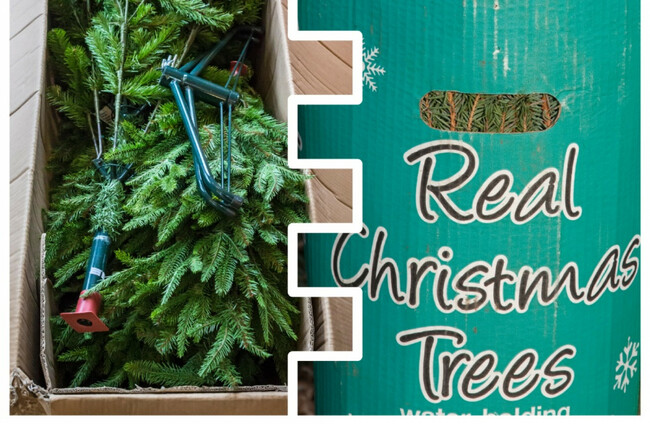
FOR THOSE WISHING to have a more environmentally friendly Christmas, the question of which tree to have in their living room is quite a big one.
When it comes to a real tree versus a fake one, the answer can be slightly nuanced.
When comparing a freshly-cut tree to their artificial alternative, the fake tree can be better over the long run.
A 6.5 foot artificial tree has a carbon footprint equivalent to about 40kg of greenhouse gas emissions.
Real Christmas trees have an average carbon footprint of 3.5kg of greenhouse gas emissions if disposed of through methods such as recycling by wood chipping.
But if they are left to decompose in landfills, their carbon footprint rises to 16kg of greenhouse gas emissions.
That’s because the tree then produces methane gas – which is 25 times more potent as a greenhouse gas than CO2.
However, the most recent figures show that as of 2022, just 14% of municipal waste was landfilled in Ireland.
Some studies note that if an artificial tree is used for at least seven to ten years, it is better for the environment than getting a freshly cut tree every year.
For Samantha Fahy, the sustainability manager at Dublin City University (DCU), the use of plastic in artificial trees means she steers clear of that option.
“All artificial trees have the same issue – plastic,” Fahy told The Journal.
While Fahy noted that an artificial tree could be better in the long run as opposed to getting a new real tree each year, she warned against the “risks of continued extraction of fossil fuels” and that this is more “impactful” on the environment.
“Artificial trees are made from plastic, a derivative of oil, and their continued use supports the continued demands for oil extraction.
“As we try to reduce oil extraction, there are many far better uses for this resource than artificial trees.”
She added that the best science available identifies reductions – eventually to zero – in our use of fossil fuels as “fundamental to a sustainable future”.
Fahy also cautioned that the “convenience of artificial trees promotes the ‘perfect’ image that supports the focus on convenient and materialistic click bait culture” (Tesco in the UK is giving away hundreds of wonky Christmas trees this year to encourage customers to celebrate the ‘imperfect side of the festive season’).
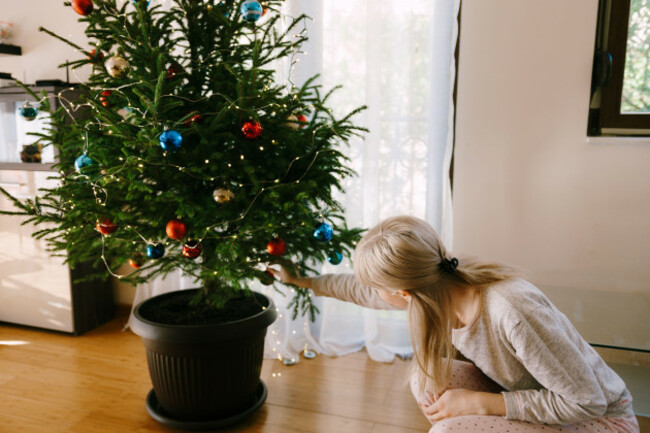
While most debates focus on freshly cut versus fake trees, Fahy proposed a third way: a tree in a pot.
Pot-grown trees – which can be planted in the garden, brought inside for Christmas, and then re-potted and used again year after year – are rising in popularity.
“Our sustainable future is going to have to be less materially consumptive,” said Fahy.
“Perhaps people need to move to a tree in a pot that can then be planted outside when it gets too big to come inside for Christmas, and then you start again.
“Wouldn’t it be great if the huge excessive consumption of the Christmas period could be offset just a little by planting more trees.”

To embed this post, copy the code below on your site











have your say