Sign in. It’s quick, free and it’s up to you.
An account is an optional way to support the work we do. Find out more.
Sign in. It’s quick, free and it’s up to you.
An account is an optional way to support the work we do. Find out more.
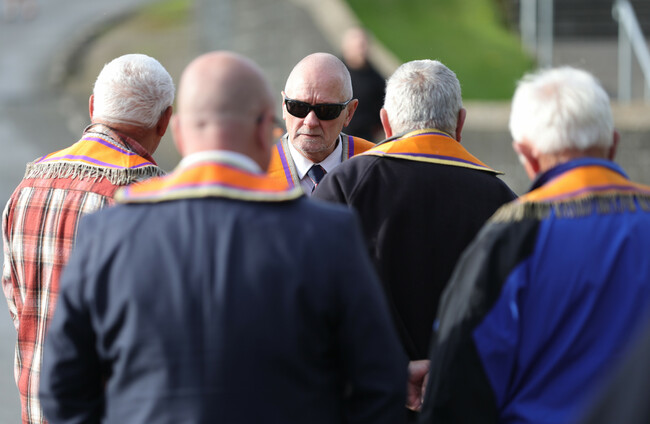

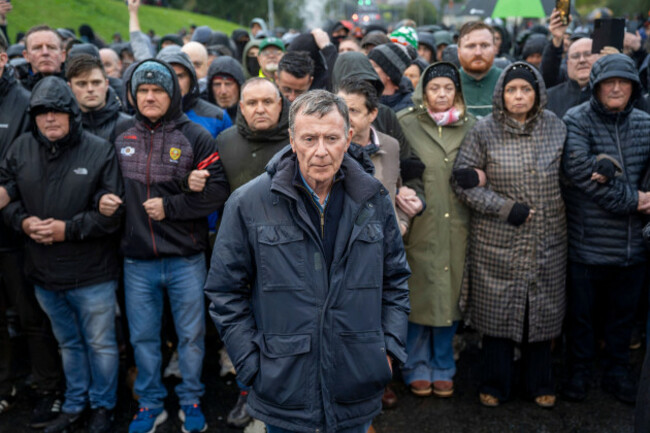
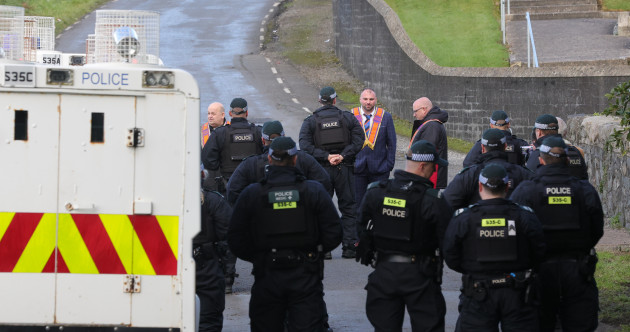
PEOPLE REMAIN ON both sides of the Drumcree Road this morning, with members of the Orange Order at Drumcree Church and nationalist protesters on the Garvaghy Road.
Intensive talks to resolve the dispute took place yesterday and will continue today, but at the moment, there appears to be little room for compromise.
Garvaghy Road residents were yesterday informed during a meeting held by Breandán Mac Cionnaith that an international mediator is being sought.
He said the mediator could not be someone from Britain or Ireland, and that the international mediator should have no connections to the British or Irish governments.
Speaking to media after the meeting with Garvaghy Road residents, Mac Cionnaith was asked when mediation could begin.
“It’s like asking how long a piece of string is,” was his response.
He added: “There’s a process that has to be gone through with both ourselves and the Orange Order that leads to the selection of the mediator.
“How long is that going to take? That could take a couple of weeks, could take a couple of months.”
When asked if residents would remain on the road overnight, Mac Cionnaith said: “Let’s just see how it develops.”
In the end, hundreds remained overnight and some remain this morning, with three marquees in place to shelter those standing on the footpaths.
I’m headed for home but this is the scene as I leave at 7pm, with more coming from every direction it seems. @thejournal_ie pic.twitter.com/E2wapuXl83
— Diarmuid Pepper (@Diarmuid_9) September 28, 2026
So with a seeming stalemate, how can this dispute be resolved?
The Journal yesterday asked Jamie Bryson if there was any room for compromise.
He described himself to The Journal as the legal adviser to the Portadown District Orange Lodge, which is seeking to march down the Garvaghy Road.
Bryson runs a paralegal service called JWB Consultancy, and is often referred to as a loyalist activist, having gained traction during Brexit negotiations in the North.
Speaking outside Drumcree Church, Bryson said that “this is not an issue that needs to be resolved”.
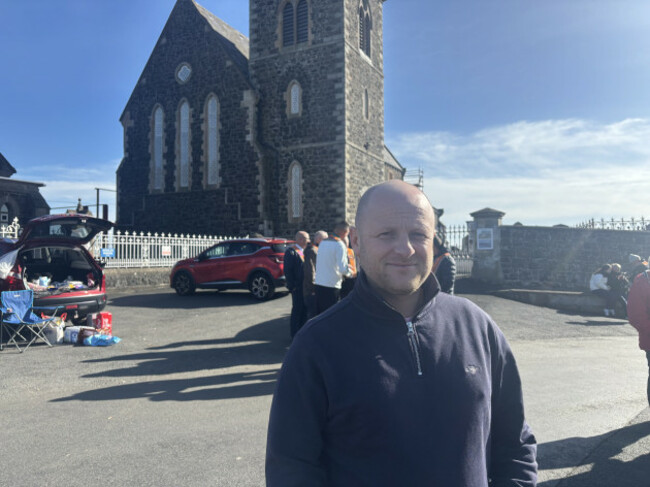
Bryson was referring to the fact that the High Court in Belfast quashed a decision by the Parades Commission to refuse permission for the Orange Order to complete its 1998 walk along Garvaghy Road.
While the High Court did not take a stance on whether the Orange Order had a right to march down Garvaghy Road, this decision opened the door to submit a new application.
Since 1998, the Orange Order has applied almost every Sunday to march down the Garvaghy Road, lodging over 1,300 submissions to the Parades Commission.
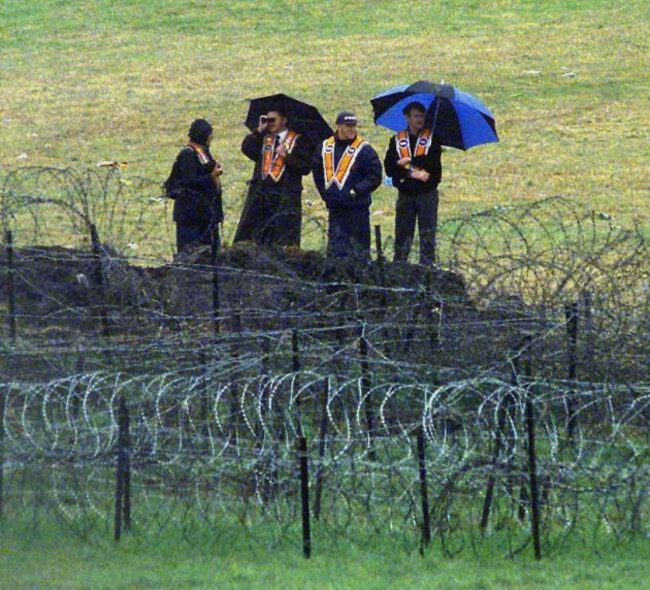
But a new application for a much-reduced parade on Sunday 27 September was accepted by the Parades Commission.
Having sought advice from the PSNI in relation to the policing of the march, the Parades Commission granted permission for it under a number of restrictions, including an 8am start time and limiting the number of participants to 35 people.
In addition, no supporters were to accompany the parade or congregate along the parade route, and no bands were allowed to participate.
It had been thought that once the clock struck midnight on Sunday night, a new application would need to be submitted by the Orange Order.
However, it’s now understood that this is not the case and the Parades Commission’s determination remains live in the interim.
“What you have here is the law and unlawful activity,” added Bryson.
“They are not two things to be weighed equally in the balance, there can only be one winner.
“The law has resolved this issue. The Portadown District has a lawful determination the law must be applied, and if it’s not, then the mob wins.”
For nationalists, meanwhile, they point to the “trauma and wounds” of the Drumcree dispute in the late 90s.
Sinn Féin MP John Finucane spoke to The Journal at the Garvaghy Road on Monday and while he is not from the area, he said that he “felt the tension and fear that Drumcree brought”.
“It brought the murders of 21 individuals,” he added.
The Drumcree parade resulted in violent clashes in the 90s and necessitated a major security operation for several summers, as Garvaghy Road residents rejected the march passing through the community.
A number of people were killed during tensions in the 90s linked to the dispute.
“That is the context in which all of this takes place,” said Finucane.
“We got a resolution that led to 28 years of peace and we now have a very vulgar and brutal attempt to undo all of that.”
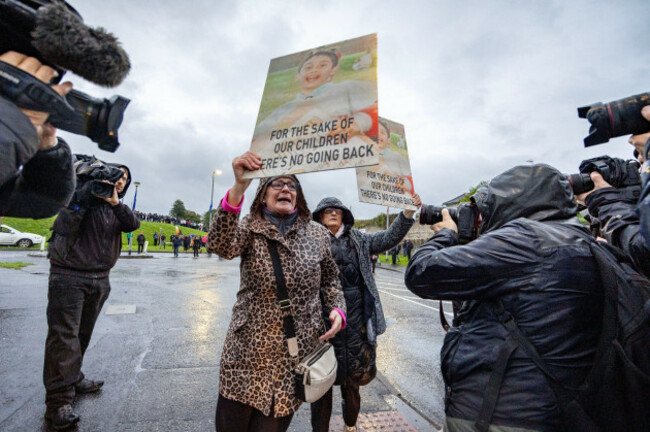
Meanwhile, he said that “nobody is preventing the Orange Order from going to a church service, and nobody is preventing them from returning home”.
“What this community will not accept is an attempt to go back to the days where they will be forced off the road and have a supremacist march to come through, those are the days of old.”
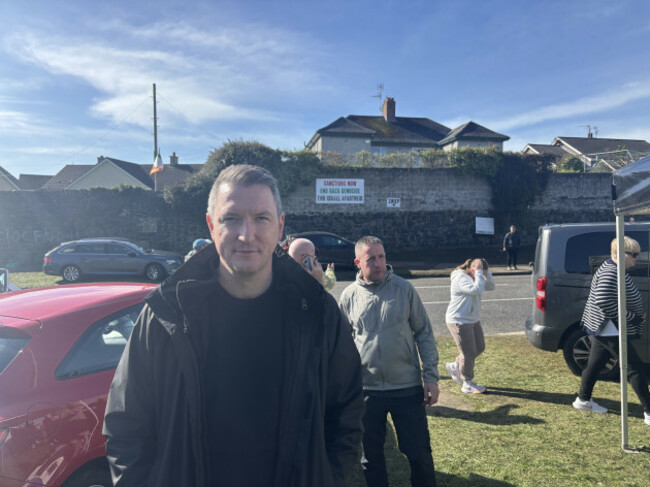
Finucane added that there are now only a “very small handful” of controversial marches and asked why the Orange Order “want to reopen” the Drumcree dispute.
Northern Ireland Secretary Chris Bryant seems to think so, despite the gap between the two sides.
Speaking yesterday, he said that a solution is “tantalisingly just a bit far away”.
He described meetings with the Orange Order, residents of Garvaghy Road, and political parties as “very positive” and added that he was “exploring every option to see whether there’s a solution”.
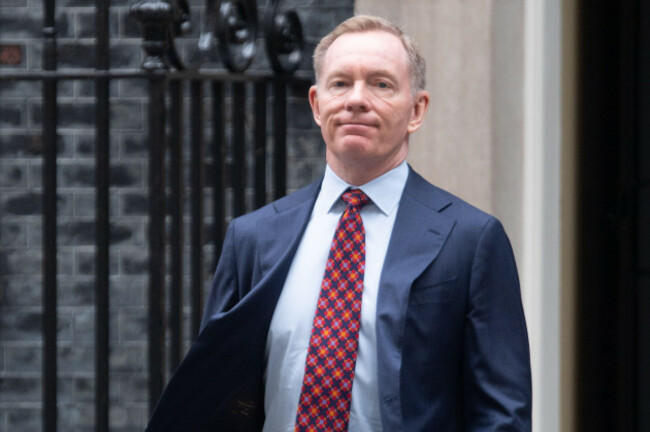
But when asked last night at a Labour conference in Liverpool about the possible solution, he conceded that “it’s not quite clear what that will look like yet”.
“A bit through the mist, I can see maybe what that might look like if I can persuade everybody to sign up,” he added.
Meanwhile, Alliance leader and Northern Ireland minister of justice Naomi Long yesterday questioned “the wisdom of picking at this scab and unleashing this pain”.
However, Long said she “cannot say for sure that there is a resolution”.
Speaking to The Journal, Bryson said there are two options.
“Either the Orange Order march down the Garvaghy Road, or the Stormont Executive comes down.”
DUP MLA Carla Lockhart has also warned of “profound consequences” should the Orange Order not march down the Garvaghy Road.
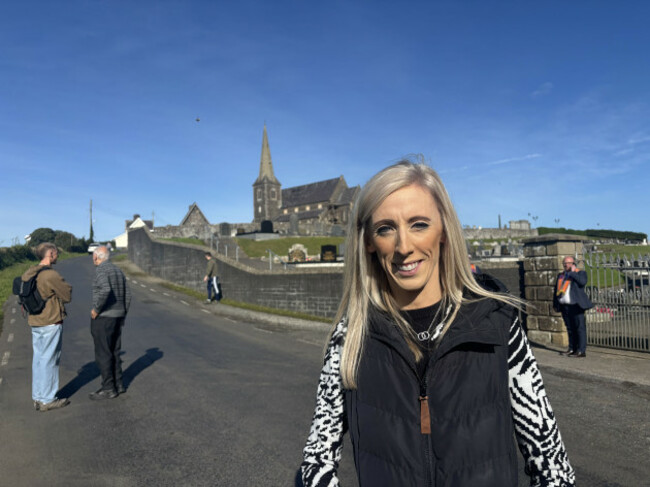
The TUV meanwhile has called on DUP deputy first minister Emma Little-Pengelly to quit her role at Stormont, which would collapse the institution.
But while Stormont creaks on for the moment, everything else in the Executive is taking a back seat to this dispute.
For example, DUP leader Gavin Robinson has pulled out of a Stormont committee today that would have, ironically, discussed reforming institutions in the North.
Robinson on Monday said there can be “no business as usual” at Stormont while the Drumcree dispute remains a live issue.
Meanwhile, photo opportunities that had been planned before the renewed Drumcree dispute between the first and deputy first minister, Sinn Féin’s Michelle O’Neill and Little-Pengelly, have been put on ice.
Stormont has yet to agree a budget and ministers were given a final warning to decide on its funding future by this Thursday – that deadline will presumably be postponed indefinitely too while there is a stalemate over Drumcree.
One saving grace is that things have not turned violent, and both sides have remained peaceful, with little sign so far of any violence on the horizon.
The PSNI on Monday welcomed the fact that there has been no violence or disorder on the Garvaghy Road so far.

To embed this post, copy the code below on your site










have your say