Sign in. It’s quick, free and it’s up to you.
An account is an optional way to support the work we do. Find out more.
Sign in. It’s quick, free and it’s up to you.
An account is an optional way to support the work we do. Find out more.
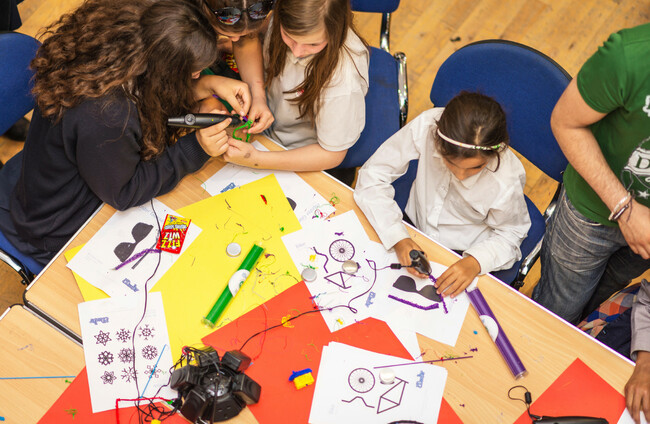
CHILDREN FROM HIGH-INCOME families are more likely to attend afterschool clubs and centres than those from low-income families – and the gap is widening, according to the Economic and Social Research Institute (ESRI).
Alongside the Department for Children, the government think tank looked at patterns of afterschool for children aged nine and 13 over a 10-year period and found that children from less affluent families are more likely to be cared for by relatives.
Over the decade observed, the cost of afterschool care for parents has increased at a rate higher than inflation, particularly for those using childminders and afterschool clubs or centres.
The report also suggests that the type of care impacts a child’s outcomes. Kids in afterschool care are more likely to play sports, take part in cultural activities and have a better vocabulary than those in less formal care settings.
The research found that less than 30% of nine-year-olds were in any form of non-parental care during term time across the ten-year period.
Care by relatives is the most common form of non-parental care, followed by childminding. Less than 5% of 9-year-olds were in afterschool centres or clubs.
The research said whether a mother is employed is the strongest predictor of use of afterschool centres, while childminders are more commonly used by those with the longest work hours.
The use of afterschool centres is more prevalent in urban areas and the use of childminders more common in rural areas.
Care from childminders or centres is associated with greater involvement in sports at age nine, while those being looked after by relatives or siblings read less for pleasure and are less likely to take part in cultural activities such as music lessons.
Nine-year-olds in childminder or afterschool centres or clubs spent less time watching TV or being online. Among 13-year-olds, this difference was smaller because almost all owned a mobile phone.
At age 13, those cared for by relatives tend to have fewer friends and close friendships than their peers. This may be because being cared for in a different location constrained access to local peer networks.
Those in afterschool clubs or centres or with childminders were more likely to be involved in sports clubs. The small group of 13-year-olds who looked after themselves or were cared for by siblings were less involved in cultural activities and read less.
13-year-olds born in 1998 who were cared for by a childminder at age 9 tend to have higher reading and mathematics test scores. Additionally, those attending afterschool clubs or centres at age 13 show higher reading scores.
For children born in 2008, vocabulary test scores at age 13 are lower among those being looked after by relatives. However, any differences found are small and afterschool care-type is much less of an influence than family or school factors.
Children who attended afterschool clubs at age 9 show slightly more conduct or hyperactivity issues at age 13, but care type explains less than 1% of these differences
The ESRI said afterschool services have the potential to enhance children’s development, both cognitive and socio-emotional skills, in an interactive and play- or activity-based setting.
But it added that the higher levels of hyperactivity issues in group-based settings are concerning and suggest providers should focus more on developing children’s interpersonal and coping skills.
The report said the quality of care is also likely a key factor influencing children’s experiences and outcomes.
Helen Russell, one of the co-authors of the report, said: “The study findings have important implications for policy development.”
“Evidence of rising costs over time suggests that choice of afterschool care is constrained by income, with relative care remaining an important support for less advantaged groups.
“The largely privatised nature of the system has led to geographical variation in provision, with childminders playing a more important role in rural areas.”

To embed this post, copy the code below on your site















have your say