Sign in. It’s quick, free and it’s up to you.
An account is an optional way to support the work we do. Find out more.
Sign in. It’s quick, free and it’s up to you.
An account is an optional way to support the work we do. Find out more.
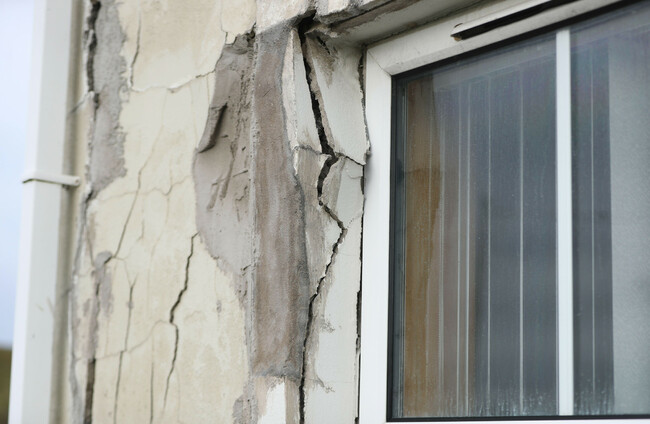
A EUROPEAN PARLIAMENT committee has said it is “imperative” that the mica redress scheme be “improved” and has called for the “red tape” involved to be reduced.
From 30 October to 1 November, a European Parliament delegation undertook a fact-finding visit to Donegal on the use of defective mica blocks in construction.
The draft report arising from this visit has made six recommendations to the government’s mica redress scheme, including the need to speed up progress and to reduce red tape.
The mica scandal first made headlines in 2021 when homeowners saw concrete blocks used to build their homes and were beginning to crumble.
The blocks were made with a natural mineral named muscovite mica – the presence of mica absorbs moisture, weakens the concrete and causes the homes to crack and crumble.
The government introduced a scheme in November 2021 to support affected homeowners to remediate their dwelling and this scheme was enhanced last summer.
The Enhanced Defective Blocks Scheme allows affected homeowners in counties Clare, Donegal, Limerick, and Mayo to apply for a maximum grant of €420,000.
The five remedial options of the scheme range from an entire demolition of the home and a reconstruction in the same position, to demolishing and rebuilding the outer leaf of affected walls only and re-rendering them.
However, following last year’s fact-finding mission to Donegal the European Parliament has made six recommendations for the Enhanced Defective Blocks Scheme.
While the draft report praised Ireland’s mica redress scheme for its “very ambitious and comprehensive plan”, it added that it is “imperative that the scheme be improved”.
The European Parliament said the scheme should be improved by “addressing the concerns expressed by homeowners, widening its scope, reducing red tape, speeding up the progress of the process and involving financial institutions”.
It also called for the scheme to “show more flexibility and take better account of the financial burden of all the costs, such as the cost for new foundations, provisional accommodation and rental costs”.
The draft report said arrangement should be in place for homeowners not in a position to advance some of the costs.
Elsewhere, the draft report said there is a “need for a clearer picture when it comes to identifying and holding accountable the persons and entities responsible for this situation”.
The report said this includes ensuring there is a “thorough and transparent public enquiry”, as well as “effective and timely legal proceedings, when appropriate”.
Meanwhile, the draft report from the European Parliament also notes that “large scale and complexity of the use of the defective building blocks” in Ireland and remarked that “its severe health, financial and social consequences amounts to an ongoing housing crisis which should be urgently tackled”.
The document also highlights the need to “ensure that this situation will never occur again, not only in Ireland but also in any EU Member State”.
It also called for the market surveillance system in Ireland to be “enhanced” and for it to adopt a “stance that is proactive and persuasive, rather than reactive”.
MEP Luke “Ming” Flanagan said the report “pulls no punches” and “couldn’t be clearer”.
“The state has let people down in a manner which is totally unacceptable,” said Flanagan.
“The government don’t however need to wait until the European Parliament committee has finalised this report.
“They can act now and do what they should have done a long time ago.”

To embed this post, copy the code below on your site














have your say