Sign in. It’s quick, free and it’s up to you.
An account is an optional way to support the work we do. Find out more.
Sign in. It’s quick, free and it’s up to you.
An account is an optional way to support the work we do. Find out more.
THE JURY HAS begun deliberating in the trial of a former sports coach who is accused of sexually abusing four girls in the 1970s and 1980s.
The man (70s), who cannot be named due to the nature of the charges, was originally charged with 78 counts of indecent assault and one count of attempted rape.
He pleaded guilty to five counts of indecent assault, and not guilty to the remaining 74 counts.
The offences are alleged to have occurred on dates between 1971 and 1981 at a number of locations within the state, when the four complainants were aged between eight and 15.
It is the state’s case that the abuse took the form of kissing, inappropriate touching, digital penetration, forced oral sex and, in relation to one complainant, attempted rape.
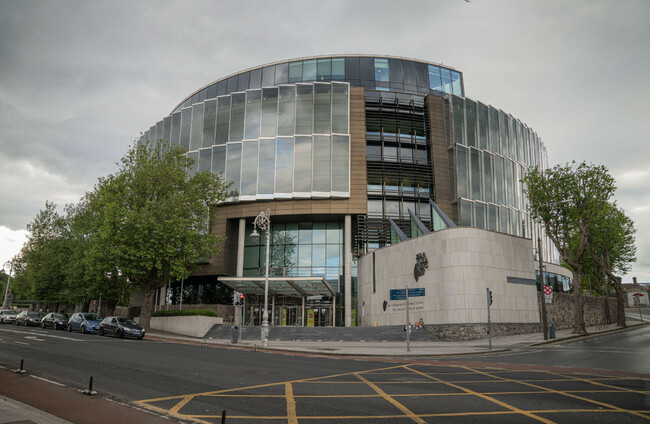
At the Central Criminal Court today, Mr Justice Mícheál O’Higgins directed the jury to return not guilty verdicts in relation to 33 counts of indecent assault relating to two complainants.
It came after legal submissions were made, with counsel concluding that the evidence given during the trial did not support them. Some 41 counts remain.
The man initially faced 29 counts of indecent assaulting the first complainant on dates between 1975 and 1977. The jury has been directed to return not guilty verdicts on 16 of these counts.
The five indecent assault counts the man pleaded guilty to relate to this complainant.
The man has pleaded not guilty to two counts of indecently assaulting the second complainant on dates between 1975 and 1977.
In relation to the third complainant, the man denied 41 counts of indecent assault and one count of attempted rape on dates between 1971 and 1975. The jury has been directed to return not guilty verdicts on 17 of the indecent assault counts.
The man has pleaded not guilty to one count of indecently assaulting the fourth complainant on a date between 1980 and 1981.
Counsel for the prosecution and the defence delivered their closing speeches to the jury of six men and six women this afternoon.
James Dwyer SC, for the prosecution, told the jury that the accused had pleaded guilty to five counts of “the disgusting crime of child abuse”. But he said this did not mean he had committed the other alleged offences to which he had pleaded not guilty.
He said the four complainants had made the allegations independently of one another and that there was no suggestion of collusion on their part.
“If you are satisfied that each of these witnesses is truthful and that their evidence is independent, you are allowed to take into account the unlikelihood that these four women would make similar allegations like these.”
He noted commonalities in their accounts, such as all of them being young girls and the accused being their sports coach when the alleged abuse occurred. “You can have regard to that, that’s a matter for you. You’re the judges of fact and no one else.”
Dwyer told the jury that in relation to any inconsistencies in the evidence, human memory “is not a computer hard drive and our eyes are not CCTV cameras”. He said memory fades over time and that if there were no inconsistencies at all, “you might be worried that something is a little bit too correct”.
Recalling the evidence given by the four complainants to the trial, he said the defence seemed to suggest it was improbable that the accused “would be so brazen” as to go upstairs to the first complainant’s bedroom when she was a child to abuse her while her parents were downstairs.
But, he said, “brazen” was the accused’s “M.O.” in 1970s Ireland when he was “a powerful figure” and child sexual abuse “was something hidden and not spoken about”.
He recalled the accused telling gardaí after he was charged that the complainant was “never in my home”, telling the jury: “If that’s the case, how did she know where he lived? How does a teenage girl know the exact address of her sports coach if she’d never been in the house? The answer is she was in the house repeatedly.”
He referred to the second complainant telling the court that she felt ashamed after the accused allegedly put his hand inside her clothes, asking: “Are they the words of somebody who’s made a false allegation? That’s a matter for you.”
In relation to the third complainant, Dwyer said the accused started off low by “teaching her how to kiss” before gradually moving on to putting his hand under her clothes, to eventually attempting to rape her. He said the attempted rape was “the culmination” of years of abuse from the accused.
Dwyer said the prosecution was submitting that each of the four complainants gave “credible evidence of abuse at the hands” of the accused.
He asked them to consider the likelihood that four women would give independent accounts that a “predatory abuser” would assault them, and said he believed they could be satisfied that the accused “is guilty of all of the counts before you beyond reasonable doubt”.
Patrick Gageby SC, for the accused, told the jury that most of the offences are about 50 years in the past and that they had “given an oath or affirmation to return a true verdict in accordance with the evidence”.
He said that abuse by a person in authority of children is a criminal offence and “revolting” and that no part of what the defence was saying was to excuse any misconduct at all.
Gageby recalled the evidence of the third complainant where she alleged that she was assaulted by the accused at a number of locations while in his car after accepting a lift from him, and pointing out these locations on a map during cross-examination.
“For some unknown reason, the authorities in this case have decided not to provide any photographic evidence,” he said, calling it “inexplicable” and “a curious lack of curiosity in the investigation team”.
Referring to one of the locations, he asked the jury: “Wouldn’t you like to know, roughly, what it looks like now?”.
Gageby said it does not seem that she ever refused a lift from the accused, referencing an “old Irish phrase” that “a burnt child remembers the fire”.
Referring to her evidence that the man had continued to abuse her by putting her head on his penis, he said: “That is so substantially different from kissing or hugging. Who would take a lift after that? Because on any metric, that’s pretty disgusting stuff. Who would ever take a lift after that?”.
He suggested that there is “clear” evidence that the third complainant had “evolving memories” referring to differences between some of her evidence during the trial and her statement to gardaí in relation to the allegation of attempted rape.
Gageby noted that the accused has pleaded guilty to five counts of indecently assaulting the first complainant. He said the “timing or length of the abuse” of the first complainant “is a matter of some importance to you, because although he has pleaded guilty to some, he has not pleaded guilty to all”.
He submitted that it could be said that the accused has “admitted to molesting” one of the four complainants and “that tells all, that’s good enough, he’s that kind of fellow”.
“But that’s not the trial as the judge will explain to you. Each count is a separate trial and I’m asking you to consider all of those.”
He referenced a television ad for the ESB in which a person asks ‘is it safe?’ before stating: “It’s quite a good ad because that’s the real question here. Is it safe, knowing what you know, and the only suggestion I’ll make to you is that it isn’t safe to convict.”
In his charge to the jury, Mr Justice Mícheál O’Higgins told the six men and six women that each of them was a judge of the court “just as I am”.
“I am a judge of law, you are judges of facts. You’re not to be intimidated by that,” he said, adding that the role of jurors had been performed by members of the public for over 100 years and that it was a good and robust system.
The judge said they were armed with their own common sense, personal shrewdness and sense of personal judgement when it came to the matters at hand. He said they had to weigh up the evidence and decide what was true, and that their task was “to coldly and dispassionately assess the evidence in this case”.
He reaffirmed that the accused enjoys the presumption of innocence and that the burden of proof was on the prosecution. He said the jury must be satisfied beyond a reasonable doubt that the accused committed an offence in order to convict him.
“If you have a reasonable doubt, you must return a verdict of not guilty.”
Mr Justice O’Higgins said that at this point in time, the 12 jurors must return a unanimous verdict.
The jury deliberated just over an hour before being sent home. They were asked to return tomorrow afternoon.

To embed this post, copy the code below on your site













have your say