Sign in. It’s quick, free and it’s up to you.
An account is an optional way to support the work we do. Find out more.
Sign in. It’s quick, free and it’s up to you.
An account is an optional way to support the work we do. Find out more.
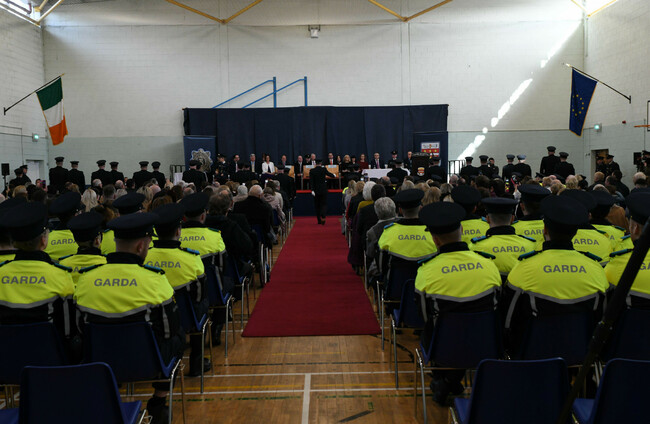
THE GARDA REPRESENTATIVE Association has called for a review into An Garda Síochána’s uniform and dress code after three trainees were sent home from the Garda College in Templemore for having tattoos.
In a statement to The Journal, a garda spokesperson confirmed that a “number of Garda recruits have had their positions deferred pending their compliance with the Uniform and Dress Code within An Garda Síochána”.
“An Garda Síochána Uniform and Dress Code is published on the Garda website and details provided in the Recruitment Candidate Information Booklet,” added the spokesperson.
The uniform and dress code states that “tattoos on the face, or visible above the collar, are not permitted”.
It adds: “All other tattoos will be covered at all times while on duty, whether in uniform or plain clothes.”
The three trainees that were sent home from the Co Tipperary Garda College were part of 175 recruits that had arrived for induction two weeks ago.
Brendan O’Connor, president of the Garda Representative Association, told RTÉ’s Today with Claire Byrne that the move is an “ultra-conservative view of something that is very much the norm”.
The three recruits have reportedly been told to get the tattoos removed if they wish to re-enlist in the Garda College.
“There is a set of guidelines there and whether they adhere to them or not, I’m not exactly sure,” said O’Connor.
However, he added: “We’re talking here, in relation to one case, small and discreet tattoos behind the ear of a star.
“So it certainly can be concealed with makeup, if it is the case that it has to be concealed.
“It does seem that perhaps this policy is slightly out of step and is robbing the organisation of three people with the potential to be excellent guards.
“We’re in a recruitment and retention crisis, it’s hard to get people processed through the recruitment and selection procedure.
“We get them into Templemore, and then they have to leave because of something that does seem to be slightly judgmental in its approach.”
“It is going to be difficult I think to reach that 1,000 target but we are not departing from it, certainly not yet,” said Varadkar.
“We’re looking to broaden the scope of our recruits,” said O’Connor, “so why are we shutting off this, it doesn’t really make any sense.
“We’re talking about discreet, non-offensive (tattoos).
“Body art is part of the modern culture and it shouldn’t exclude someone from becoming a guard”.
While O’Connor said policies have to be in place, he called for policies that are “more agile and more reflective of the wider social values of our very modern, tolerant and inclusive society”.
“That’s what should be reflected in An Garda Síochána and not the conservatism of previous generations of police rules and codes of behaviour,” said O’Connor, who also called for a review of the dress and uniform code.
“Times change, values change, so maybe this is a little bit conservative.
“It would seem that at a time when An Garda Síochána is saying we need to reach out beyond where we traditionally have looked for recruits, and we need to be more imaginative and more inclusive and more diverse… that someone who chooses to have something which is a very socially acceptable thing would be excluded from the training programme does seem to raise some questions.”

To embed this post, copy the code below on your site














have your say