Sign in. It’s quick, free and it’s up to you.
An account is an optional way to support the work we do. Find out more.
Sign in. It’s quick, free and it’s up to you.
An account is an optional way to support the work we do. Find out more.
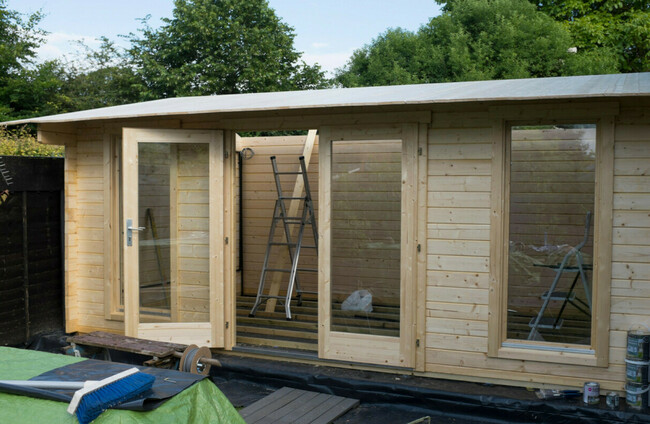
ONE MONTH ON from new rules designed to ease the building of cabins in back gardens, figures show they are set to fly up across Dublin.
Plans for 103 backyard homes have been received by local councils across the country since the new rules took effect on 27 July.
Almost one-in-five of these are planned for south Dublin, with Clare and Tipperary also seeing a high number of the new garden units.
Housing Minister James Browne changed legislation to allow the homes be built without planning permission in its latest bid to combat the housing crisis.
While planning permission is not required, homeowners are still obliged to notify their local council about the plans to build a garden home. These exemptions fall under Class 3A of the Planning and Development Regulations 2001.
It is not known whether the more than a hundred lodged cabins to date are due to be used to house family members of the homeowner, or if they’re set for the rental market.
A controversial element of Browne’s plan has been to allow homeowners to become landlords by renting the garden units on the private market, but without requiring the type of regulation that traditional homes receive.
They also only apply to gardens that still have 25 square metres of space remaining after the cabin is built.
The homes can be rented out under the Rent-A-Room relief scheme, which allows a person to rent a room in their home and avail of tax-free relief up to €14,000.
To stay under that threshold, a landlord could charge a tenant in a shed-cum-home a maximum monthly rate of €1,166 – significantly cheaper than a one-bed apartment in the likes of Dublin, which now cost just over €2,000 per month, according to a Daft report released this week.
The trade-off for someone staying in the garden units is that no rental laws apply to the homes, and they have no recourse to a Residential Tenancies Board.
South Dublin County Council has received the most notifications by far, with 18 in the first month of the new rules. There is also strong interest in north Dublin, where Fingal County Council has been told about seven plans so far.
Clare County Council has received 10 notifications, followed by Tipperary which is to see eight of the cabins built.
Wexford will see seven garden homes, while planners in Kildare and Cork County Councils have both had six modular sheds apiece flagged.
Galway County Council and its counterparts in Wicklow and Waterford have each been notified of five habitable back-yard sheds.
Under the new regulations, modular units between 32 and 45 square metres in size in gardens at the back of people’s homes are now exempted from requiring planning permission.
Among the caveats to the new rules, aside from requiring 25 metres of space remaining, the homeowner must also be living in the main house and separate entrances to the overall property will also be required.
Proponents of the plan believe it will ease the housing crisis by unlocking a raft of new beds around the country.
It’s also thought that the plans could relieve planners of having to work on minor planning applications and instead free them up for more complex projects.
In 2025, when the change was first flagged, the government said it would allow younger and older generations to live “independently of the family home in the short-term”, while remaining close to their family.
However, the government later shifted the plan to allow the modular homes to be rented out under the Rent-A-Room relief scheme.
Housing and older people’s charities have feared that the new regulations could result in a “new category of renter that sits outside the protections” of rental laws.

To embed this post, copy the code below on your site















have your say