Sign in. It’s quick, free and it’s up to you.
An account is an optional way to support the work we do. Find out more.
Sign in. It’s quick, free and it’s up to you.
An account is an optional way to support the work we do. Find out more.
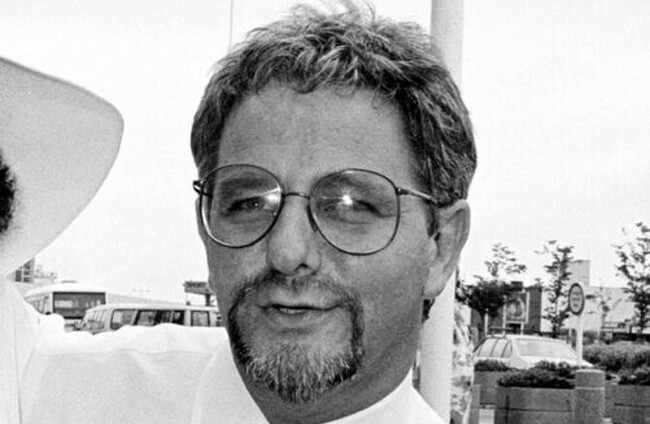

TODAY IS A long day for George Gibney.
It is his first day in prison after he was sentenced on Monday to 15 and a half years for sexually abusing four women when they were children. Gibney is now 78; the lengthy sentence means there is a strong chance he will spend the rest of his life in prison.
The judge in the case described him as a manipulative predator who used his role as a swimming coach to access and then assault defenceless children in his care.
While this case focused on his abuse of four girls between 1974 and 1981, the allegations against Gibney begin even further back than that.
He began coaching in the 1960s and went on to become Ireland’s national and Olympic swimming coach. His success made him a celebrity-like figure in Ireland in the 1980s. He regularly gave television and radio interviews, and appeared as a pundit on RTÉ during their Olympics coverage in 1992.
Throughout all of this success, Gibney was a paedophile. He was grooming and abusing the swimmers that he coached.
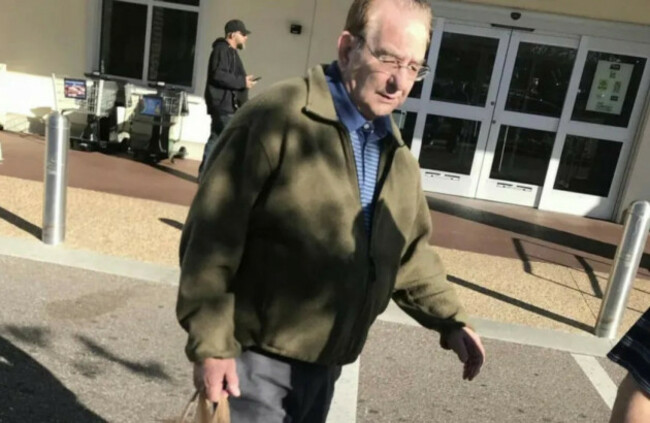
When he was initially charged with 27 sexual offences in the 1990s, he successfully got an injunction to prevent him from being prosecuted. Shortly after this, he fled Ireland.
This is a timeline of his career, his decades of abuse, and how he evaded justice for so long.
Gibney was born in Dublin in March 1948. He began his career as a swimming coach in Guinness Swimming Pool in Dublin’s Liberties in the 1960s. He worked as a fitter there, and apparently swam for Guinness Swim Club.
The first allegation against him dates back to 1967, when he was around 18. Chalkie White, a promising athlete who was around 11 at the time, had started swimming two years earlier. Gibney was his coach when Chalkie says he began abusing him.
White would later be instrumental in the uncovering of Gibney’s abuse of the swimmers he coached, but it would take years before charges were brought against him.
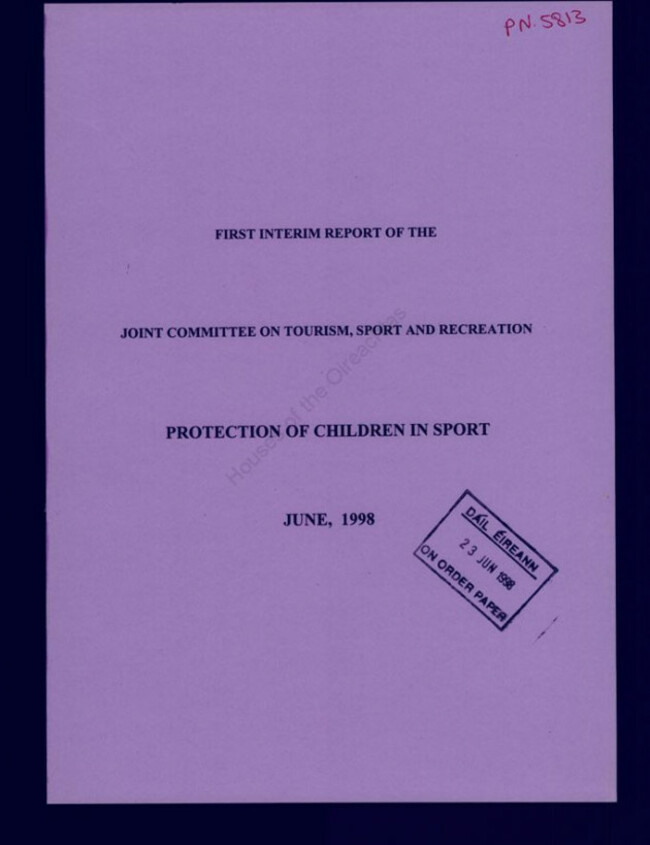
An 11-year-old girl would later say that Gibney abused her in 1968. Her account came to light as part of an inquiry in the late 1990s into child sexual abuse in swimming in Ireland, known as the Murphy inquiry.
Though he is identified only as ‘the first named coach’ in this report, it is clear from the details given that it is Gibney.
According to a profile of Gibney published in the Sunday Tribune newspaper in 1990, he left Guinness Swimming Pool for a job in Marian College pool in Ballsbridge, then went to work in Vancouver under the Canadian coach Deryk Snelling before going on to work in California.
After moving back to Ireland, Gibney became baths manager of Waterford Crystal Swimming Club in 1971. It was during his time here that he abused at least one 10-year-old girl, who spoke to the Where Is George Gibney? podcast.
In 1972, Gibney started coaching swimmers in Glenalbyn Swim Club in Stillorgan. The Tribune profile states that he went back across the Atlantic to Edmonton in Canada for a spell before returning to Ireland in 1974 to manage Newpark Sports Centre in Blackrock, which had a new 25-metre pool.
We know from his convictions that Gibney abused children whom he coached at Glenalbyn Swim Club. But we don’t know how many.
The Murphy report contains an account from a woman who alleged that in 1975, when she was 13, she stayed with Gibney for a month while her parents were abroad. She told the inquiry that he abused her during this period.
The report states that she confided in a school friend who encouraged her to speak to a priest. She said that the priest advised her to confront the abuser and to ask him to stop. When she did, she said Gibney “slapped her across the face, called her a whore and told her to stay away from boys”.
Gibney established Trojan Swim Club in Newpark in 1976, which shortly began turning out top swimmers.
Another woman told the report that, when she was 12, she had been abused by other people for a period of time. She alleged that in 1977, one of those who had previously abused her suggested that she accept a lift from Gibney. “She alleged that he abused her when driving her home,” the report states.
The woman said she wasn’t aware of the impropriety until she was 20, as she had “no reference point as to what was appropriate behaviour”.
By the 1980s, Gibney’s success with the swimmers he coached at Trojan led to him being given the top job in the sport.
He was appointed Ireland’s national swimming coach in 1981, giving him the authority to decide which swimmers would compete for their country at the very top of their sport.
Three years later, he took the national team to the 1984 Olympics in Los Angeles, followed by Seoul in 1988.
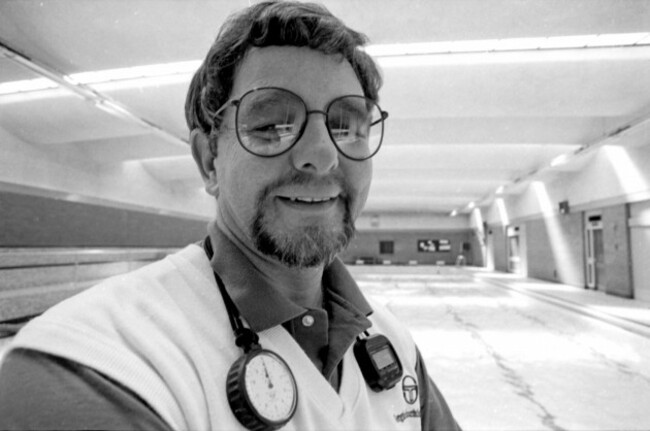
News articles from that time speak about his intense training regime for his swimmers. One 1990 Sunday Tribune piece states: “There are swimmers who will not be able to live with the ambition which eats away at Gibney. But there is no Irish swimmer, seriously intent upon international achievement, who can live without George Gibney.”
His greatest coaching success came when Gary O’Toole won the 200m breaststroke silver medal at the 1989 European Championships in Bonn.
Another Sunday Tribune article from 1989 covers Gibney’s lobbying of the sports minister of the day Frank Fahey to build an Olympic-sized swimming pool.
“Gibney has run the 25-metre pool at Newpark for 15 years. His proposal to double its length to the Olympic standard of 50 metres was dismissed by the minister as a waste of money,” it states.
“Gibney is confident that £750,000 from the government and £750,000 from corporate bodies would be sufficient to extend and maintain the pool.”
Ireland’s first 50-metre swimming pool opened at WestWood Club in Clontarf in 2000, six years after Gibney left the country.
The Murphy report details how a woman said she was raped by Gibney in Florida in 1991, while another woman said she had been abused by another person at the pool when she was between 11 and 13. This person then suggested she take a lift home with Gibney when she was 12, where he allegedly touched her inappropriately.
“What is significant in all of these cases is the evidence of the swimmers that they did not complain to their parents nor to their clubs,” the report states.
“More disturbing was the evidence that some were not aware of the impropriety of the alleged incidents. The evidence of one of the witnesses that a previous abuser suggested she take a lift from the first named coach was most disturbing.”
The report also gives a sense of Gibney’s power at the time. “It must be said that, once appointed as Olympic Coach… he seemed to dominate Irish swimming,” it says.
It notes that the technical training committee of the Irish Amateur Swimming Association, comprising the most successful coaches, influenced who was given a position on the international team. “Where controversy arose regarding the choice of the Selection Committee”, Gibney’s choice prevailed, the report says.
According to the report, six senior swimmers stopped training with Gibney between December 1990 and January 1991, with some leaving swimming altogether. “However, no questions were asked as to why they had discontinued their training with the coach or why they had left the club,” it adds.
We know now that it was during a flight to the world swimming championships in Perth in December 1990 that Chalkie White confided to Gary O’Toole that Gibney had abused him as a child.
O’Toole, who as a child had once told Gibney to leave his bedroom, acted. Upon returning from Australia, he quit Trojan Swimming Club. When Gibney asked him why, he replied: “I think you know why.”
After the Barcelona Olympics, the 22-year-old then set about gathering evidence against his former coach. He met with swimmers whom he had known and trained with. He spoke to them about Gibney. He encouraged them to speak out.
In April 1993, Gibney was charged with 27 counts of indecent assault and unlawful carnal knowledge.
It came after seven swimmers made sworn statements to gardaí that their coach had sexually assaulted them on dates between 1967 and 1981. Chalkie White was among them.
In the end, it was the span of the abuse that meant the charges were never heard.
A book of evidence in the case was served in June 1993; shortly after, Gibney’s legal team applied for a judicial review preventing the Director of Public Prosecutions (DPP) from bringing the charges. The High Court refused the application the following month, but the Supreme Court allowed him to apply for a judicial review in December 1993.
Among their arguments as to why Gibney could not get a fair trial was that too much time had elapsed between the alleged offences and the charges being brought, and that the charges were not precise enough.
The review succeeded. In July 1994, Gibney won an injunction preventing the case from proceeding. The court’s decision was never appealed by the DPP.
Gibney had resigned as national swimming coach in February 1991. Upon his recommendation, Derry O’Rourke replaced him. Seven years later, O’Rourke was jailed for 12 years relating to 29 charges of sexual assault, indecent assault and unlawful carnal knowledge against 11 children between 1976 and 1992.
According to the Murphy report, Gibney was suspended on full pay by the management company of Newpark in January 1993. A year later, he was suspended without pay. “On 9 August 1994, the coach received payment of £19,000 in full and final settlement of his pay claim,” the report states.
By August 1994, Gibney had left Ireland and taken a job coaching young swimmers at Warrender Baths Club in Edinburgh. He was sacked in December 1994, after the Sunday Tribune published an investigation into his abuse written by Johnny Watterson.
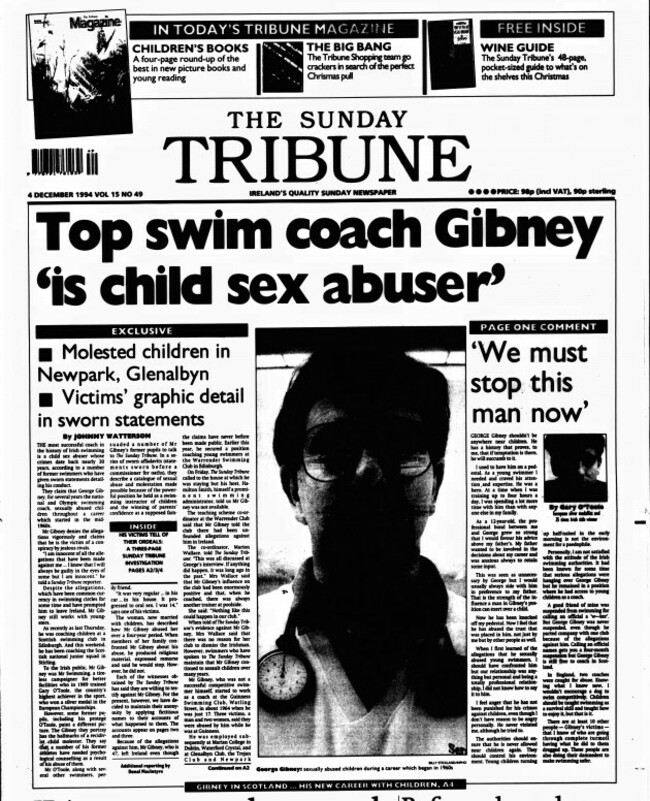
His reporting contained the allegations made by the swimmers at the centre of the 1993 case. Knowing that the newspaper could be sued for printing their claims, all of them signed affidavits affirming that they would be willing to testify under oath and submit themselves to cross-examination should legal action be brought.
According to the Tribune’s reporting at the time, the committee at Warrender were aware of the allegations against him when they employed him, but accepted his account that it was nothing serious and had been dismissed by the Irish courts. Parents whose children attended the club were subsequently furious that they had not been made aware of the serious allegations against him when he began working there.
In May 1995, he was hired as a swimming coach by North Jeffco Swim Team in Denver, Colorado. He was teaching six to 17-year-olds. He left his position in January 1996 after some parents raised concerns about the reports of sexual abuse against him in Ireland.
It seemed that Gibney was never in the same place for very long after this. He lived and worked in Colorado for a few years, but later moved to California.
In 2006, more than a decade after he fled Ireland, RTÉ’s Prime Time tracked Gibney down in California, where he was working behind the front desk of the Calistoga Ranch Club in Napa Valley.
When reporter Clare Murphy approached him in the car park of his workplace and asked him if he had any plans to return to Ireland to face the allegations against him, he had no response. He got into his car and drove away.
When the reporters tracked him to his nearby home, there was no answer. The resort later confirmed that Gibney had voluntarily left his job.
Two decades after Gibney had left Ireland, efforts were made on both sides of the Atlantic to keep his case in the spotlight.
In 2015, Independent TD Maureen O’Sullivan said she had written to almost 100 US politicians seeking information on Gibney’s immigration status, having previously raised the matter in the Dáil.
Across the ocean, US freelance journalist Irvin Muchnick was seeking the same information having come across Gibney’s case. In July 2015, he sued the US Department of Homeland Security (DHS) under the Freedom of Information Act, claiming it released only four of 102 pages he had sought.
When more pages were released, they revealed that Gibney was issued a four-month US visa in 1992. Muchnick also discovered that Gibney applied for naturalised US citizenship in 2010, which was rejected after he was unable to produce records relating to any previous criminal proceedings against him.
In February 2018, Second Captains producer Mark Horgan released a 40-minute podcast called The George Gibney Case: 25 years on. There was a huge reaction to the episode, which saw Horgan set about digging deeper into Gibney’s case.
In 2020, Horgan and documentary-maker Ciarán Cassidy released the podcast Where Is George Gibney? on BBC Sounds.
Horgan spoke to those who made allegations against Gibney in the 1990s as well as some who never came forward, interviewed people who previously worked with him at Newpark Swimming Club and tracked him down to a Florida suburb.
As more episodes were released, more people contacted Horgan to tell their stories about what Gibney had done to them.
By 2022, gardaí had taken new statements from four women who alleged that Gibney had sexually abused them when they were children. A file was sent to the Director of Public Prosecutions (DPP) in 2023 and gardaí contacted US authorities.
On 1 July 2025, Gibney was arrested in Florida on foot of an extradition warrant. At a hearing the following week, he agreed to be extradited to Ireland.
He returned to Ireland on 29 July 2025, where he was arrested and charged with sexually abusing four girls in the 1970s and 1980s.
On 6 July 2026, following a two-week trial at the Central Criminal Court, Gibney was found guilty of 39 counts of indecent assault and one count of attempted rape.
He was jailed for 15-and-a-half years on Monday.

To embed this post, copy the code below on your site













have your say