Sign in. It’s quick, free and it’s up to you.
An account is an optional way to support the work we do. Find out more.
Sign in. It’s quick, free and it’s up to you.
An account is an optional way to support the work we do. Find out more.
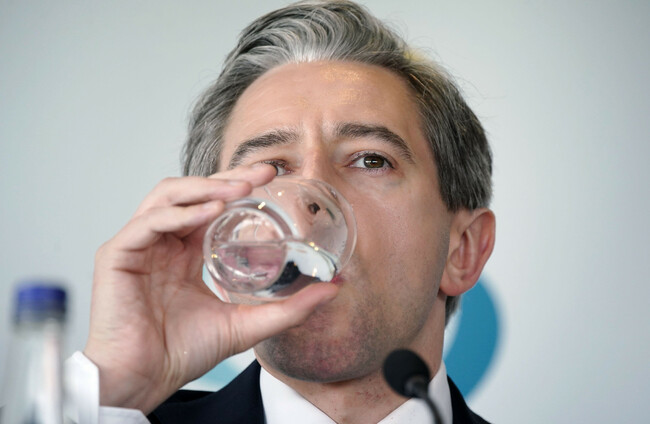
THE GOVERNMENT HAS released new details of the State-backed investment accounts it plans to introduce next year.
Tánaiste and finance minister Simon Harris described the Investment Account as “a simple and accessible” way for people to make investments in capital markets.
He said the accounts will give people greater choice in how they manage their savings and investments.
“My ambition is to build a system that is simpler and easier to understand, where people know what their options are and can make informed decisions based on their own circumstances,” Harris said.
So what do we know so far?
The Investment Account will be available to Irish tax-resident individuals aged 18 and over who have a PPS number.
It will only be possible to open one account per person.
The exact tax rate has yet to be set, but it will be a “low” flat rate, the government said.
There will also be a threshold before which no tax will need to be paid.
The accounts, once the value is over the threshold, will be taxed annually. The tax will apply to the value of the account, not the gains made during the year.
The tax rate will be announced as part of the budget on 6 October.
One major benefit for people who have one of these investment accounts is that they will not have to pay the deemed disposal tax that is applied to other investments.
Every eight years, certain investments are treated as if they have been sold, even if they haven’t been.
Those investments are taxed at 38%, but the new investment accounts will not be taxed in this way.
The kinds of investments that will be permitted include listed shares, listed bonds, financial instruments traded on a regulated market and a range of investment funds suitable for retail investors, including exchange-traded funds (ETFs).
There will be no minimum contribution or lock-in period for the accounts. There will be a limit though, which will be announced with the budget in October.
The government has said that “highly complex and risky products”, including derivatives and cryptocurrencies, will not be eligible.
The provider of the investment account will calculate, report and pay any tax due on behalf of the account’s owner, which the government said would make the process more straightforward.
The reaction from the finance industry has been mixed.
Grant Thornton welcomed the announcement and said that if the account scheme is implemented successfully, “it has the potential to be a significant development in broadening retail participation in investment markets”.
Moyagh Murdock, chief executive of Insurance Ireland, said the plan “has the potential to be a significant milestone in building a stronger savings and investment culture in Ireland”.
Both Grant Thornton and Insurance Ireland said it remains to be seen how the scheme will be implemented, and that the tax rate and contribution limits will be particularly relevant.
Michael Healy, the CEO of the online trading platform IG Consumer, has strongly criticised the today’s announcement, saying it has not brought the clarity that was promised.
“The government has finally recognised that Ireland has a retail investment problem,” Healy said. “Unfortunately, the solution it has proposed will not fix it.”
Criticising the lack of specific details about the tax rate and threshold, he said that “announcing an investment account without them is like announcing a new mortgage and neglecting to mention the interest rate”.
Healy also said that the annual tax, which will be based on the value of the account and not the yearly gains, could put people off investing if they have to pay tax despite making a loss.
“A market downturn in the second year of this scheme could therefore mean hundreds of thousands of first-time investors receiving a tax bill on an account that has lost money, with platform fees taken on top,” he said.
“Nothing will put people off investing for good faster than that.”
He also said that the government calling the tax rate “low” before it’s been announced is “marketing, not simplification”.
“Low compared with what?”
Healy said the government had “taken the worst of both proposed models rather than the best: Sweden’s annual tax on the value of your account, and the UK’s cap on what you can put in.
“Why launch a scheme that is less attractive on day one?”

To embed this post, copy the code below on your site










have your say