Sign in. It’s quick, free and it’s up to you.
An account is an optional way to support the work we do. Find out more.
Sign in. It’s quick, free and it’s up to you.
An account is an optional way to support the work we do. Find out more.
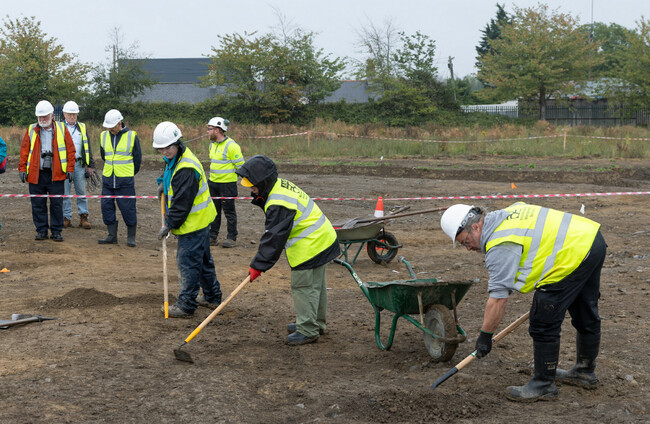
A MEDIEVAL FORT and a Bronze Age flint have been unearthed during preparatory works for a drainage project in Co Dublin.
The Greater Dublin Drainage project aims to provide wastewater treatment to around 500,000 people and support the delivery of up to 185,000 new homes across north Dublin and surrounding parts of Meath and Kildare.
During excavations ahead of the project, a ringfort – an early medieval enclosure – was found at Sheephill in Abbotstown.
Ringforts were among the most common settlement types in early medieval Ireland, serving as homes and farmsteads for families, as well as enclosures for livestock. They typically date from between AD 600 and 900.
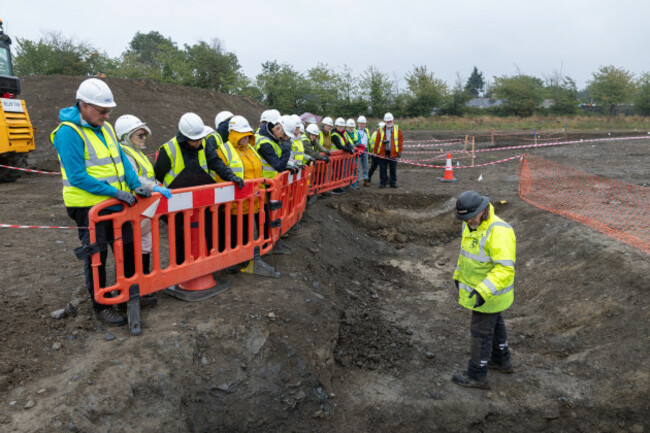
Archaeologists and members of the Blanchardstown and Castleknock History Society and the Clonsilla & Porterstown Heritage Society recently visited the site to inspect the remains.
Archaeologist Derek Gallagher said: “Through a combination of geophysical surveys and test trenching, our team identified the remains of a circular enclosure hidden beneath the surface.
“Discoveries like this provide a fascinating glimpse into how people lived in this area over a thousand years ago. Archaeological investigations not only help protect our heritage, but they also create a permanent record that contributes to our understanding of the history of Abbotstown and can be shared with future generations.”
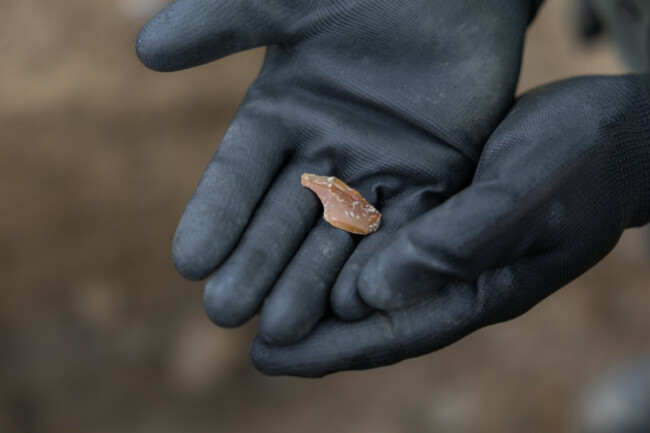
An early Bronze Age flint hollow scraper was also discovered.
Dermot Bruton, Programme Manager with Uisce Éireann, said: “Protecting Ireland’s archaeological heritage is an important part of how we deliver major infrastructure projects responsibly.
These investigations ensure that significant discoveries are carefully identified, recorded, and preserved before construction begins.”
Christine Moore from Clonsilla & Porterstown Heritage Society said: “This is a part of our history that I’m not very familiar with and it was lovely to see first-hand the work and care that is taken by the archaeologists to make sure that nothing is lost to time as part of the infrastructure project.”
All the records from the excavation will be archived with the National Monuments Service Archive, while all recovered artefacts will be held at the National Museum of Ireland.
To embed this post, copy the code below on your site









have your say