Sign in. It’s quick, free and it’s up to you.
An account is an optional way to support the work we do. Find out more.
Sign in. It’s quick, free and it’s up to you.
An account is an optional way to support the work we do. Find out more.
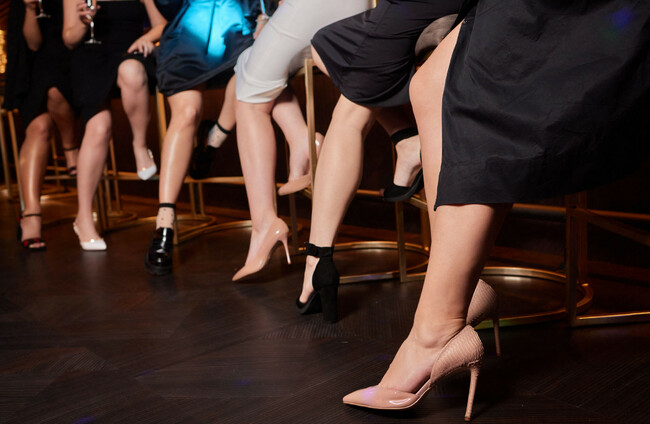
ABOUT 5PM LAST Friday evening in Dublin city, just as people high-tailed it from workplaces to head for the hills, the bus, tram, train, the M50 (thoughts and prayers) or to the pub, the skies opened with a biblical vengeance. It rained cats, dogs, pitchforks; it came down like stair rods; it bucketed, lashed, hammered down.
Scurrying down a rapidly emptying side street, a sudden loud racket close by caused this writer’s heart to briefly depart her carcass; a few seconds later a cavalcade of half-soaked young women tottered past, swearing and half-drowned.
It wasn’t the fusillade of swearing which induced the jump-scare though – instead it was the noisy blast of fast-moving stilettos clattering along the pavement, a percussive, staccato rat-tat on concrete.
The women were clearly dressed for going out-out. But while they were perfectly en vogue from the ankles up, a parade of slip dresses and cropped faux fur jackets, their unanimous choice of footwear seemed oddly anachronistic, as if they had just stepped (carefully) out of a Tardis after a round trip to the 1990s.
They were sporting proper high heels.
The standing-on-tippy-toe type which basically requires balancing atop a three or four-inch nail – and not just balancing, mind, but also performing other feats of equipoise such as walking, dancing, standing around for hours and running for a bus.
In other words, the type of shoe which was the automatic accessory of choice or of necessity for at least a couple of generations of women.
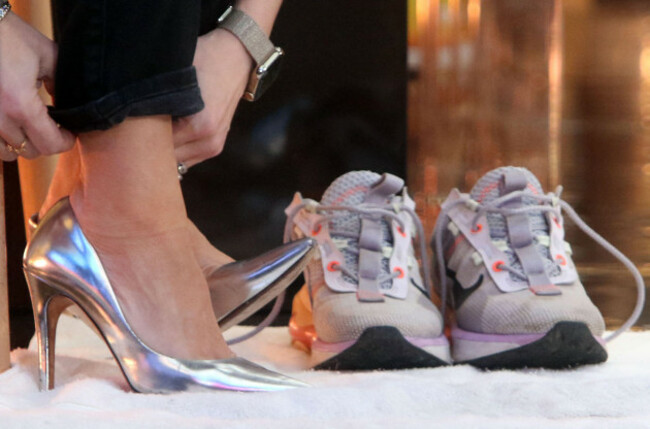
Until, thank God, it wasn’t. The quasi-extinction of the high-heeled shoe has been as swift as it has been welcome. True, there are still various degrees of slightly elevated footwear out and about to be sure, such as block heels, wedges and kitten heels, but even they’re lesser-spotted objects these days, easily spotted among the forest of flatties.
Why the hell did we do the high heel thing for so long? Because we bought into the canny propaganda, is the short answer. First and foremost, the stiletto has been long touted as a signifier of feminine sexiness. Think of the iconic scene in the 1950s Hollywood classic ‘Some Like it Hot’ when Tony Curtis and Jack Lemon, gussied up like a pair of dames, goggle at how a stiletto-wearing Marilyn Monroe sashays with ease along a train platform. “Look at that! Look how she moves! That’s just like Jell-O on springs… must have some sort of built-in motor or something,” marvels Lemon.
Then in more recent decades, in an effort to recast the high heel as a feminist statement, spiky heels and a shoulder-padded suit came to signify a ball-breaking boardroom badass high-kicking her way through corporate glass ceilings. In 2012, Victoria Beckham, who by now had remarkably transmogrified from the Spice Girl who pointed rather than sang into the designer darling of New York fashion week, explained her adherence to vertiginous heels. “I can’t concentrate in flats,” she told a TV interviewer.
It was pure Carrie Bradshaw-speak.
If any one figure promoted the high heel as simultaneously an implement of enticement, a girl’s best friend and an ambitious woman’s weapon of choice, it was the Manolo Blahnik-obsessed character played by Sarah Jessica Parker in HBO’s massive hit series Sex and the City who regularly uttered empowering nuggets such as: “The fact is, sometimes it’s hard to walk in a single woman’s shoes. That’s why we need really special ones now and then – to make the walk a little more fun.” Or: “Maybe the reason Cinderella was so happy wasn’t because of the Prince…. but because of the shoes.”
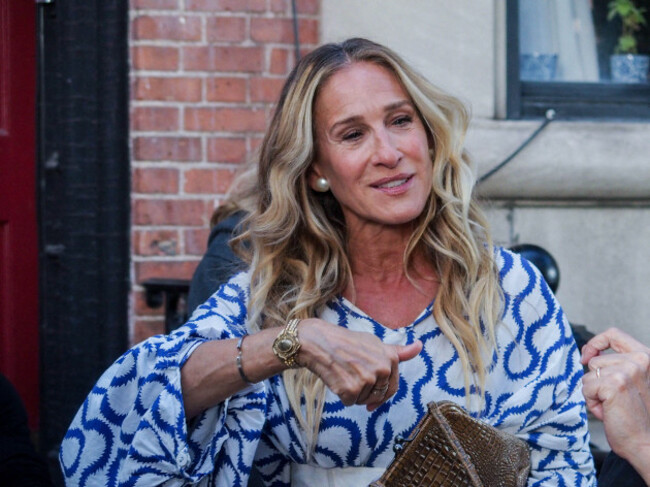
Sex and the City had perfect timing, coinciding with the boomiest of boom times at the tail-end of the 1990s and the early 2000s, when oodles of money was flying around like snuff at a wake and when the phrase “girl power” made it into the Oxford English Dictionary. However, it’s no coincidence that by the time the second full-length spin-off movie was released in 2010, the economic and societal mood had darkened considerably, and the film was universally kicked to flitters by critics for its tone-deaf materialism and naff consumerism.
Heels, like hemlines, rise in optimistic times, and lower when the outlook is less sunny.
The descent of high heels started slowly; women took to wearing tights and trainers on their commute to work, before slipping into a heeled court shoe (nude-coloured being the ‘colour’ of choice) outside the entrance or as soon as they reached their desk. It wouldn’t do at all to be caught literally flat-footed in the workplace.
Thankfully, once a dazed workforce had emerged from the smoking rubble of the global financial crash of the late naughties, this pointless ritual had largely bitten the dust. Trainers, high-tops, Doc Martens, ballet pumps, biker boots, loafers and brogues pounded pavements and adorned the feet of front row fashionistas from Manhattan to Milan.
The Covid pandemic finally did for the office high heel – the notion of clacking about in any sort of shoe, tight skirt or even an underwired bra for that matter while working from home was ludicrous – sales of high heels reportedly dropped by 65% during the second quarter of 2020, according to market research data.
Interestingly, once the pandemic receded, the stiletto failed to make a triumphant comeback, despite the imprecations and predictions of various glossy magazines.
It turns out that unlike many fashion accessories, flats weren’t just a fad – they represented a redrawing of how women move through the world.
‘Killer heels’ are no longer status symbols among women who want to be able to run unimpeded and in comfort for a bus or from a creepy stalker or for public office. Even the world of haute couture copped on. “The flat shoe makes the woman equal to men. When they have high (shoes) they play a part like a geisha, and they can’t be expected to be taken that seriously,” observed designer Karl Lagerfeld.
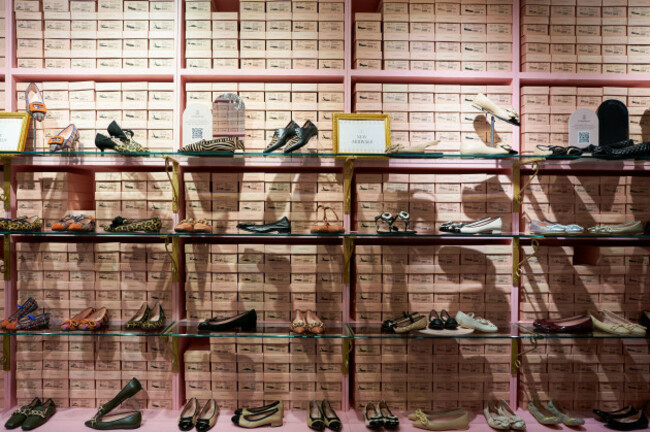
Therefore it’s unsurprising that one place where high-heeled women are most conspicuous is anywhere in the near vicinity of that doughty defender of gender equality, Donald Trump. MAGA’s botoxed, trout-lipped, stilettoed chattels totter around Mar-a-Lago and the White House, mostly pound shop versions of Melania Trump who is usually spotted perched atop spindly Louboutin stilettos during her rare tight-lipped forays into public with her husband. But wherever they all go, any glass ceilings above them remain unbothered and intact.
However, back in rainy Dublin, I watched the tangle of leggy women scurrying for shelter, and felt a pang for my most beloved-ever shoes, a long-departed pair of sleek, pointy-toed caramel-coloured buttery-leather Prada stilettos which looked sexy as hell, yet which felt like wearing fluffy slippers. They were miraculous, and I mourned them when they were consigned to the bin, finally beyond repair. I’ve never felt similar fierce affection for any pair of trainers or Chelsea boots, to be honest. Flatties are, well, grand.
There’s nothing wrong with sallying forth in a pair of towering stilettos when the occasion, the mood or the outfit calls for it. Sometimes, being Jell-O on springs feels damn fine.
But now it’s a choice, not a duty. And that’s the whole pointy-pointe of it.
Lise Hand is a journalist and writer. This column runs every Wednesday.

To embed this post, copy the code below on your site

















have your say