Sign in. It’s quick, free and it’s up to you.
An account is an optional way to support the work we do. Find out more.
Sign in. It’s quick, free and it’s up to you.
An account is an optional way to support the work we do. Find out more.
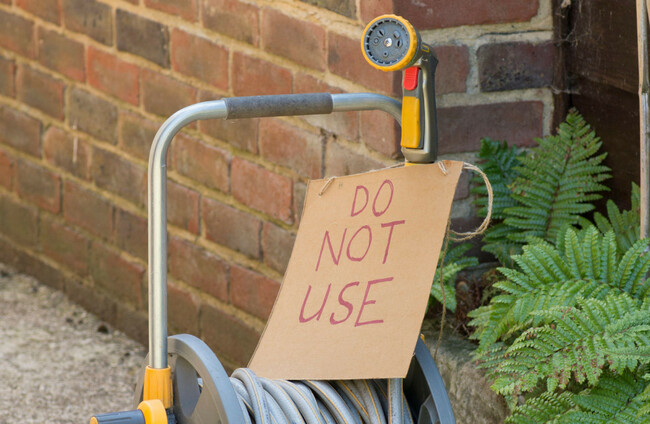
THE WHOLE COUNTRY is now under a hosepipe ban, which will last for just under six weeks.
Yet Ireland is normally a very wet country, with an average of 700mm to 1,400mm of rain falling every year.
So what has happened to all of this water, and how come we can no longer do things like fill up our paddling pools and water our gardens with a hosepipe?
The problem lies in how Ireland stores its water, combined with the extended dry spell.
The majority of Ireland’s drinking water comes from surface water sources, which include rivers, lakes and ponds. Some comes from groundwater too, such as reservoirs.
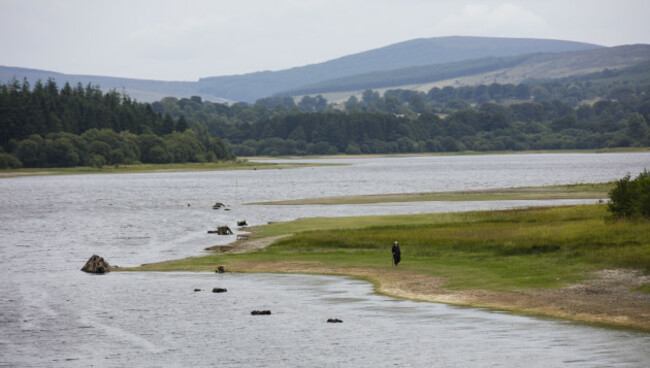
When it rains, some of the water evaporates, some is absorbed by the soil, and some flows into the sea. The remainder is treated and delivered to homes and businesses through the public water network.
But parts of the country receive more water than others. In the east, where most people live, around 750mm to 1,000mm of rain falls every year, while western areas are generally wetter, receiving between 1,000mm and 1,400mm.
Part of the problem lies in transporting the water to people across the country.
Dr Matt Crowe, chair of the National Water Forum, told The Journal that Ireland’s population is very dispersed, with lots of small towns and people living in villages.
“We have a very large number of very small water supplies [such as lakes and rivers] in Ireland compared to other countries,” he said. The problem is connecting them all together.
Prior to Uisce Éireann’s creation in 2013, water supplies were managed by 34 distinct local authorities, meaning that supplies were not connected. It is also expensive to lay pipelines to connect small water sources.
There are other problems too. With a growing population requiring more water, and the effects of climate change, water scarcity is becoming more frequent.
Lack of rainfall affects surface water, which has an impact on groundwater.
Fiachra O’Loughlin, an expert in hydrology at University College Dublin, said that Ireland is currently operating at a huge deficit – around 50mm across the entire island at the very minimum.
The deficit refers to the difference between the amount of rain that has fallen and what is expected to have fallen based on historical data.
“This equates to about six thousand Croke Park Stadiums,” he said. “This represents a significant volume of missing water compared to what we normally receive.”
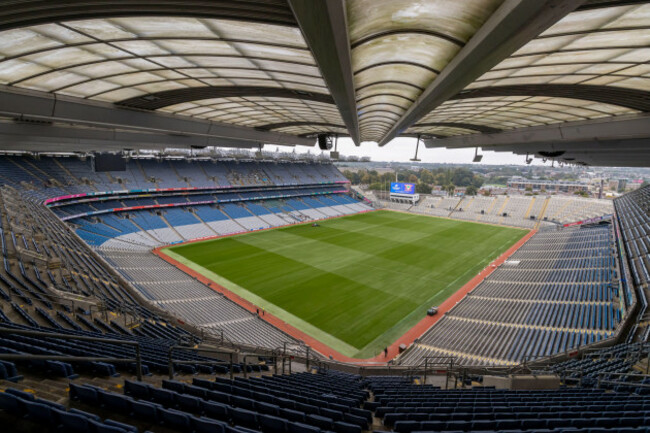
Normal levels of water can take a “long time to recoup”, O’Loughlin said.
Ideally, Ireland would be operating at a surplus, and would be able to draw on these excess reserves during periods of drought. To achieve this, water usage needs to be minimised throughout the year, even during times of heavy rainfall.
O’Loughlin said that the hosepipe ban is a precautionary measure.
He described it as a “minor inconvenience” and a “mild intervention”, and that if things were to get worse, Uisce Éireann may consider other measures such as reducing water pressure.
But the main thing, for O’Loughlin, was the increased awareness that comes with a hosepipe ban.
“It just makes people realise how much water they’re going to be using,” he said. “It will change the behaviour of a large proportion of society.”
While he acknowledged the difficulty of enforcing the ban, he said “it would be a lot more effective if people actually followed it.”
Uisce Éireann supplies 80% of Ireland’s population – around two million homes and businesses. A small proportion of this, around 200,000, are businesses, according to Uisce Éireann’s 2024 annual report.
The hosepipe ban does not apply to businesses, which has led to some feeling that there is one rule for ordinary people and another for businesses.
It has also led to some curious situations, where people are banned from washing their car with a hosepipe, but can pay a company to wash their vehicle.
Meanwhile, 36% of Uisce Éireann’s supply is lost to leakage nationally (down from 48%).
The Sustainable Water Network (SWAN) told The Journal that there have been issues with some businesses extracting water from rivers.
Since 2018, businesses that extract more than 25,000 litres of water a day are required to register with the Environmental Protection Agency’s abstraction register. However, SWAN said that the threshold needs to be lowered, as the current level means that businesses can still be extracting a large quantity of water without having to register.
“A business could be taking abstractions which are the equivalent water usage a day of 42 households, and not even needing to log them on the system, so they aren’t managed in any way,” Puneeta Sreenivas of SWAN said.
“Due to lower water levels and higher water temperatures during this drought, aquatic life is under stress from low oxygen levels which leaves them more exposed to the significant pollution and habit degradation… unmanaged small water abstractions can dangerously lower water levels further.”
Golf courses can use up to 300,000 litres a day in maintaining their pristine lawns, according to an estimate by the Environmental Protection Agency. By contrast, the average one-person household uses around 133 litres of water a day.
The Golf Union of Ireland disagrees. It suggests that a nine-hole course could use 20,000 litres a day, according to figures it provided to the EPA, with an 18-hole course using double that.
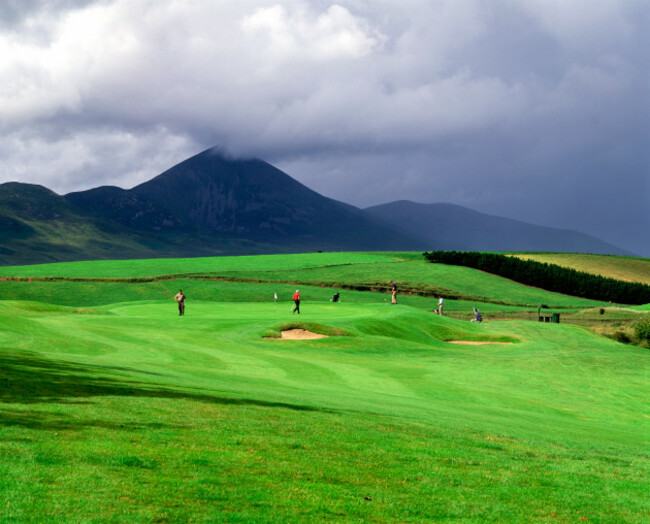
For golf courses that are also resorts, 300,000 litres a day could be used, not just on irrigating the greens, but also on water used by the resort, including drinking water or swimming pools.
Racecourses can draw up to 500,000 litres a day for a 10-hectare racecourse.
A hotel with a swimming pool can draw up to 500 litres of water per day per room, meaning that a hotel with 50 rooms would draw up to 25,000 litres per day.
A tunnel car wash can use between 250 and 400 litres per vehicle, while an in-bay car wash uses less, at around 150 and 300 litres per wash.
One Dublin car wash said they had seen a decrease in customers in the past couple of weeks. They said that this could be due to people not wanting to waste water.
But Anatoli of Long Mile Motors car wash in Dublin 8, said that they had seen a slight increase in customers coming to get their car washed.
“When the sun shines, people tend to get their car washed,” he said. “When it’s rainy it’s a bit different.”
Meanwhile, The Journal Investigates has found that data centres used almost one billion litres of water last year; while pharmaceutical giants used more than double that, at over four billion litres in the past two years.

Commenting on this, Labour’s climate spokesperson Ciarán Ahern TD said: “So for households, there’s a hosepipe ban, but for data centres? Nothing – no assessment of their impact on our climate goals, no calls to preserve water.
Lynn Boylan MEP said: “Instead of standing up to the tech giants running these water guzzlers, the government thinks it’s better to set up a snitching hotline for neighbours to report on one another.
“It’s time to end this blatant double standard.”
Matt Crowe of the National Water Forum said that one of the ways to address water supply issues is to build new reservoirs and interconnecting supplies, which is one of the goals of Uisce Éireann’s strategic plan.
O’Loughlin said, however, that building new reservoirs would cost “billions”, not to mention the environmental cost of flooding the land needed for the reservoir.
In the medium term, Crowe recommended that all businesses – from schools and hospitals to the construction industry – should develop individual drought plans.
For new builds, the recommendation is to install efficient taps, showers and toilets – which the National Water Forum has estimated would cost less than €180 per household.
Another strategy is to reuse water instead of sending it back to the rivers and the sea.
“We cannot control when the next prolonged dry spell will happen, but we can decide how prepared we are for it,” Crowe said.
“Today’s water conservation order should be more than a response to current pressures – it should be the catalyst for building a stronger culture of water conservation across Ireland.”
To embed this post, copy the code below on your site















have your say