Sign in. It’s quick, free and it’s up to you.
An account is an optional way to support the work we do. Find out more.
Sign in. It’s quick, free and it’s up to you.
An account is an optional way to support the work we do. Find out more.
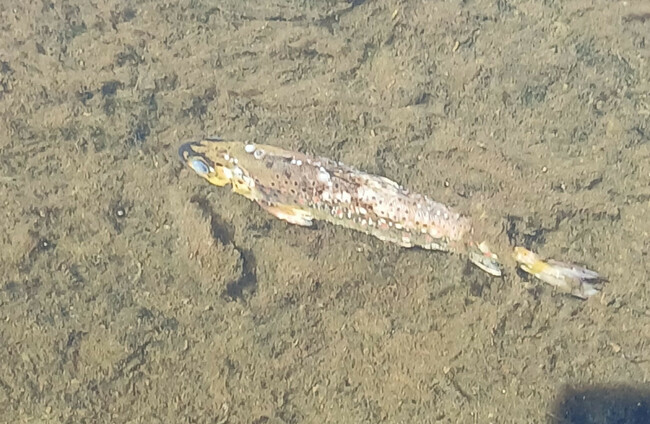
HOT AND DRY weather may have contributed to a suspected fungal infection that killed up to 1,000 brown trout in Co Cork, Inland Fisheries Ireland (IFI) has warned.
Yesterday, a large number of dead fish were spotted in the River Blackwater and IFI has said it is investigating a possible fungal infection outbreak as the cause.
It is currently assessing the impacted area, which spans an 8 kilometre stretch of the river between Mallow and Roskeen Bridge in Lombardstown.
Water levels are very low in the River Blackwater at Mallow and water temperatures have been recorded between 17 and 19 degrees.
IFI said freshwater fish are vulnerable to low water levels and high temperatures and noted that Ireland has been impacted by hot and dry weather spells this summer.
These conditions have led to the periodic closure of fisheries in the west in recent months.
Inspections of the Allow and Minor Awbeg rivers in Co Cork have not detected incidences of infected or dead trout.
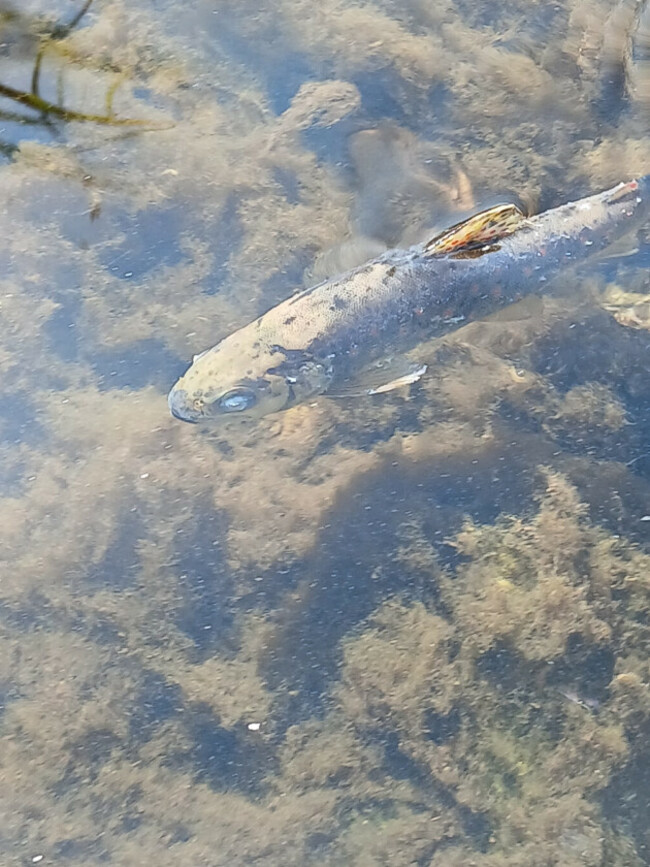
IFI is liaising with Uisce Éireann, the EPA and Cork County Council, all of whom have had staff on the River Blackwater throughout today.
Marine Institute staff are supporting IFI and are undertaking sampling to identify the possible infection.
Investigations have not yielded evidence of pollution at this stage.
Monitoring and assessment of the river will continue to help identify the cause of the incident, which resulted in the deaths of up to 1,000 brown trout.
Meanwhile, IFI has urged anglers to refrain from fishing in the affected stretch of river.
Anglers are also being asked to wash, clean and dry all equipment, and to avoid crossing catchments with tackle to minimise the risk of spreading any possible infection.
IFI added that it continues to appeal to people to report instances of fish kills or suspected water pollution to its 24-hour confidential phone line on 0818 34 74 24.

To embed this post, copy the code below on your site













have your say