Sign in. It’s quick, free and it’s up to you.
An account is an optional way to support the work we do. Find out more.
Sign in. It’s quick, free and it’s up to you.
An account is an optional way to support the work we do. Find out more.
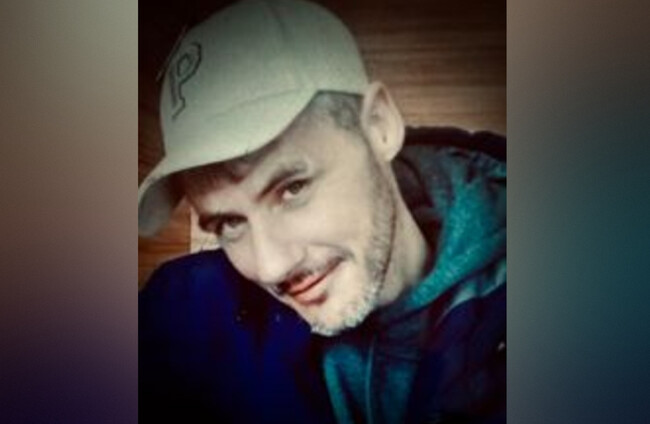
AN INQUEST INTO the death of a homeless man who was crushed to death in a waste collection truck two years ago has heard the discovery of people taking refuge in bins by refuse collectors is a common issue.
Derek Kearney (36), who came originally from Finglas, was pronounced dead on 27 September 2024, after his body was discovered by workers at the Panda waste management facility at Ballymount Road Upper, Ballymount, Dublin 24.
Panda Waste’s environmental, health and safety manager, Joe Nicholson, told an inquest into Mr Kearney’s death that there was an issue with people taking shelter in large commercial bins.
“Unfortunately, it is common nationwide,” said Mr Nicholson.
He told an inquest into Mr Kearney’s death at Dublin District Coroner’s Court on Friday that at least six people had been found in bins around the country last year before they were being emptied into a waste collection truck.
The inquest heard the results of a postmortem showed the deceased, who was also known as Derek Byrne, died from multiple traumatic blunt force injuries to his head and chest from being crushed.
The coroner, Clare Keane, said the post-mortem also revealed that Kearney was alive at the time of the fatal incident.
While toxicology tests showed evidence of cocaine and therapeutic levels of other drugs including methadone and Xanax in his body, Dr Keane said they did not directly cause Mr Kearney’s death.
However, the coroner said he may have been asleep and unaware of his surroundings.
The inquest heard DNA testing had been needed to positively identify the remains of Mr Kearney due to the extent of his injuries.
His body was discovered suspended from a bucket used to move waste around the facility in Ballymount at around 6am.
Panda employee, Alex Scortanu, gave evidence that he initially believed he was looking at a mannequin because the skin was so white.
“I could not believe it was human,” said Mr Scortanu.
Detective Sergeant Ann Byrne gave evidence that no foul play had been detected in relation to Mr Kearney’s death following a full garda investigation.
Det Sgt Byrne revealed that the deceased had been granted temporary release from Wheatfield Prison in Clondalkin just two days before the fatal incident.
While accommodation in a homeless shelter had been arranged for him, she told the inquest that Mr Kearney had not used the facility.
The inquest heard gardaí were unable to determine the location of where the bin containing Mr Kearney had been emptied into a waste collection vehicle.
Det Sgt Byrne explained that the view of cameras fitted at the rear of the vehicles was obscured by the lids on the bins as they were being tipped into the back of the trucks.
She said CCTV footage from various locations along the route of six bin trucks which had been identified as potentially being involved in the fatal incident had not revealed any extra information.
However, she confirmed that Mr Kearney had not made his own way to the waste facility centre in Ballymount.
Det Sgt Byrne said the deceased had collected his social welfare on the morning of 26 September 2024 with another individual before they made their way to Oliver Bond flat complex where it was suspected they bought drugs.
He was subsequently observed at various locations around the city centre including the Lighthouse café on Pearse Street.
Mr Kearney had also attended the National Drug Treatment Centre in Pearse Street where he was not given any medication because he was considered intoxicated but was encouraged to return the following day.
The inquest heard that the last-known sighting of the deceased was when he was captured on CCTV attempting unsuccessfully to board a bus on O’Connell Street on 26 September 2024 at 4.52pm.
Det Sgt Byrne said gardaí had checked with people using soup kitchens and homeless shelters to see if anyone had any subsequent contact with him but had gathered no additional information.
Another witness, Daryl Corrigan, who was released from Wheatfield Prison at the same time as Mr Kearney, said the deceased had spoken about going to sleep on the grave of his late girlfriend who had died four years earlier.
Mr Corrigan said Mr Kearney, whom he had never met before, appeared sad but had not mentioned any other plans.
An inspector with the Health and Safety Authority, Trevor Ryan-Nesbitt, gave evidence that an investigation into Mr Kearney’s death had not found any breaches of health and safety in the workplace legislation.
Mr Ryan-Nesbitt confirmed that the case had not warranted any criminal prosecution.
He also noted that waste collectors had not noticed anything out of the ordinary in relation to the weight of commercial bins, which would have had a capacity of up to 1,100 litres of waste, being loaded that night.
Mr Ryan-Nesbitt said Panda had operated a policy where staff did visible checks on commercial bins before they were lifted onto waste collection vehicles.
In reply to questions from the coroner about Panda’s operations, Mr Nicholson said thermal imaging at the Ballymount facility was used to detect possible fires and not the presence of humans.
He expressed doubt that they could be set to a lower temperature to detect the presence of individuals as alarms would be set off by vehicles and other equipment.
However, Mr Nicholson said Panda was looking at the potential use of AI technology to detect the presence of someone in bins being emptied into trucks.
The witness said Panda staff, whom he described as being at the “coalface” of the issue, were provided with general and refresher training about carrying out visual checks on bins, particularly during cold periods.
A jury of six women and two men returned a verdict of death by misadventure.
They also recommended “more investment with a sense of urgency in health and safety” by waste collection companies to detect human life in bins.
The jury said additional cameras on bin trucks as well as the fitting of locks on bins should be considered to stop people getting into them in the first place.
The coroner said she would notify the relevant companies of the jury’s recommendation.
Dr Keane also offered her condolences to Mr Kearney’s family on a case that contained “traumatic and very difficult evidence.”
To embed this post, copy the code below on your site











have your say