Sign in. It’s quick, free and it’s up to you.
An account is an optional way to support the work we do. Find out more.
Sign in. It’s quick, free and it’s up to you.
An account is an optional way to support the work we do. Find out more.
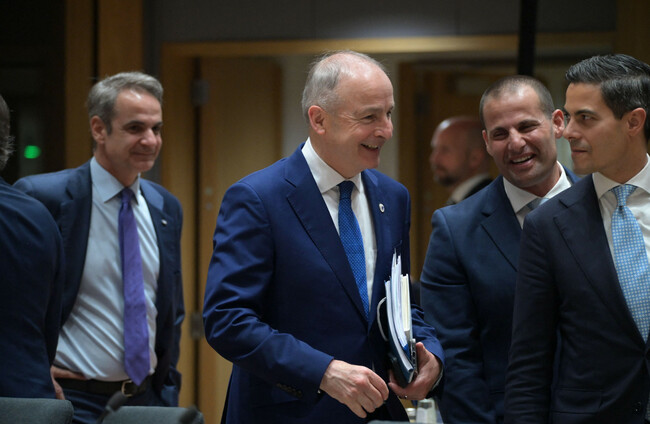

LEADERS LEFT A two-day European Council summit in Brussels on Friday with little to show for it.
They had a packed agenda: negotiating further the EU’s long-term budget, Russia, Ukraine, the economic threat posed by China, and the Middle East.
On the budget – or multiannual financial framework (MFF) – Ireland will next take the reins on preparing a revised framework that can appease as much of the EU as possible, due to presented at a meeting in October.
There has been disagreement amongst some leaders over the extent of the spending set out in the current draft framework – Germany’s Friedrich Merz and France’s Emmanuel Macron, the EU’s largest net contributors, remain at loggerheads on whether to save or splash out.
Ireland remains concerned over changes to the structure of the MFF – particularly a change to how the EU ‘pots’ of money are separated. A more simplistic structure has seen several sectors grouped together, which, as it stands, has been estimated to lead to a 20% reduction in funding for the common agricultural policy (CAP).
The leaders of the 27-country bloc heard from Ukrainian president Volodymyr Zelenskyy on Thursday, who arrived flanked by President of the European Council António Costa and President of the European Commission Ursula von der Leyen.
Zelenskyy addressed leaders and urged them to continue to and step up support for Ukraine. The council agreed on its unwavering support and the first payout of the €90 billion loan to Ukraine will be made before the end of June.
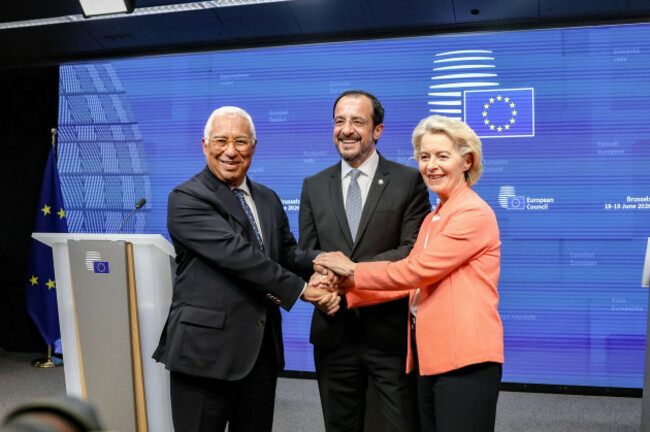
There was some discontent amongst leaders as Costa came under fire for diplomatic outreach from his office to the Kremlin, which Costa defended.
The European Council president said the bloc needed to “listen” to Moscow despite pushback from some member states.
“It is precisely because we need also to support Ukraine through diplomatic means that we need to have a direct diplomatic channel with Russia,” Costa said after the summit.
“The time to negotiate has not arrived yet,” added Costa, who said there were no “credible signs” that Russia wants to engage.
“But in any case, we need to establish immediately this direct contact, because we need to listen to them,” as well as be able to “convey directly” messages from the bloc to Moscow, he said.
An EU official said on Wednesday Costa’s office had made “brief contacts at diplomatic level” with Moscow aimed at opening communication channels.
The move by Costa, who chairs summits of the EU’s leaders, came as discussions grow on whether Europe should re-engage with Russia about ending the Ukraine war.
On the Middle East, there was condemnation served in conclusions from the council for Israel – but leaders made no decision on sanctioning Israeli far-right ministers at an EU level (Ireland has done so domestically). There was also no progress on examining its trade relationship with Israel.
Time was also dedicated to the enlargement of the union, with Montenegro, Moldova and Ukraine all in line to join once they get through the gruelling accession process.
The onus will now be on Ireland to act as an “honest broker” during its presidency and advance forward the long-term budget – something Martin said would be “very very difficult” to resolve.
Additional reporting by AFP

To embed this post, copy the code below on your site











have your say