Sign in. It’s quick, free and it’s up to you.
An account is an optional way to support the work we do. Find out more.
Sign in. It’s quick, free and it’s up to you.
An account is an optional way to support the work we do. Find out more.
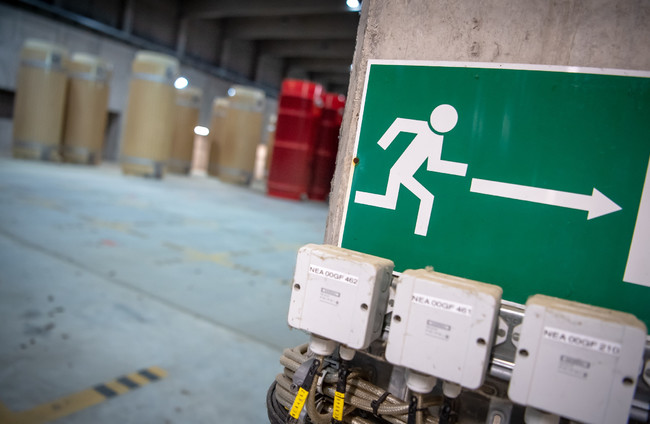
IRELAND’S NUCLEAR EMERGENCY response plan was tested yesterday for the first time in five years.
Yesterday’s training exercise was held to “test the national response to a nuclear emergency abroad”.
While the Department of the Environment, Climate and Communications says “an event of this nature is highly improbable,” it adds that the Government “is committed to ensuring that any such risks are minimised and that contingencies are addressed”.
The exercise took place in the National Emergency Coordination Centre.
It practised the systems and procedures outlined in the National Plan for Nuclear and Radiological Emergency Exposures.
This plan sets out the details of a “national response to a nuclear or radiological emergency likely to cause widespread exposure across Ireland”.
‘Responding to a nuclear event’
The National Plan outlines some of the actions that would be required in responding to a nuclear or radiological event abroad that would “likely cause widespread emergency exposure in Ireland”.
During the ‘Alarm Phase’ while radioactive plume approaches Ireland, there would be a precautionary meeting of the National Emergency Co-ordination Group.
Meanwhile, the initial message to the public would be ‘Get In – Stay In – Tune In’.
This would include getting indoors as soon as possible, staying indoors until advised otherwise, and tuning in to Irish broadcast media for further updates.
Once the plume has “mostly of wholly passed over Ireland”, the ‘Reaction Phase’ would begin.
This would include sampling air, water, soil, and foodstuffs to decided upon the next actions required.
The National Plan notes that there are currently “no high-level radiation sources in Ireland capable of causing a widespread emergency exposure situation across most or all of the country”.
Planning for yesterday’s training exercise commenced last year.
The last exercise event took place in 2017, and it is a statutory requirement that national nuclear emergency exercises are organised by the Environmental Protection Agency as part of “ongoing and prudent contingency planning”.
The EPA is the primary authority for the response to a nuclear or radiological emergency exposure situation.
Yesterday’s nuclear emergency response training exercise follows on from exercises held earlier this month to test the response to a hypothetical disruption to Ireland’s energy supply.
The Department says “such exercises are part of regular and prudent Government planning for national emergencies”.

To embed this post, copy the code below on your site














have your say