Sign in. It’s quick, free and it’s up to you.
An account is an optional way to support the work we do. Find out more.
Sign in. It’s quick, free and it’s up to you.
An account is an optional way to support the work we do. Find out more.
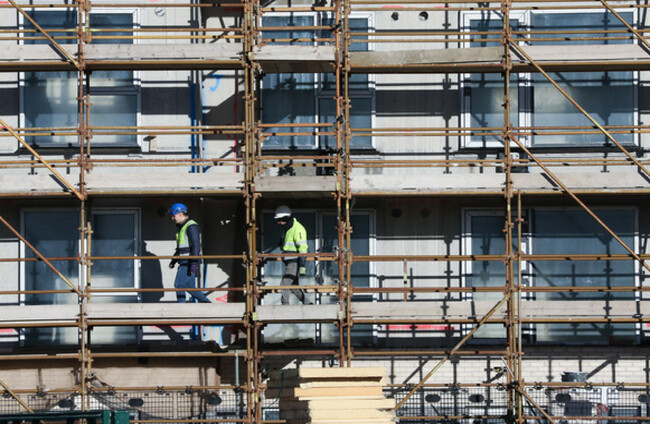
THE STATE’S AFFORDABLE housing agency is planning to increase the number of homes it builds outside of Dublin – but the attention will still be mostly on the capital between now and 2030.
The Land Development Agency (LDA) has said it is on track to build some 13,272 new homes between now and 2030, with around 1,800 set to be finished this year.
Some 7,892 will be completed directly, while 5,380 will be delivered through Project Tosaigh initiative, which aims to accelerate delivery of housing on sites with full planning permission that are not currently being developed by private sector owners.
Of the 27 projects, only 10 are set to be outside of Dublin.
The LDA said it is “firmly in our plans” to expand beyond cities and start to build smaller scale developments in other parts of the country.
Established in 2021, the agency’s main role is to acquire and develop state and other land to deliver affordable homes. It has built some 3,215 new homes since 2022, the majority of which have been in Dublin, with around 10,000 people now living in them.
In a mid-year update at its offices on Dublin’s Townsend Street on Wednesday, the LDA said that most of its upcoming developments will be apartments in Dublin and Cork, with other projects planned for Limerick, Galway and Kildare.
LDA chief executive John Coleman also told reporters there is “a lot of interest” in Waterford at the moment.
The agency is particularly interested in building around 400 to 500 homes in the North Quays area of Waterford with the local council, as well as around 200 to 300 homes at the site of the former St Otteran’s Hospital site in the city, he said. These would then be sold on.
Coleman said the agency also has plans to expand to more regional areas.
There’s lots of great places to live around Ireland that aren’t the cities, and we have a mandate now from the government to drive development regionally.
“What that looks like to us is to select and pursue sites that are outside the city areas and to bring them to a scale of average 200 homes, to select a material number of those and to bring them through the planning process with a view to get them up and running for development.”
He said even if they initially cost more than what the LDA could sell them for on the market, “we’re still prepared to take those first steps on the ladder without knowing exactly what the final few steps will be”.
“At least if you have sites with planning permission, you’ve got options to make decisions. If you don’t have those, you’ve no options.”
Coleman said the LDA is currently “looking at a number of opportunities” to acquire land in Limerick, Cork, Galway, the Greater Dublin area and some surrounding counties.
“It’s definitely part of the future of the LDA, and we’ll have good clarity on that as the year progresses.”
The agency now controls or has rights to land for approximately 30,000 homes. There are currently 6,449 under construction.
It is projecting some 1,800 homes will be delivered before the end of the year, with a spend of €1.5 billion on land and housing development forecast for this year. Of that figure, around €200 million would be for buying land.
A total of 8,300 homes are projected to be built between this year and 2028. This will cost somewhere in the region of €3.5 billion, according to Coleman.
The LDA delivers homes in two ways: acquiring public or private land and procuring a building contractor to build the apartments, or funding builders through schemes like Project Tosaigh to build apartments which are then given back to the LDA.
In both instances, they typically operate the apartments under the cost-rental model. That is where the price of rent is at least 25% below the regular market rate in the area.
Coleman said the agency is “increasingly efficient as a direct house-builder ourselves”.
“We’re experiencing very good results in our tender prices on direct delivery, to the point now that it is cheaper for us to deliver by doing it directly ourselves rather than engaging a house builder.”
He said “a lot of positive changes have been made” that has improved delivery of homes, including an increase in funding from the government and fewer delays as a result of judicial reviews, which he felt were abused in the past.
Regulations introduced last year saw requirements for new apartments tweaked in a bid to reduce costs. It was estimated that the changes, including reduced floor plans, fewer windows and balconies, would save a minimum of €47,000 per apartment.
Asked by The Journal if that forecast proved to be correct, Coleman said: “It wouldn’t be a million miles off.”
But he said that while the smaller apartment size is a factor, it wasn’t the biggest saving.
“For instance, the amount of dual aspect apartments that you have to have has a significant bearing on how sites stitch together, and it’s mainly down to the fact that you get more apartments on a given site because of the design standards. That’s what gives the main efficiency.”
At the end of last month, the housing agency had some €2.9 billion in assets. The agency plans to lever and borrow against that balance sheet to fund the building of more homes.
The government has committed €6.25 billion to the LDA, a fivefold increase from the €1.25 billion allocated in 2022. Coleman said this reflects the progress the agency is making in terms of the upscale in delivery.
The housing agency is currently appointing financial advisers with a view to pursuing debt facilities from the European Investment Bank, which it hopes to “make significant progress on” later in the year.
They are also seeking funding from Ireland’s pillar banks – AIB, Bank of Ireland and Permanent TSB. “We’d be looking to raise debt of about €1 billion,” Coleman said.
He added: “A significant level of debt capacity will be introduced to the LDA over the next six to nine months. We want to diversify and stretch that equity investment from the government.”
The Land Development Agency Act 2021 allowed equity of €1.25 billion, as well as allowing the agency to borrow the same amount. “It’s only now that we’re getting the level of rental income coming back that we can service that debt,” Coleman said.
The LDA’s income in the year to date was €25 million, which is “growing significantly as we let more properties”.
Housing Minister James Browne this week received cabinet approval for legislation that requires all developments built on public land to comprise 50% social and affordable housing.
Currently, the affordable housing share is 80% in towns including Dublin and Cork with a population above 150,000, and 50% elsewhere.
Now, the LDA will be able to build up to 30% private in Dublin and Cork, and up to 50% private elsewhere.
When asked by The Journal if this would lead to larger populations seeing a lower affordable housing share, Coleman said the 30% figure is “not a target”.
“It’s for flexibility. It’s to provide home-ownership options for people as well, which is a very legitimate thing for people to want. It’s that, rather than it representing a target.”

To embed this post, copy the code below on your site


have your say