Sign in. It’s quick, free and it’s up to you.
An account is an optional way to support the work we do. Find out more.
Sign in. It’s quick, free and it’s up to you.
An account is an optional way to support the work we do. Find out more.
COMMUNITY GROUPS AND politicians in south Dublin have highlighted issues with antisocial behaviour, garda shortages and fear and intimidation.
In a public meeting of the South Dublin Local Community Safety Partnership (LCSP) group, representatives gathered in Tallaght stadium on Thursday evening to discuss the biggest issues in the area and propose solutions.
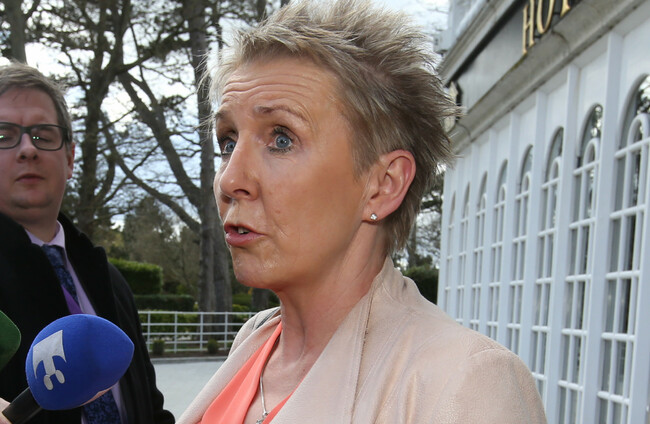
Speaking to The Journal after the meeting, mayor of South Dublin County Council Pamela Kearns said: “The answer is early intervention, helping parents who are struggling, because a lot of the issues are happening in the more deprived areas.”
Issues that came up repeatedly during the round-table discussion included bins and bushes being set on fire, open drug use in public places, and opportunistic crime.
The LCSP comprises residents and community representatives with local councillors, An Garda Síochána, business and education stakeholders, and key statutory agencies including the HSE, Tusla and South Dublin County Council.
The function room at the stadium was filled and organisers were quick to remark that they were happy with the turnout of roughly 50 people. To facilitate discussion, each table of attendees was joined by two LCSP members.
After a short presentation from Independent councillor Mick Duff, LCSP coordinator Maria Nugent then explained the structure of the LCSP and how it replaced the Joint Policing Committees (JCP).
She outlined that this meeting was to get a basic sense of the issues in south Dublin communities and use these as a starting point for the new initiative’s three-year plan.
The majority of the ordinary members of the public who spoke at the meeting said the issues they are seeing mostly involve young people in the communities.
Though they were appreciative of An Garda Síochána, with several attendees remarking that gardaí had attended their houses when they were called, many of those at the meeting brought up grievances with their response.
Several called for better anonymous reporting tools and called for more visible gardaí in their areas.
Some locals also highlighted fear and intimidation they’ve faced when trying to report incidents to gardaí. They said they were often reluctant to give their names when making reports.
Kearns, of the Labour Party, said though “we do need more guards”, it’s “not all about throwing guards out, that doesn’t solve the problem. You need to build up a relationship with the kids and the community”.
“Guards are doing a fantastic job in relation to that.”
The LCSP replaced the old JCPs, which were made up of local authority representatives, gardaí, members of the Oireachtas and some volunteers. The new LCSPs have members from more bodies, including Tusla.
Many LSCPs across the country have been criticised for holding their meetings behind closed doors. Journalists were able to cover the now-defunct JCPs.
Previously, several LCSPs told The Journal that they are not allowing the media to cover their proceedings, except for one meeting that is required to be held in public each year.
The ban has been criticised by the National Union of Journalists, Sinn Féin, and even the Waterford LCSP, which recently explained that it wanted its meetings to be conducted transparently.
This meeting of the south Dublin LCSP was its first public meeting and functioned mainly as an introduction to the partnership. The audience was given the explanation of how the LCSP works and a presentation on personal and community safety by crime prevention officer for DMR west Louise McHugh.
Following on from this, there was a discussion at each table, made up of people from different areas and two LCSP members, of the main issues in the communities and potential solutions.
Towards the end of the meeting, an LCSP rep stood up in turn from each table and presented these issues and ideas to the room. The meeting concluded shortly after that once Duff thanked attendees.
Kearns believes the partnership of all these groups “will help solve so many issues” and she called for “more money for government to facilitate early intervention”.
Duff also spoke to The Journal after proceedings ended, saying they hope to “reach the hard-to-reach communities” with these meetings.
Duff said the people in the room on Thursday were the ones excited to engage but that he wants to reach those that are less likely to attend such gatherings.
He hopes to “take the most common issues across the board and just try to say that’s common to every area, whether you’re private residential, whether you’re a social area, rental, whatever”.
Another theme throughout the meeting was rising issues with racism and the need for more cultural awareness. A number of locals said they had observed racial slurs being shouted at people of colour in the community.
Duff said they hope to focus on “integration” and community building for underrepresented groups like the Traveller and migrant communities.
All attendees’ suggestions were taken up and recorded at the end of the meeting and organisers pledged to keep engaging with locals.
The Journal’s reporting of the new Local Community Safety Partnerships is supported by the Local Democracy Reporting Scheme.
To embed this post, copy the code below on your site












have your say