Sign in. It’s quick, free and it’s up to you.
An account is an optional way to support the work we do. Find out more.
Sign in. It’s quick, free and it’s up to you.
An account is an optional way to support the work we do. Find out more.
LAST UPDATE | 17 Jun 2024
EUROPEAN ENVIRONMENT MINISTERS have signed off on the Nature Restoration Law, finally green-lighting the hard-fought for legislation to protect and restore degraded ecosystems.
The EU Environment Council discussed the law once again at a meeting in Luxembourg this morning, where Ireland’s Minister for Climate Eamon Ryan was among participants to speak out in its favour.
The Nature Restoration Law seeks to restore at least 20% of the EU’s land and sea areas by 2030 and all ecosystems by 2050, with measures to restore urban, forest, agricultural and marine ecosystems.
The law garnered significant political debate in Europe and individual member states, particularly around whether it could negatively impact farmers.
Proponents of the law advocated for it to be approved on the basis that it would form an essential part of Europe’s efforts to battle the climate and biodiversity crises, which pose a myriad of threats to land, lives and livelihoods, including agriculture.
The law was originally proposed by the European Commission and, after some compromising, passed though the European Parliament, but looked at risk as some countries pushed back on it at the EU Council stage.
However, the majority of countries voted this morning to approve the law, with only six countries - Italy, Hungary, Poland, the Netherlands, Finland, and Sweden – voting against it.
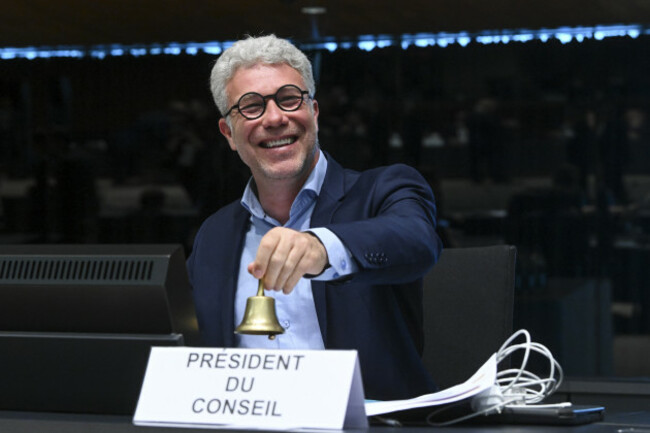
In addition to the benefits for climate and nature, countries advocated to pass the law in order to honour a previous agreement between the Council and Parliament, saying that to do otherwise would risk undermining the principles underpinning the functioning of the EU institutions.
Additionally, they wanted to send the EU to the COP16 biodiversity conference later this year with a strong legislative position on nature restoration after the bloc was a leader in important negotiations at the same conference last year – to do otherwise would be to renege on promises, many ministers felt.
Representing Ireland at the meeting this morning, Eamon Ryan told other ministers that there is “no food security in a world where nature is destroyed”.
“The compromise that has been reached more than anything else was attentive to the concerns of our farming community, which are valid. This is a voluntary law in the sense of the measures we may have to take will not be forced or imposed on any farmer or forester,” Ryan said.
“In my mind, it is a real opportunity to answer what the farmers are protesting about particularly the most marginal farmers in our union, that they need a fair income for protecting nature, and for that second reason, I believe we should approve the law here today.”
Eamon Ryan says that the approval of the Nature Restoration Law at an EU Environment Council meeting this morning marks an important, future-looking day
— Lauren Boland (@laurenanna_1) June 17, 2024
He also says the vote result received "one of the longest applauses" he's seen at these meetings
(Vid by @EUCouncilPress) https://t.co/8s25dAuwTD pic.twitter.com/E6kgc8cKrA
He said at the meeting ahead of the vote that the law would be critical in adapting to the climate challenge and that nature-based solutions will be some of the lowest-cost and most beneficial measures countries can take to reduce emissions.
The minister also said that the decision was about “maintaining and building trust in our union”.
“If we do not adopt the law today, how would you negotiate any future text? How would you get to a compromise if you expect, well, this could be changed after an agreement is made?” Ryan said.
“It would fundamentally undermine the institutional arrangements of our union, so for that issue of trust, I believe we do have to approve the law today.”

To embed this post, copy the code below on your site















have your say