Sign in. It’s quick, free and it’s up to you.
An account is an optional way to support the work we do. Find out more.
Sign in. It’s quick, free and it’s up to you.
An account is an optional way to support the work we do. Find out more.
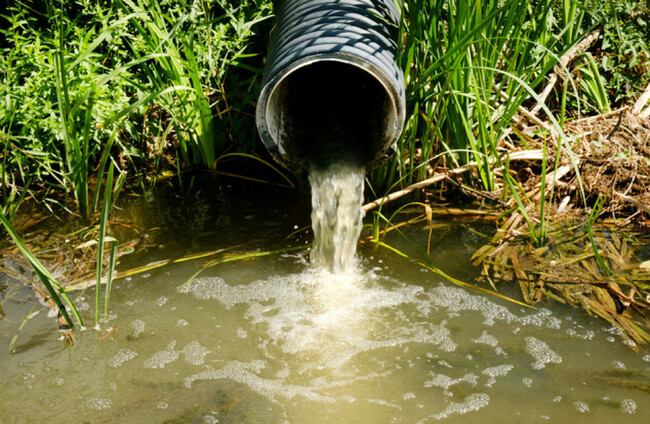
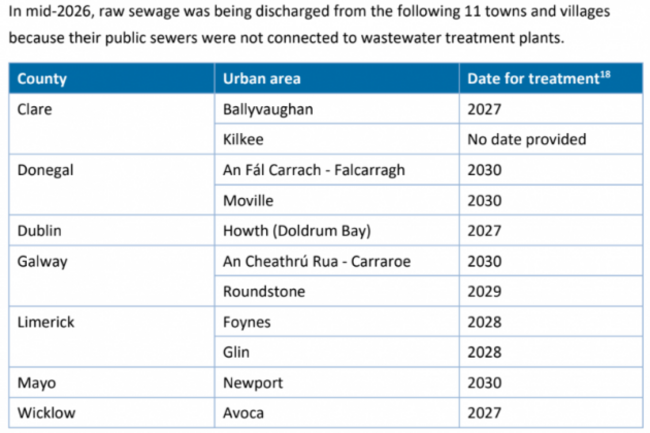
RAW SEWAGE IS being discharged daily from 11 towns and villages across Ireland.
These towns and villages see raw sewage from a population equivalent of around 15,000 discharged every day because the public sewers serving these areas are not yet connected to wastewater treatment plants.
This figure of 11 is down from 29 at the beginning of 2023.
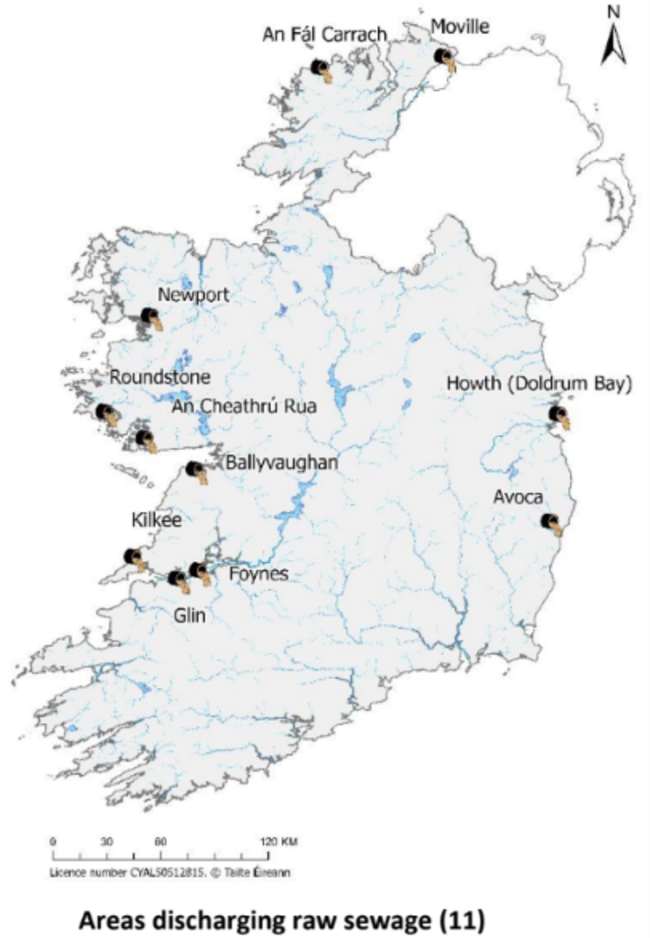
New treatment plants are under construction at two of these 11 locations, works are due to start shortly at a third, and projects are progressing through various design and planning stages at the remaining eight locations.
In several of these towns and villages, a treatment plant is not expected to be completed before 2030.
However, as the time needed to complete the remaining pre-construction stages at the final eight locations is uncertain, the completion dates for these sites are estimates.
The findings are contained in a new report from the Environmental Protection Agency (EPA) which has warned that “poor management of wastewater treatment plants by Uisce Éireann continues to harm our environment”.
The 2025 urban wastewater treatment report also found that some 55% of the 505 licensed plants across Ireland discharged wastewater that failed to meet EPA standards for preventing pollution.
This is down from a rate of 59% in 2024.
These breaches ranged from occasional short-duration discharges of inadequately treated sewage to frequent or continuous discharges of raw or poorly treated sewage.
Around half of these failures were due to deficient infrastructure, while the other half were due to poor operation and maintenance.
The EPA warned problems with the operation and maintenance of treatment plants “remain far too common” and that many environmental incidents could have been prevented by better management of wastewater treatment infrastructure.
The EPA called on Uisce Éireann to “address this without delay and reduce discharges of inadequately treated wastewater through improved operating practices, staff training and support, and effective preventative maintenance”.
Elsewhere, the EPA said sustained investment will be required over many years to provide the infrastructure necessary to ensure wastewater is appropriately treated.
In all, the EPA said it has identified 72 “priority areas where action is most urgently needed to prevent pollution and protect the environment”.
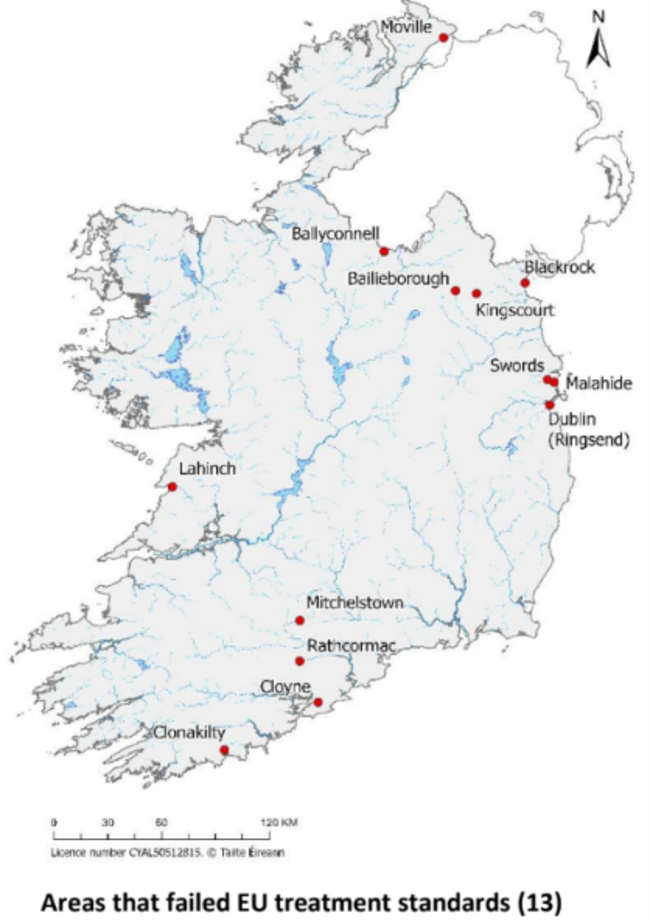
These include 13 towns and cities, which account for close to half of the wastewater collected in large urban areas, which have failed to meet mandatory European-wide wastewater treatment standards introduced more than 30 years ago.
Elsewhere, the EPA said wastewater treatment must improve at nine priority areas to protect habitats of critically endangered freshwater pearl mussels.
While improvements have been carried out or are underway at five of these areas, the EPA wanted that progress at the other four locations “is far too slow, with construction not scheduled to start until 2030”.
The EPA said this “lack of progress is putting the protection of these important habitats at risk”.
Uisce Éireann’s progress in assessing the impacts of discharges on shellfish waters is also “unsatisfactory”, according to the EPA, and it has called for “urgent action” to complete 16 overdue assessments.
In response to the report, Uisce Éireann noted that while 13 towns and cities did not meet EPA standards, some 177 did.
This means that of the 190 large urban areas assessed, 93% complied with EPA standards.
Meanwhile, Uisce Éireann said it invested some €454 million in wastewater services last year.
A spokesperson for Uisce Éireann remarked: “While these achievements are making a real difference for communities and the environment, we know there is more work to do.
“We remain focused on addressing challenges, investing where it is needed most, and delivering the improvements that communities expect and deserve.”
Uisce Éireann said it acknowledges the EPA’s concerns about operational incidents and added that many of these issues are “linked to the age and condition of parts of the wastewater system, which in some areas were not designed to meet the demands placed on the network today”.
“Addressing these challenges is a priority, but upgrading infrastructure on this scale takes time,” said Uisce Éireann.
It also acknowledged that much of Ireland’s wastewater infrastructure has been in place for decades and requires significant investment and modernisation.
Meanwhile, Uisce Éireann said “new organisational structures have been designed to strengthen operational oversight, improve incident response, and enhance long-term resilience of our assets”.
However, it called on the public to “play their part to protect the wastewater network”.
“Unfortunately, one of the challenges we continue to face is the disposal of inappropriate materials into our wastewater network,” said Uisce Éireann.
It reminded the public that fats, oils, grease and other unsuitable materials can cause blockages and put additional pressure on the wastewater network and that disposing of these items correctly helps protect the infrastructure and “focus resources on maintaining and improving services”.

To embed this post, copy the code below on your site















have your say