Sign in. It’s quick, free and it’s up to you.
An account is an optional way to support the work we do. Find out more.
Sign in. It’s quick, free and it’s up to you.
An account is an optional way to support the work we do. Find out more.
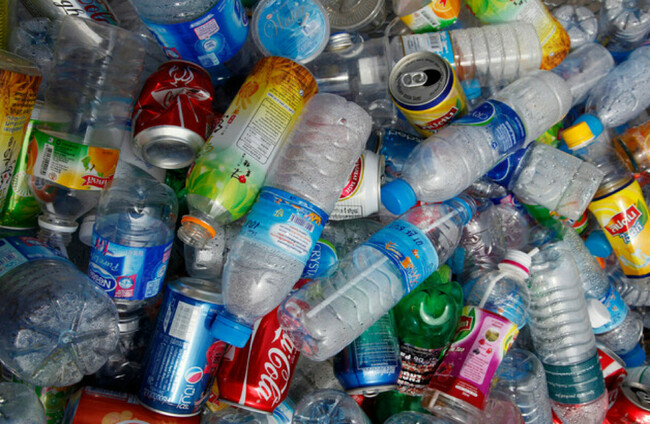
RE-TURN HAS SAID that the recycling rates of plastic bottles has increased to over 90% since the introduction of the deposit return scheme.
The company appeared today before an Oireachtas climate committee to provide a “clearer understanding of how the scheme is funded through producer fees, unredeemed deposits and revenues from the sale of recyclable materials”.
Re-turn is a private, not-for-profit company that operated the deposit return scheme.
In its opening statement to the committee, Re-turn chief executive Ciarán Foley stated that the company is “not a State body” and “does not receive Exchequer funding”.
He added that the purpose of the scheme is to “increase the collection and recycling of containers, reduce litter, and ensure that high-quality material is collected so it can be properly recycled”.
Foley noted that Ireland is among the highest consumers of plastic bottle and cans in Europe, with over 1.9 billion placed on the market annually.
He said that before the scheme was introduced, more than half of these bottles and cans were not being recycled but over 800 million additional bottles and cans are being recycled as a result.
More than three billion bottles and cans have been collected through the scheme and Foley said the “impact on recycling rates have been significant”.
Around 49% of plastic bottles were recycled before the scheme’s introduction, and this has risen to over 90% today.
Meanwhile, Foley said that since the scheme’s introduction, the material quality has “improved substantially” and that the plastic bottles collected through the scheme reach quality levels of up to 98%.
This level of quality is above 95% needed for bottle-to-bottle recycling.
Foley pointed to this as the reason why a separate collection system is necessary.
“The deposit return scheme provides a dedicated return route for bottles and cans,” said Foley.
“It increases capture rates, reduces contamination, protects material quality and enables bottles and cans to be recycled back into new containers.”
Meanwhile, Foley remarked that the scheme is funded through producer fees, the sale of recyclable material and unredeemed deposits.
“It does not rely on public funding,” said Foley.
“As a not-for-profit organisation, all funds are reinvested into operating and improving the scheme.”
And while he acknowledged that unredeemed deposits are an “expected feature of deposit return schemes, particularly in the early stages,” he added that these unredeemed deposits are “not profit”.
“As return rates increase, unredeemed deposits decline,” said Foley.
“Re-turn will invest any surplus unredeemed deposits in supporting Ireland’s Circular Economy.”
He added that Ireland does not currently have a facility capable of fully recycling plastic bottles back into food-grade drinks containers and that the scheme now provides the “scale and quality of material needed to support such a facility”.
He said such a facility would present a “significant opportunity to reduce reliance on exports and strengthen Ireland’s circular economy”.
Re-turn alongside the Convenience Stores & Newsagents Association (CSNA) and the committee said it was “keen” to hear its perspective given it has “raised concerns that the current handling fee may not adequately cover the operational costs of participation”.
Sara Orme, president of the CSNA, said the scheme seems “incapable of allowing our sector to recover their costs”.
She said the scheme is supposed to be “cost neutral” for retailers.
Orme said “retailers provide space on their property for the scheme, ensure the machines are in clean and working order, deal with unwanted litter, and wait for weeks to be compensated 2.2 cent per container”.
She said it is “very obvious” that the fees and grants paid by Re-turn “do not come anywhere near covering our real costs” and that the 2.2 cent handling fee per container will “never provide recompense for our costs”.
Re-Turn has said that it will review the handling fees next year but the CSNA said that “by that time, our retail members will have incurred very large deficits”.
Meanwhile, a deposit return scheme is due to be launched in Northern Ireland in October 2027 and Orme said there are “very real concerns that there will be an exodus of containers from the South to the North”.
She said this is based on the “sterling differential on the flat 20p deposit for all cans and bottles, as opposed to the 15c charged for smaller bottles and cans in our scheme”.
She said this will lead to an increase in unredeemed deposits in Ireland and “further difficulties with meeting our collective targets of 90% if products are travelling North”.

To embed this post, copy the code below on your site















have your say