Sign in. It’s quick, free and it’s up to you.
An account is an optional way to support the work we do. Find out more.
Sign in. It’s quick, free and it’s up to you.
An account is an optional way to support the work we do. Find out more.
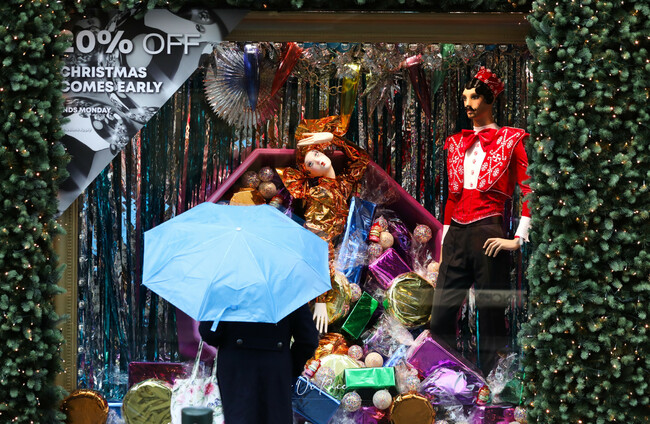

WHEN WE THINK of words that encapsulate Christmas, joy, excitement, family and blessings spring to mind.
Here’s one I heard very recently from someone describing their sentiments regarding the holiday season: Disgusting.
A little context. Chats at the coffee collection point were circling around a certain Christmas song (I’m looking at you, Mariah) having been played just two days after Halloween. The general consensus amongst the group was, it is far too early for such music to be played. Far too early. A contentious annual debate, for sure.
We shook our heads in solemn, judgy agreement and the barista told us they had heard the same song several times across the recent midterm break. “Christmas for me,” they said, “has become disgusting.”
This person has worked the Christmas retail period for the last decade and is of the opinion that silly season, along with its relentless marketing ploys, is being shoved down our necks earlier each year. It was at this point in the conversation that they dropped the “disgusting” adjective.
This year, they will not be putting up a Christmas tree and along with their husband, have decided to treat the day the same as any other. It is a sentiment that could be accused of having a slight tinge of bah-humbug to it but really, it’s difficult not to be stressed over the whole thing when a particular Christmas shop opened its doors for business on 7 September.
Back in 2020, John Lewis aired their Christmas ad on 13 November. This year, it was released on 4 November, a whole nine days earlier.
The festive phenomenon of Christmas arriving earlier with every trip around the sun goes by its own handle: ‘Christmas Creep’. It refers to the gradual lengthening of the season, which can begin in autumn, with retailers promoting and selling Christmas-related merch.
Not without its fans, there are those who hold the opinion it boosts anticipation and gives us something to look forward to in a world seemingly filled with bad news. In contrast, others are more critical saying it causes fatigue and detracts from the real meaning of Christmas.
Black Friday, with Cyber Monday hot on its heels in tandem with emails of the “oops our mistake” variety flooding our inbox informing us the “offer is now extended to (insert random date) all contribute to the creep which can trigger intense feelings of panic and stress. Is it any wonder we might have reached our jocular limit well before 1 December?
Love it or loathe it, it’s here for the long haul.

So how can we protect our sanity and retain even a little bit of enthusiasm for the 25th without getting our tinsel in a tangle?
It is extremely frustrating to have preachy sanctimonious suggestions foisted upon us at any juncture, let alone in the run up to Chri5tm@s. But (sanctimony incoming) a couple of straightforward pointers can really separate the wheat from the chaff and perhaps alleviate some of the pressure associated with this time of year.
First off the bat – we really don’t have to keep up with the Jones’. Plenty of families have made a tradition out of putting up the tree in time for the Toy Show, and nothing bad has happened.
Won’t someone please think of the children in the midst of all the overwhelm? How does it affect them? The most impressionable amongst us. I know of one person who puts the toy catalogues in the bin as soon they fall through the letter box. Preventing not so small demands from tiny people wielding an insatiable red magic marker. “What they don’t know, they don’t know,” she says.
Another family I spoke to hung onto their recycling receipts with the sole intention of putting them towards extras in the Christmas shop.
Do you know about the Rule of 72? This one requires a modicum of will power in that you wait 72 hours before purchasing, particularly if it’s online. Chances are, if it is not an essential requirement, it won’t become an impulse buy three days later when it has lost its lustre.

Then there’s the incredibly dull directive of setting a budget, which is absolutely no fun at all. Nor is it any use if we don’t stick to it. But Christmas brings a very financial burden to households every year.
Last year, the Competition and Consumer Protection Commission (CCPC) found the average Irish household spent €1,177 over the Christmas period (an increase of €1,030 the previous year). With the current cost of living, we are unlikely to see an improvement on that figure this December.
What a gift it might be for someone to hear another say, “if you really must get me something for Christmas, the amount should be no more than €10.” In keeping with the true meaning of Christmas, the real spend here is time pondering what to go shopping for considering the allowance, ergo coming up with a token that is thoughtful yet hasn’t broken the bank. The recipient is moved as a result and the giver has demonstrated what Christmas is all about. Giving not receiving.
Probably the most tiresome proposal of all, but absolutely one your future self will thank you for looks like this: plan for next year. Straight away. In January. The smallest sum each week soon adds up and it will go a long way to contributing towards seasonal costs.
Have I just brought the Christmas creep forward by a whole twelve months?
To borrow a well-worn phrase from psychology circles, we cannot control other peoples’ actions or behaviour, but we can control how we respond. The same could apply to the Christmas creep; there isn’t a lot the consumer can do about it except take a deep breath and look away.
God be with the days when we waited until Penneys informed us all via their jolly jingle on 1 December that they Have A Whole Lotta Things For Christmas before we lost the seasonal run of ourselves.
Gwen Loughman is the gatekeeper of four boys, one husband and a watcher over two dogs.
To embed this post, copy the code below on your site













have your say