Sign in. It’s quick, free and it’s up to you.
An account is an optional way to support the work we do. Find out more.
Sign in. It’s quick, free and it’s up to you.
An account is an optional way to support the work we do. Find out more.


BY NOW YOU would have read or heard some parts of the Cornell rape case, one that has shocked the public in the US. Prosecutors there have now reopened an investigation into an alleged gang rape at the prestigious Cornell University in New York, following claims that the college failed to punish the men involved.
The alleged victim in this case, known only as Jane Doe, said in a civil lawsuit that she was drugged with ketamine, assaulted and raped in 2024 by seven members of a frat house in the college. Cornell closed the Chi Phi fraternity and temporarily suspended the students alleged to have been involved, two of whom were later expelled.
However, as more details of the night in question have come to light, anger has grown at Cornell over its actions, which many believe were too lenient. Prosecutors are now weighing up the evidence in a fresh criminal inquiry.
The allegations about that evening are horrific. According to the civil lawsuit, the 20-year-old undergraduate went to the fraternity house after a night out, where she alleges she was given ketamine and alcohol and subsequently raped and assaulted by multiple men over several hours. The civil lawsuit filed in New York also includes graphic details, including a screenshot of a Snapchat group message advertising “free pussy” during the incident, in an apparent invitation for other members of the fraternity to take part.
The case has also once again shone a spotlight on the issue of sexual assault on US campuses and attitudes within university bodies themselves to such crimes. It has ripples across politics and media circles, with New York Governor Kathy Hochul demanding answers this week.
I want answers. And I want accountability.
— Governor Kathy Hochul (@GovKathyHochul) September 30, 2026
I spoke with Cornell’s president today, and the university has agreed to bring in outside counsel for an independent investigation.
I’ve directed my team to look at what more we can do to strengthen protections for survivors.
This… pic.twitter.com/yDLOgi4svz
Democrat, Alexandria Ocasio-Cortez, gave a town hall speech during the week, referencing the alleged gang rape and decrying the “culture of rape, sexual assault and paedophilia” in elite institutions across the US.
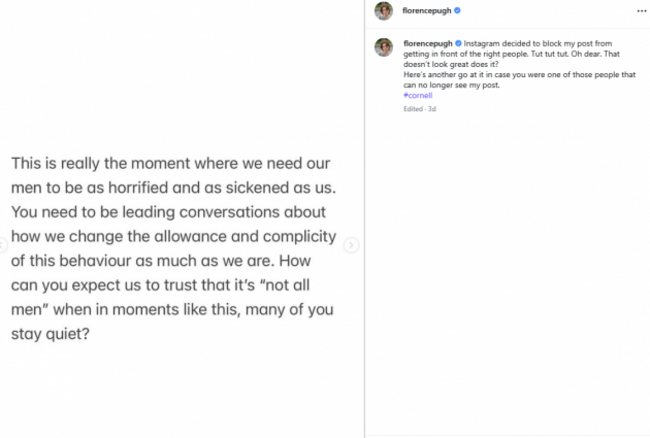
Actress Florence Pugh also spoke out about the case this week, too, expressing their revulsion at the details of the alleged crime, and calling for greater solidarity from men within society with the women who suffer rape.
After reading those heart stopping details of this alleged rape (let’s not shy away from that word), I went into my daughter’s room and hugged her while she slept, staring at her and wondering how do I keep her safe.
All I could think of was that poor girl and her family, the trauma, the pain and the incredible loss. Rape may be fleeting for those who commit it, but it’s a life sentence for the survivor. All day I started thinking of the absolute bravery of that same woman in the US, who is still fighting to get justice.
It shows how broken the system is when someone who gets viciously brutalised has no other recourse but to seek justice via a civil suit because she says she was failed by various individuals and institutions. If you read the reports, you should have many feelings, disgust, sadness, sympathy, but most of all rage. Rage for the rapists who carry out such crimes, rage towards the bystanders who do nothing and rage towards a system that is utterly broken. A system that continues to fail our girls in every country, in every postcode.
For anyone who may think “we’re in Ireland, not America”, remind them of the bravery shown by women including Lavinia Kerwick, Aisling Vickers, Niamh Ní Dhomhnaill, Leona O’Callaghan, Bláthnaid Raleigh, Ciara Mangan, Nikita Hand, among many others. And let them know that the report from the Central Statistics Office tells us that over 21% of women, that’s one in five women, in Ireland have experienced non-consensual sexual intercourse in her lifetime. 52% of women in Ireland reported experiencing sexual violence at some point in their lifetime.
This isn’t just an American problem, it’s an everyone problem.
We cannot keep telling our girls to be careful while we are teaching boys to be entitled. From the moment our daughter was able to understand, we started to teach her how to protect herself. And it’s similar lessons we hear time and time again. How many of us have asked a friend to watch our drink? How many of us ask our friends to text us when she gets home? To share their location? How many times have we heard parents say to daughters “don’t wear that, you’ll attract too much attention”?
But how often do we hear boys being taught consent? Being told that women are to be respected and not used? That violence against women in any form is wrong? Or when they witness sexual harassment or sexual assault, they need to be an active bystander and ally? Or that when women say they have been attacked to believe her?
It seems we have become superb at shifting the responsibility.
The details emerging from Cornell University are horrifying, but they beg the bigger question of what are young men being taught about sex, consent, women and entitlement?
Just this week, the Dublin Rape Crisis Centre issued a report that gave some alarming insights and makes the reader ask the above question even more. Within their surveyed participants of over 1,000 people, almost half, 48%, of men aged 18 to 24 believe there are “a lot” of false rape allegations. A third, 34%, of young men say a rape should not be believed unless there is a guilty verdict in court or unless it has been reported to gardaí. Two in five, 40%, young men believe rape and sexual violence are exaggerated by the media. The irony here is that the scale of sexual violence towards women is very real, if anything, it’s underreported since survivors fear that they would not be believed or get the justice they deserve.
The World Health Organization estimates that almost one in three women globally, 840 million, have experienced physical and/or sexual violence during their lifetime. UNICEF estimates that more than 370 million girls and women have experienced rape or sexual assault before the age of 18. UNESCO estimates that one in five girls experience some form of sexual violence during childhood with the violence occurring in and around schools and through online environments. Sexual violence doesn’t just suddenly appear on the college campus, it begins in childhood and follow girls into adolescence, secondary school, college and adulthood.
Again, not just a Cornell problem, it’s an everyone problem.
Even where we improve SPHE Social, Personal and Health Education curriculum and address issues like consent, what is being learnt in the classroom isn’t making a difference in the corridor. Research from the Rape Crisis Network Ireland found that 80% of adolescents had been subjected to some form of sexual harassment, 83% had witnessed sexual harassment, and 78% said it occurred within their peer community. Yet, we still lack the type of national policy on sexual harassment that Rape Crisis Ireland has repeatedly called for.
The report also identified that more than 40% of the harassment reported in the study occurred online. This affirms the CSO reports where young people experience the highest levels of sexual harassment online. UN Women has issued warnings on the growth of the online “manosphere” and how misogynistic communities can reinforce harmful and violent attitudes towards women.
From incel forums, to ‘red-pill’ communities to influencers online, the message is stark laden with lies… women are manipulative, feminism is a dirty movement that have robbed men of their rightful place in society and male dominance needs to be reasserted. The internet did not create misogyny, but it has most definitely supersized its reach, given it an audience and, through toxic algorithms that reward provocative and harmful content, made it spread like wildfire.
We start early. Consent and respect should begin in childhood at home, at school, at sport, it must continue through secondary school and university, through active learning. All areas such as consent, coercion, pornography, rejection, emotional literacy and healthy masculinity should be covered. We should be having regular conversations about this and not just when it hits the headlines.
We teach boys to be allies and active bystanders. Just like we tell them to call for help if they see someone hurt on the street, it should be no different when they see someone subjected to sexual assault or harassment.
We stop blaming and start believing in survivors, the harrowing part of the Cornell rape allegations was how much Jane Doe had to convince those who should have been protecting her, and the lack of repercussions that followed for those she alleges assaulted her. The data is stark and depressing on how few survivors report their assault. But then as we saw from the Dublin Rape Crisis report, if people are predisposed to thinking it’s the survivor’s fault or worse still that they’re making it up and ultimately the perpetrator get off with zero consequences, who in their right mind would want to relive their brutalisation again and again and again? Because it’s not just once they have to recount it, from the initial statement to defending the pointed remarks on a witness stand, the scars are forever.
Regulate the parts that need regulation. Even before the horrific incident on the M9 during summer social media platforms had been challenged time and time again to make the online space safer by turning off their auto recommender systems, now more than ever we need to hold big tech accountable and regulate so that they stop funnelling our children increasingly misogynistic and sexually violent content.
And we properly fund support for survivors. We provide rape crisis services, a safe first point of contact, we provide specialist gardai support, we provide free counselling and post trauma services in every college campus and local community. We provide free legal support since we have seen too often what happens to survivors giving evidence in court.
This isn’t just a women’s problem. It’s an everyone problem.
How we choose to deal with it will determine how much we genuinely want to protect our daughters, our granddaughters and their daughters in the future.
Hazel Chu is a Dublin City Councillor, Deputy Leader of the Green Party, and she is the Green Party Spokesperson for Public Expenditure, Digitalisation and Media.
If you have been affected by any of the issues mentioned in this article, you can reach out for support through the following helplines. These organisations also put people in touch with long-term supports:
To embed this post, copy the code below on your site


















have your say