Sign in. It’s quick, free and it’s up to you.
An account is an optional way to support the work we do. Find out more.
Sign in. It’s quick, free and it’s up to you.
An account is an optional way to support the work we do. Find out more.

LAST UPDATE | 21 May 2025
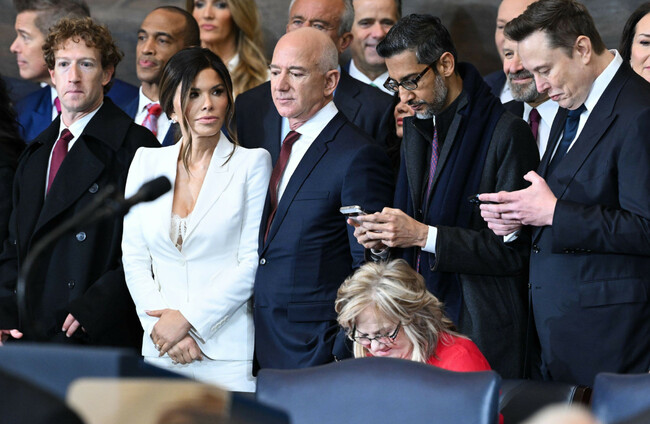
THE SIGHT OF Musk, Zuckerberg, Bezos, Murdoch, Adelson and others at the inauguration of US President Donald Trump in January, in many ways, symbolised the capture of government by the billionaire class.
Since the US Supreme Court’s 2010 landmark ruling in Citizens United v. Federal Election Commission, individuals or corporations can spend unlimited money on American elections. This has emboldened the super wealthy like never before, with implications far beyond America.
Trump’s arrival on the political scene was a godsend to the billionaire class, as he was and remains the perfect conduit for their agenda. In spite of the fact that he himself is a billionaire, with a track record of numerous bankruptcies and disgruntled former employees, his questionable reality television brand mixed with faux conservatism, toxic nationalism, transactional foreign policies, and comedic performances appeals greatly to large parts of the working class across the US, and many others further afield.
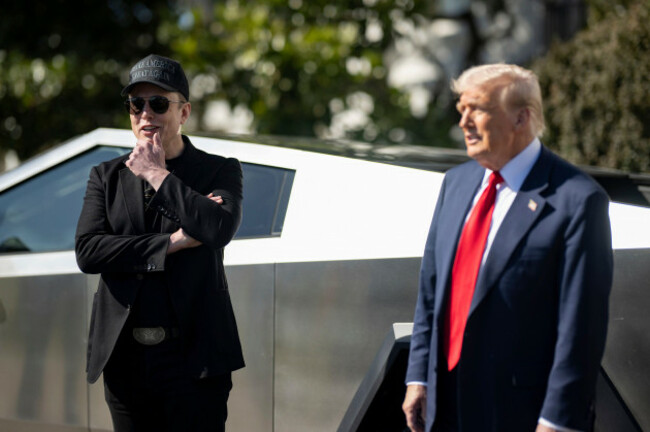
Congress is currently debating the administration’s tax bill. The contentious legislation will cut taxes for wealthier Americans, partly paid for by cuts to the public health programme, Medicaid, as well as to the food assistance programme, Snap, both used by tens of millions of the country’s poorest.
Tech mogul Elon Musk has used the cover of his crusade to cut supposed waste, and the creation of the so-called Department of Government Efficiency, Doge, to ensure that the administration opens the taps of vast federal funding for his private companies SpaceX and Starlink.
Doge cuts and the slashing of rights and regulations have not only left tens of thousands of people without employment, they have removed vital citizen protections, along with functions and skills from the government, at places like the IRS and the Social Security Administration, which has ironically created vast inefficiencies.
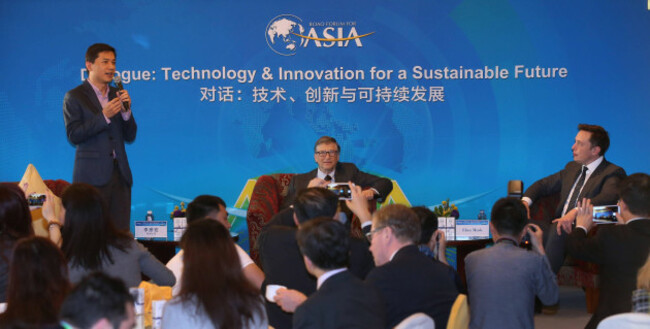
Microsoft founder and fellow billionaire, Bill Gates, recently accused Musk of killing poor children. This is in relation to cuts to the US Agency for International Development budget, which is not only a key and effective tool for soft power, but it is also a vital lifeline for some of the world’s poorest people. Gates warns of a resurgence of diseases such as HIV, measles and polio. USAID also works to address food insecurity and poor governance, and it promotes democracy and economic growth across the developing world. Something that is in all our interests.
Many of these billionaires have been accused of leveraging their media companies for their preferred candidates and personal agendas. It’s now impossible to avoid Musk on X, where he has engineered the platform to elevate his tweets. And it’s clear his far-right agenda and favoured conspiracy theories are promoted. Rattling the political landscapes, particularly in Europe, where a number of governments and the EU itself pose a challenge to the billionaire class’s agenda.
Jeff Bezos, the proprietor of The Washington Post, plunged the news outlet into chaos, by not allowing the Editorial Board to endorse a candidate in last November’s presidential election. It has raised eyebrows, with many suggesting Bezos did this to ensure that the ever-vengeful Trump would not withdraw extremely lucrative federal contracts from Bezos’s companies, including Amazon.
The rich have always existed, since time immemorial. Look back at any era, and you’ll invariably find poor communities living at the mercy of the rich and powerful. It has always been this way, and the billionaires of today are reminiscent of the kings and queens of yesterday.
What is different is that we now believe we live in the democratic era, supposedly a time without royalty, and yet these modern monarchs now have a global reach. No Roman or British Empire stretched to every corner of the human experience, but look at the richest men, now in control of technological innovation. They are a group with an unprecedented level of power over many aspects of human life, from politics to personal behaviour. They have innovated and brought exceptional and often welcome changes to humanity, and with that great power, you’d hope, should come great responsibility. But human nature being what it is, that is not always the case. The kings and queens of today can effect change with technological shifts and financial investments.
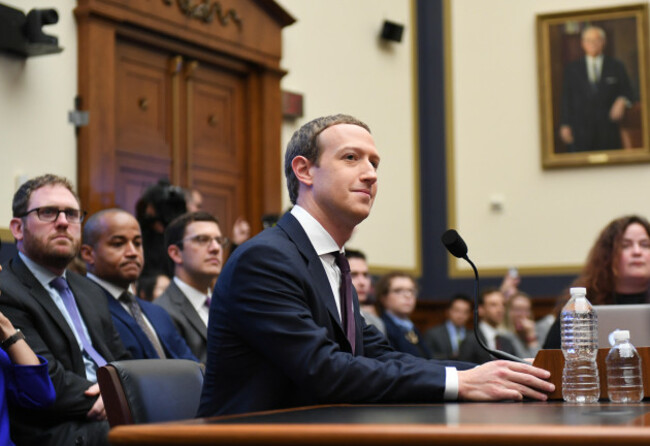
Human Rights Watch has accused Meta, which is owned by Mark Zuckerberg, of silencing peaceful voices in support of Palestine and the human rights of Palestinians. The report documents systemic global censorship on Meta’s platforms, Facebook and Instagram, on content in support of Palestine, whilst very little related to support of Israel faced similar restrictions.
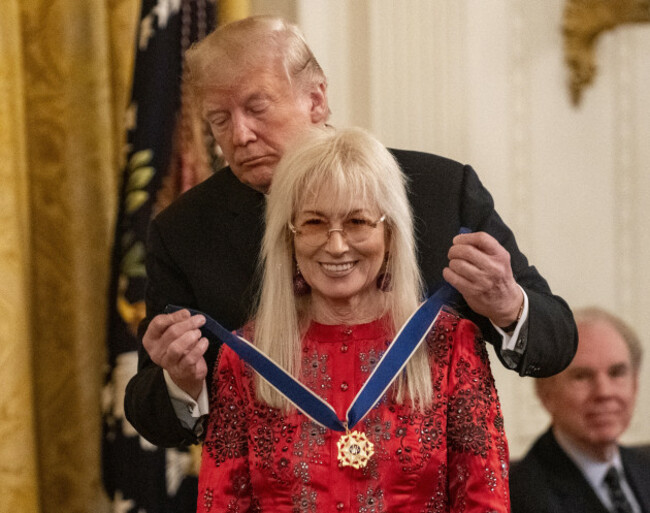
Trump’s top donor in his race for the White House was an Israeli-American woman called Miriam Adelson, the widow of casino magnate Sheldon Adelson. Her $100 million donation eclipsed that of Musk’s $75 million.
Their money was gifted to super PACs, political action committees, which are focused on particular agendas and issues. Adelson is a major funder of pro-Israel politics in the US and is credited with convincing Trump in his first term to move the US embassy from Tel Aviv to Jerusalem, damaging prospects of a two-state solution.
Billionaire fund manager and major donor to Ivy League universities, Bill Ackman, along with others, successfully mounted a campaign to remove the presidents of Harvard and Pennsylvania Universities, over his perception of their bias against Israel, and failure to tackle pro-Palestine on-campus protests, which he said were antisemitic. Many dispute and support his contentions, but it is clear his donations gave him the power to enforce his agenda, even at the expense of free speech and academic integrity at these institutions.
The billionaire godfather of political capture was the late Silvio Berlusconi. The Italian tycoon used his vast media empire to gain power, and then, when in the prime ministerial seat, he furthered a clientelist system, which many believe plunged the country deep into stagnation and prevented the government and policymakers from properly addressing problems.
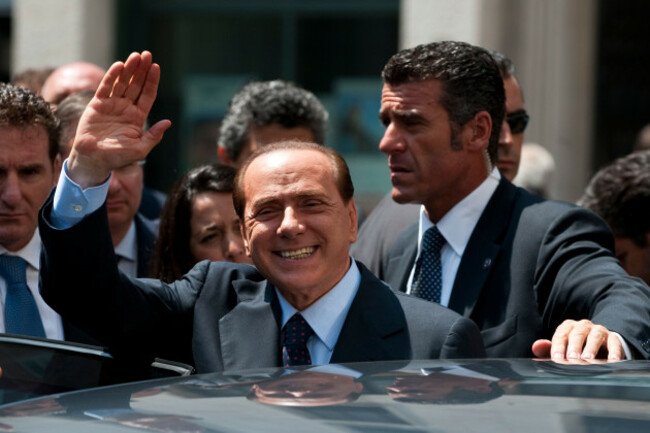
In many ways, Berlusconi acted as a model to Putin and Orban, who have also encircled themselves with gilded cronies and oligarchs and stifled free speech and academic freedom.
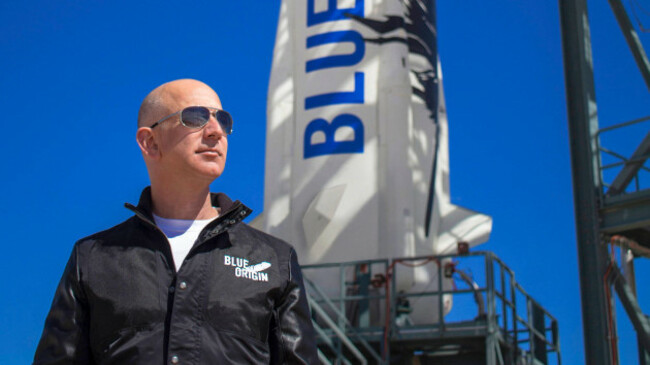
Pet projects and personal crusades are part and parcel of the billionaire playbook. Both Bezos and Musk pumped vast resources, which they claimed were solely from their personal fortunes, into ego-driven races to space.
However, Amazon has been accused of placing public subsidies and avoiding taxes at the heart of its business strategy. Musk’s SpaceX relies on government contracts, tax credits and subsidies. Their personal fortunes are subsidised. Their phallic-styled rockets are ultimately fuelled by public money.
Billionaire author JK Rowling has emerged as a crusader for the anti-transgender cause. She is now a key figure in Britain’s culture wars and was recently pictured celebrating the UK’s Supreme Court ruling on what a woman is.
Whatever your views on this, the picture is one of an incredibly wealthy woman furthering her agenda against one of the world’s most marginalised and vulnerable groups.
I love it when a plan comes together.#SupremeCourt #WomensRights pic.twitter.com/agOkWmhPgb
— J.K. Rowling (@jk_rowling) April 16, 2025
And whilst Rowling stands out amongst many of her billionaire classmates for actually paying taxes transparently, she would perhaps serve us all better by continuing her calls for the government to stop the world’s wealthiest from avoiding taxes with the aid of Britain’s many Overseas Territories.
From the time when royal courts held sway, the super wealthy have always played a role in politics, but we are now in a completely new era. Kings no longer rule by divine right, democracy was meant to move power to the people, but the super wealthy are now twisting democracy for their own ends.
Oxfam’s latest inequality report, titled Takers Not Makers, highlights that not only has the wealth of the world’s 2,769 billionaires jumped last year from $13 trillion to $15 trillion, but that this wealth is mostly taken, not earned, as much of it comes from “monopolies and cronyism,” as well as from “corruption.”
They are not successful business people, they are successful lobbyists, successful campaigners and successful publicists. They leverage their wealth to threaten politicians and capture the government.
The culture wars and toxic nationalism are key tools of the billionaire class and their populist puppet politicians to distract from their true agendas. They end up fuelling extremism, particularly on the far-right, turning working-class people against each other, and ultimately poisoning our world at a very precarious geopolitical time. A backlash against billionaires is long overdue. One that confronts them on the source of their wealth, and the toll it is taking on us all.
Their bankrolling of politics threatens democracy. It must be tackled, and not just at a national level. Otherwise, we are flying blind into the new era of the super-rich, if we haven’t reached it already. Isn’t it about time the power came back to the people?
Gus Landy is an Irish journalist with over two decades of experience in the Middle East and Europe. He has worked for the BBC, Al Jazeera and Bloomberg.
To embed this post, copy the code below on your site












have your say