Sign in. It’s quick, free and it’s up to you.
An account is an optional way to support the work we do. Find out more.
Sign in. It’s quick, free and it’s up to you.
An account is an optional way to support the work we do. Find out more.
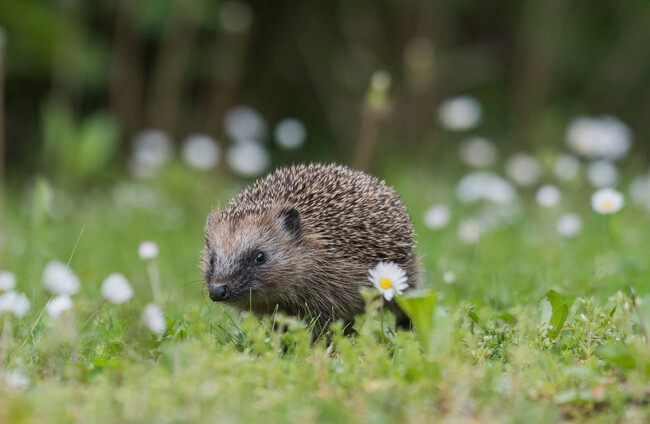

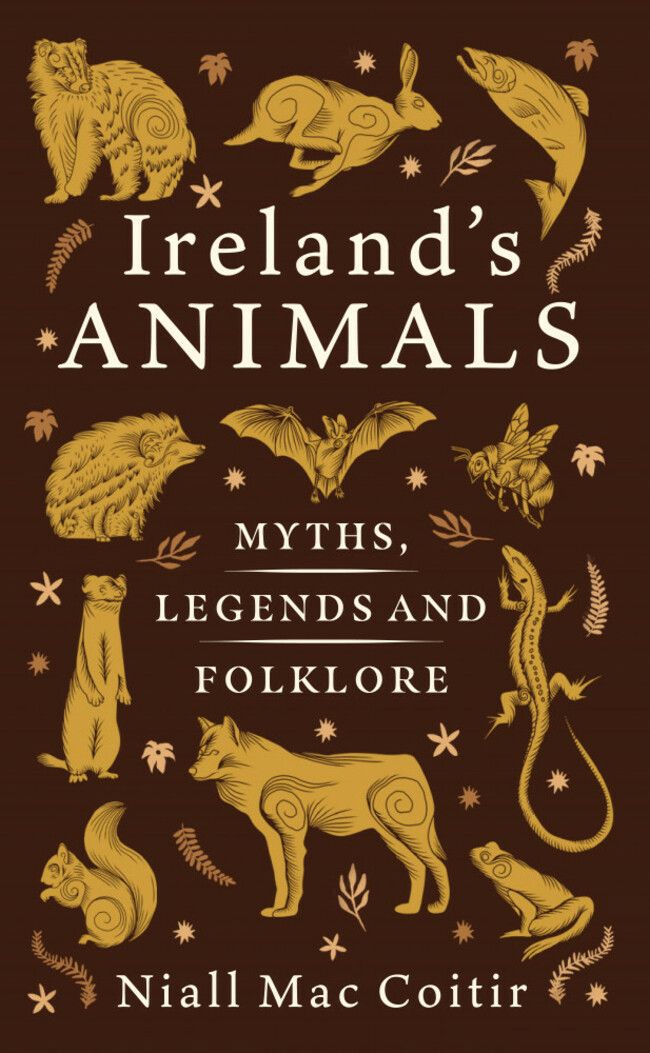
Ireland’s Animals is a new book by folklorist Niall Mac Coitir which celebrates the creatures that have shaped Irish storytelling for centuries. From the Brown Bull of Cooley to the fairyhorses of the Burren, from wolf kings and warrior hounds to magical cows, hares and seals, this book reveals the wonderful creatures that populate our folklore, myths and legends. In this chapter, Mac Coitir looks at the mysterious little prickly Erinaceus europaeus… the Hedgehog, or Gráinneog… a little creature often much maligned in old Irish tales…
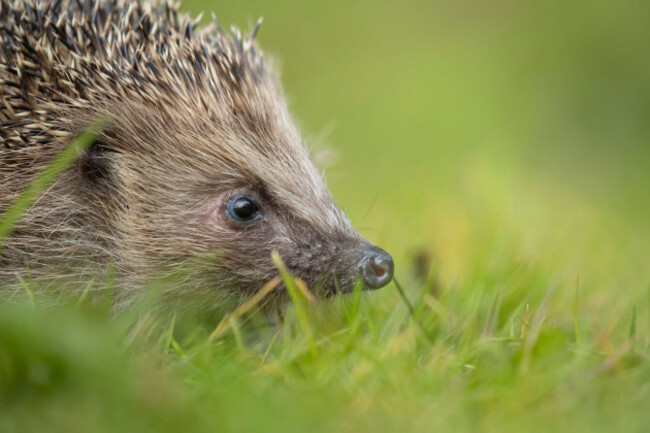
THE HEDGEHOG IS a distinctive sight in the Irish countryside, with its coat of spines and long sensitive snout. It was often persecuted out of a false belief that it sucked the milk out of cows’ udders, but is in fact a useful animal for farmers, as it eats many agricultural pests.
Various beliefs existed about the hedgehog in Irish folklore. One that was widespread was that hedgehogs sucked the milk from cows as they lay down in the field at night, especially on May Eve, so that many hedgehogs were often cruelly killed.
Hedgehogs were also wrongly thought to suck the contents of hens’ eggs in the nest. Another trait of the hedgehog was to predict the weather in spring-time, when it emerged from hibernation. If bad weather was set to continue, it returned to its hiding place to sleep, but if it stayed out it meant that better weather was coming.
It was taken as a particularly good sign if a hedgehog was seen around St Brigid’s Day on 1 February, as this meant milder spring weather was on the way. Later in the year, hedgehogs were thought to enter orchards to steal the apples lying on the ground, by sticking them onto their spikes and making off. The hedgehog was also believed to have helped Christ after his 40-day fast by rolling on the ground and collecting apples for him.
The hedgehog is part of a curious Irish folk cure for aches and pains, which involved frying an unfortunate specimen and rubbing its grease onto the affected area. This was probably an example of sympathetic magic, where an animal with prickly spines was thought to be effective at combating the pricks of pain from arthritis and similar complaints.
An Irish proverb to describe something that cannot be found or does not exist was cnuasach na gráineoige – ‘the hedgehog’s store’. The hedgehog appears in a few place names in Ireland, such as Inchagreenoge (Inis na Gráineoige – water meadow of the hedgehog), County Limerick, Garrynagranoge (Garraí na Gráineoige – garden of the hedgehog), County Cork, and Meenagranoge (Mín na Gráineoige – level field of the hedgehog), County Donegal.
Classical writers held some ideas about hedgehogs that have clearly influenced later folk beliefs. The Roman writer Plutarch said that hedgehogs collected fruit, particularly grapes, by rolling on them and taking them home on their spines.
The hedgehog was also said to be able to survive a fall from a great height by absorbing the shock in its spines. The Roman naturalist Pliny said that hedgehogs could foretell a change of wind, and shift the entrance to their nests to face away from it. This last notion is still a part of folk belief in England today.
There are no early fossil records for hedgehogs in Ireland, and Gerald of Wales, writing in the 12th century, declared that there were no hedgehogs in Ireland at that time. It has since been assumed that they were introduced into Ireland by the Normans for food.
This explanation has problems on several counts. The first is that the hedgehog has its own native name in Irish – gráinneog (‘ugly little one’). If the Normans had introduced the hedgehog to Ireland, the Irish name would most likely have been borrowed from the French hérisson or Latin Erinaceus – just as the Irish name for rabbit, coinín, derives from the Latin cuniculus, reflecting the rabbit’s Norman origins.
Could the hedgehog have been brought in by the Vikings a bit earlier? Again the Danish pindsvin or Norwegian pinsvin (‘pinswine’) are very different from the Irish word. Closer to home, however, the Welsh word draenog (‘thorny little one’) has an obvious similarity.
Incorporated into Irish and following its rules of pronunciation, ‘an dhraenog’ could easily have been changed to the more understandable ‘an ghráinneog’. This makes a Welsh origin more plausible. There were known historical links between Ireland and Wales in the early medieval period. The south Welsh kingdom of Dyfed (modern-day Pembrokeshire) was settled by the Irish in the early centuries AD, and retained its Irish character until the tenth century. It would therefore have been easy for the hedgehog to be brought over to Ireland from south Wales in pre-Norman times. The second problem is the motive for introducing the hedgehog.
The hedgehog has only ever been eaten as food by those on the margins of society, such as Gypsies or the very poor, as there is a lot of effort involved in cooking a hedgehog for little reward. The most usual way of cooking hedgehog was to encase the dead animal in clay and roast it in the fire. The spines stuck to the hardened clay coating, which could then be removed before eating the flesh. It is hard to see the Normans (or indeed the Vikings) bothering much with such a procedure.
In modern times the only people in Ireland said to eat hedgehogs this way were Travellers. A more compelling reason for regarding hedgehogs as useful animals is pest control. Hedgehogs are avid eaters of slugs, snails and various garden pests. They are also effective in controlling rats and mice in barns and outbuildings, seeking out their nests and happily consuming the young inside.
Throughout Europe hedgehogs have traditionally been regarded as useful animals by farmers, and there is evidence that hedgehogs were introduced into many parts of Europe for this purpose. This process continued in modern times with their introduction into the Hebrides in the 1970s (with disastrous consequences for the local birdlife, as hedgehogs are also fond of eggs).
Even today, advocates of wildlife gardening recommend making gardens attractive to hedgehogs for their help in keeping pests down. A much more plausible explanation, therefore, is that the hedgehog was brought to Ireland from Wales by farmers and gardeners as a form of pest control. Given that most gardening at that time was done in the lubgort, or enclosed herb and vegetable garden attached to a monastery, it is probable that the hedgehog was brought to Ireland from Wales by an early Irish monk anxious to keep the slugs off his cabbages.
It may also be possible to reconcile this account with the statement by Gerald of Wales that Ireland had no hedgehogs. It could be that the hedgehog remained confined to the southeast of the country for a century or two before it spread throughout Ireland, so it is possible that Gerald’s source was not aware of its arrival.
This is not so far-fetched when it is considered that the faster and more agile grey squirrel has still not colonised all of Ireland, although it arrived here a century ago. The theory of an introduction into the southeast of Ireland from south Wales shortly before the Norman arrival is consistent with the fact that the earliest record of a hedgehog in Ireland is in Waterford City in the 13th century. But whatever way the hedgehog arrived in Ireland, and for whatever reason, it is now a much-loved and integral part of the Irish fauna.
Niall MacCoitir grew up in a bilingual environment in Dublin with a love of Irish history, culture and nature. An active member of the Irish Wildlife Trust, he works for Fingal County Council. His other books are Irish Trees – Myths, Legends and Folklore (2003), Irish Wild Plants – Myths, Legends and Folklore (2006), and Ireland’s Birds – Myths, Legends and Folklore (2015). His new book, Ireland’s Animals is out now.
To embed this post, copy the code below on your site















have your say