Sign in. It’s quick, free and it’s up to you.
An account is an optional way to support the work we do. Find out more.
Sign in. It’s quick, free and it’s up to you.
An account is an optional way to support the work we do. Find out more.
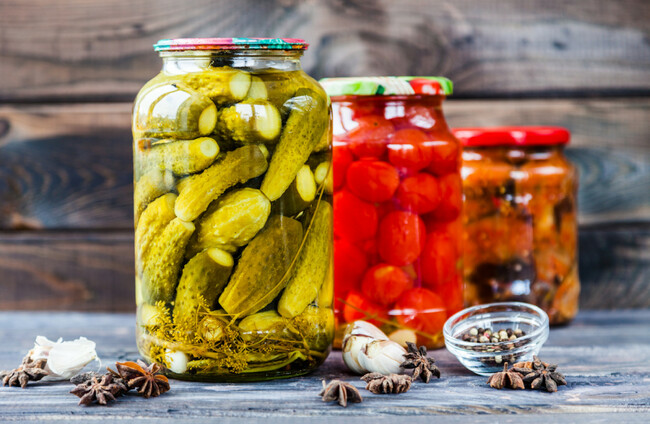

THE VEG PATCH feels like a hard taskmaster right about now, churning out seemingly never-ending gluts of produce. There’s a level on which I feel grateful for this abundance, particularly when it’s all laid out in big beautiful trays, buckets or bowls.
But there’s another level in which I feel “ENOUGH ALL READY”, particularly when said trays, buckets or bowls of produce have been hanging around the kitchen for three days and I know I have to do something with them.
Specifically, it’s the tomatoes, cucumbers, courgettes and French beans that are unwaveringly relentless at the moment and no amount of chutneying, spiralising, saucing or freezing seems to get to the bottom of them.
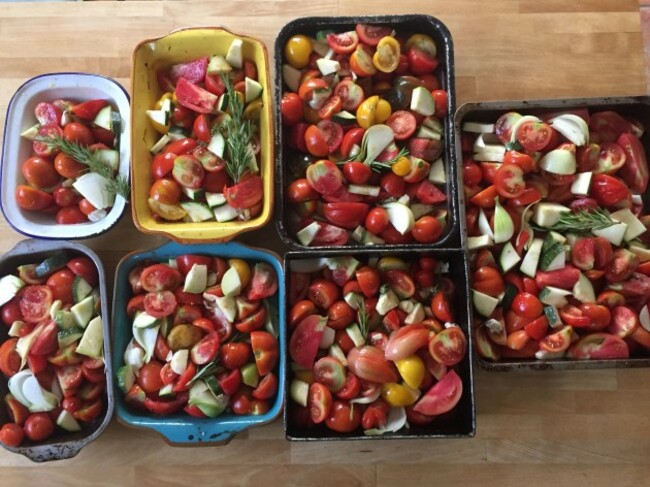
The porch (a cool place that’s ideal for storing veg) is full of produce at the moment and I know that after I finish writing this, I should really saucify another 6 or 7 baking trays of tomatoes for the freezer. And after that, I should really go out and harvest another massive batch of tomatoes that need picking too. By the way, if saucify is not a word, it totally should be.
Using the glut of veg in the kitchen
There’s a simple way to reduce the incessant flow of vegetables, and that’s to sow less of them. But sowing less of things is not something that I would ever really consider. I know if I did that, I will just be annoyed with myself sometime after Christmas when I go hunting in the freezer for a lovely home-grown tomato sauce for a pizza and see that we’ve run out. But I reserve the right to whinge and moan a little at this time of the year.
Anyway, there are obvious upsides to all the work, albeit that the gratification is somewhat delayed. At last count, there are now 40 bags of passata in the freezer which by my nerdish reckoning should take us well into the late spring of next year (using one a week). Mrs Kelly just finished making a batch of cucumber pickle (recipe below) which is one of the handiest sandwich fillers known to man, and if there is a better accompaniment to a pair of good quality sausages and a decent Waterford blaa, I’ve yet to find it.
Spiralising and freezing
We’re spiralising the devil out of courgettes. Spiralising gets dismissed regularly as a rather laughable hipster fad, which is unfair, because actually it’s unbeatable as a way to use up serious quantities of courgettes (and there are always serious quantities of courgettes). Tonight’s dinner of “courgetti” with (you’ve guessed it) tomato sauce, will see our family of four munch unwittingly through two marrow-esque courgettes.
We’re also freezing French beans like there’s a flood, war or some other class of pestilence coming down the tracks (and let’s be honest, there could be). 30-odd bags of them in the freezer will join many a quiche, stir-fry or Sunday roast during the Hungry Gap next year.
It’s worth considering amidst the belly-aching, that though the harvest currently seems endless, there will of course be an end at some point. We will rue that day when it comes.
The Basics – How to Make and Eat Courgetti
A spiraliser (or spiralising attachment on a food processor) is a great addition to the kitchen of the home-grower. To make courgetti simply chop off the ends of a courgette, and run it through the spiraliser. It will keep in the fridge in a sealed container or freezer bag for several days. The resulting “courgetti” noodles can be eaten cooked or raw.
Raw: It can be eaten raw and is delicious in salads. It’s a good idea to soften it a little by tossing it with some fresh lemon juice.
Poached: Simply add it to salted boiling water and cook for a few minutes before straining. It can also be added just before serving to soups or other recipes that require noodles. The much-scoffed-at Courgetti Bolognese, is in fact, delicious. Whether the courgetti is an adequate replacement for spaghetti or not is a moot point – it’s just different, and lovely in its own right.
Fried: Add a little oil to a frying pan and cook the courgetti for a minute or so, until just softened. You can also wok-fry it in a stirfry.
Baked: We’ve used courgetti underneath salmon in a parcel, so that’s it’s steamed (with other veg).
Recipe of the Week – Zingy Cucumber Pickle
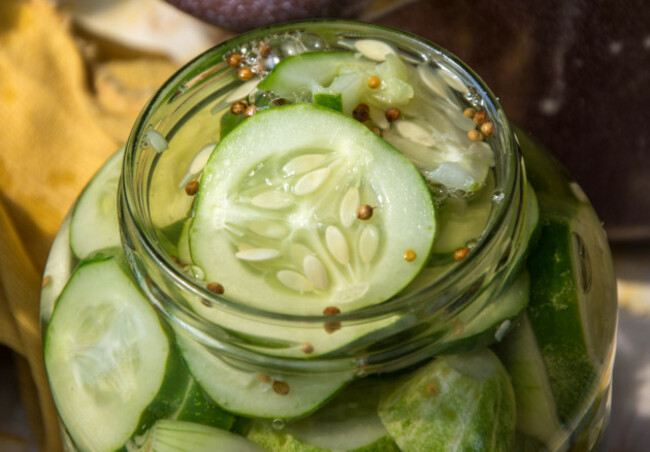
The addition of turmeric and mustard seeds gives it a real kick and as a result this was one of the most coveted jar of preserved veggies we had in the cupboard over the winter.
Ingredients
For the syrup
Directions
Wash cucumber and slice very thinly. Peel the onions and slice very thinly. In a large bowl, layer cucumbers and onions with a sprinkling of salt in between the layers. Weigh down with a plate.
Stand for three hours. After three hours, pour away the liquid and rinse the cucumbers and onions under running water twice. Put your jars in the oven to sterilised them.
Put vinegar, sugar and spices in a stainless steel or non stick saucepan and stir over a medium heat until the sugar is dissolved. Add the cucumber and onions to the saucepan and bring to the boil. Boil syrup and vegetables for a couple of minutes. Remove the vegetables with a slotted spoon and set aside. Reduce remaining syrup for 15-20 min.
After ten minutes or so, gently fill warm, sterilised jars with vegetables. Don’t press down. When syrup has reduced, pour over vegetables in jars. Cover immediately with plastic lined, sterilised metal lids. When cold, label and store in a cool, dark place, away from damp.
Michael Kelly is founder of GIY and GROW HQ.
To embed this post, copy the code below on your site














have your say