Sign in. It’s quick, free and it’s up to you.
An account is an optional way to support the work we do. Find out more.
Sign in. It’s quick, free and it’s up to you.
An account is an optional way to support the work we do. Find out more.
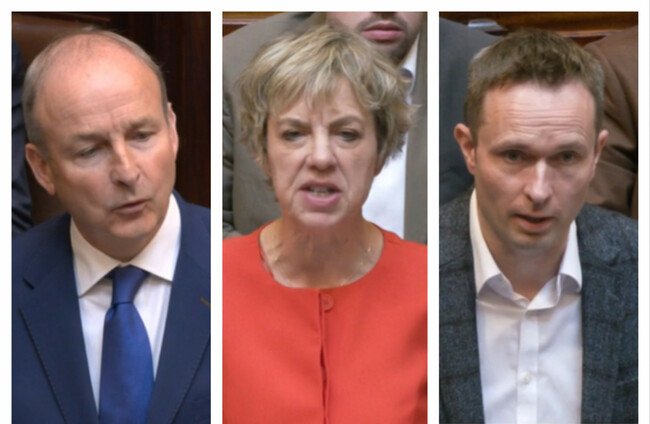
FAMILIES ARE FACING “impossible decisions” in the face of rising costs, the Dáil has heard, after a report today has said that 40% of parents have skipped meals or ate less in order to have enough food for their children.
During Leaders’ Questions in the Dáil today, TDs repeatedly cited the report by poverty charity Barnardo’s, which surveyed 1,000 parents and guardians with children aged under 18 in their care in May this year.
Its findings painted a stark image of how families are managing to maintain their lives while being faced with increased food costs, higher energy bills and the rising cost of living.
Labour leader Ivana Bacik and Social Democrats TD Cian O’Callaghan today asked how the government was going to tackle increasing grocery prices, and called for the coalition to support measures for supermarkets to publish their annual accounts.
Bacik said that families are facing “impossible decisions” over the cost of food, energy and other household bills. She said that it is “starkly highlighted” in the charity’s report.
One in five (19%) of families had to cut back to go without food over the past six months, while two in five parents said that they skipped meals or had smaller portions to ensure their children had enough to eat, according to the survey.
Younger parents, larger families, and lone parents struggled significantly more financially and were often forced to make further cuts, Barnardo’s said.
“All this is in the backdrop of threatened tariffs by [US President] Donald Trump,” Bacik said. “We know the international context is precarious. But, here at home, it is precarious too.”
The Dublin Bay South TD claimed that higher costs have been impacted further by “underinvestment” in public services in recent years, such as water, social and affordable housing and energy infrastructure.
Responding to the questions, Martin said the Irish government were “probably” the only administration in the EU to provide mass cost-of-living measures to the extent that Ireland did in recent budgets.
He listed a number of examples of these measures, including once-off energy credits and cost-cutting measures for school books, supplies, exams and fees.
The Fianna Fáil leader said that there was no “credibility” to Bacik’s claim regarding public service investment and asserted that recent reports show that government’s record in the provision of civic amenities has proven worthwhile.
O’Callaghan said “government actually has to act” on promises for grocery price controls and asked Taoiseach Micheál Martin how government were going to help low-income families in the face of high grocery costs.
“Taoiseach, you told the Dáil a few minutes ago that you will always prioritise the child that is left behind,” O’Callaghan said. “What about these children?”
Martin said that he found it “very interesting” that opposition parties are in favour of universal supports, rather than targeted measures for those suffering the most, and outlined that the government intends to do the latter in the upcoming budget.
The Taoiseach also rejected claims by O’Callaghan that the government does not have the “political guts” to demand that supermarkets publish their balance sheets to the public over concerns that prices are being hiked without reason.
Martin said the Competitions and Consumer Protection Commission is determined, with the Government, to tackle alleged “price-gouging”, but must do so in an “evidence based” way.

To embed this post, copy the code below on your site
















have your say