Sign in. It’s quick, free and it’s up to you.
An account is an optional way to support the work we do. Find out more.
Sign in. It’s quick, free and it’s up to you.
An account is an optional way to support the work we do. Find out more.
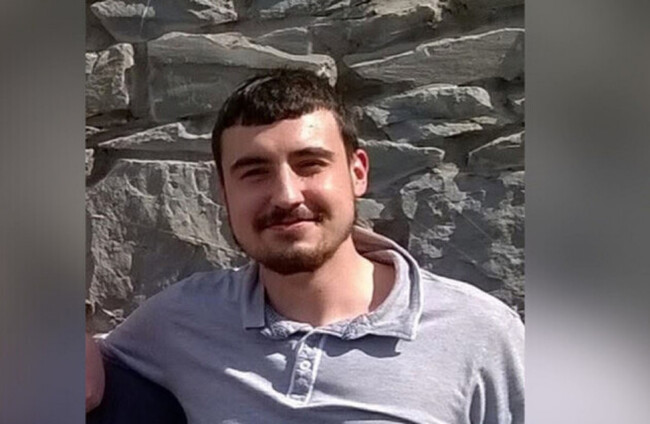
DEFENCE LAWYERS FOR a 32-year-old man, who is accused of murdering three members of his family at their Co Louth home, have asked a jury to consider finding him not guilty by reason of insanity so that he can get the “proper mental health treatment” he needs and “not be misdiagnosed for a fourth time”.
However, the State submitted in their closing speech that a verdict of guilty of manslaughter by reason of diminished responsibility was more in accordance with the preponderance of the evidence in the case and also reflected the harmony of both psychiatrists.
Prosecution barrister Roisin Lacey SC said there was no doubt but that this case was a tragedy of monumental proportions for Robert O’Connor’s parents and younger special needs brother who had died but was equally a tragedy of monumental proportions “for those who remain”.
Robert O’Connor (32), of Drumgowna, Louth Village, Dundalk, Co Louth, has pleaded not guilty of murder by reason of insanity, or guilty of manslaughter on the basis of diminished responsibility to the triple murder of his mother Louise (56), his father Mark (54) and his brother Evan (27) at their home between 28 and 29 September 2025, both dates inclusive.
The Central Criminal Court jury has been told that the accused accepts he caused the death of the three victims, who had sustained a combined 139 stab wounds.
Two consultant psychiatrists, who have given evidence in the trial, are in agreement that Robert was suffering from a relapse of schizophrenia when he fatally stabbed his parents and brother.
However, whilst both expert witnesses are of the view that a verdict of guilty of manslaughter by reason of diminished responsibility under section 6 of the Criminal Law Insanity Act 2006 would be an appropriate verdict, they differ on whether the accused qualifies for a special verdict of not guilty by reason of insanity under section 5 of the act.
Consultant forensic psychiatrist Dr Fiona Toal, called to give evidence by the defence, testified last week that Robert did not know what he was doing was wrong and couldn’t refrain from committing the act. She found that the accused met the criteria for a special verdict of not guilty by reason of insanity.
Consultant forensic psychiatrist Dr Ronan Mullaney, called to give evidence by the prosecution, has told the trial that Robert met the criteria for a verdict of guilty of manslaughter by diminished responsibility and does not meet the criteria for the special verdict of not guilty by reason of insanity.
The three criteria for a verdict of not guilty by reason of insanity under the Criminal Law Insanity Act 2006 are that an accused did not know the nature and quality of the act, or was unable to appreciate that what they did at the time was wrong or would have been unable to refrain from their actions.
The panel have been told by the prosecutor in her opening speech that the “battleground” between the prosecution and defence in the trial is whether Robert O’Connor was insane at the time.
In her closing speech, Roisin Lacey SC, prosecuting, told the jury that there had been no controversy in the case and very little conflict on the evidence.
The barrister reminded the 12 jurors of the evidence from Dr Mullaney, who took into account how the accused was behaving with neighbours in a very proximate time to the killings.
Ms Lacey said Dr Mullaney had also looked at the accused’s behaviour and what he was verbalising in order to factor into his assessment what he believed to be the appropriate verdict of guilty of manslaughter by reason of diminished responsibility and the exclusion of the special verdict.
It was blindingly obvious, counsel said, where the conflict in the case lay. “On their evidence it’s clear there are two verdicts open to you and your task is to consider on the balance of probabilities where the correct verdict lies.”
Counsel said there was agreement between the two experts in the field that the verdict of guilty of manslaughter by reason of diminished responsibility was open to the panel.
She highlighted that the defence was not advocating for a not guilty verdict and neither was the prosecution arguing for a murder conviction. “Those simple verdicts are not in play here, they are not realistic verdicts in the case… something intervened in this case, the accused’s state of mind and his mental disorder and how that has impacted on his culpability”.
Ms Lacey said the psychiatrists were in agreement on many fundamental matters including that the accused suffers from the mental disorder of schizophrenia, and that this diagnosis was long-standing.
She said the experts also agreed that the accused had been abusing drugs since his early teens, that he had suffered a relapse of schizophrenia having failed to comply with his medication regime and that his responsibility for the killings was substantially diminished because of his mental disorder.
She said Dr Toal found the accused could see he was physically killing his family but was not in control of it and was instead controlled by things that were not driven by his own logical thoughts.
Lacey suggested that it was the prosecution’s position that Mullaney’s evidence was more persuasive on the balance of probabilities and that the defence had not discharged the burden of proving that the criteria for the special verdict had been met.
Ms Lacey stated that it is not trivial but rather significant and sizeable where one’s responsibility is substantially diminished. “It’s a concession to human frailty, where there is operating a mental disorder as there is in this case”.
She concluded by saying that whilst intoxication is a factor in the case it was not central to dealing with the accused’s psychotic state. “If you are in your jury room and saying he was coked up, taking cocaine and methadone, these are all stimulants, isn’t this a situation where it’s all about drugs…. if you do that you are in breach of your oath and would be ignoring what the experts said.”
In summary, Lacey said the verdict of guilty of manslaughter by reason of diminished responsibility was more in accordance with the preponderance of the evidence but also reflected the harmony of both experts in the case. “It’s your decision and you are not bound by the experts but the reality is they are the experts”.
There was no doubt, she said, that this was a tragedy of monumental proportions for the three people who died and equally a tragedy of monumental proportions for those who remain in the context of what was a very loving, supportive and decent family.
“I urge you on behalf of the prosecution to return a verdict, which you believe to be an appropriate one, reflective of the evidence and reflective of what you determine to be the facts of the case,” she concluded.
Michael Bowman SC, defending, submitted that the tragedy of this case was enormous and beyond his ability for articulation. He noted the courage and strength of the O’Connor family, who he said had sat through the trial. He added: “To sit with that level of detail put before the court can only be traumatic and they have borne that shocking and terrible burden with integrity, strength and courage.”
The lawyer asked the jury not to punish his client for coming off his medication as experts have found that 50% of people on antipsychotic medication have poor adherence.
Counsel also asked the panel not to judge the accused for taking drugs. He recalled Dr Toal telling the jury that at least 60% of people who have schizophrenia take drugs “on top of it”.
Counsel said Robert was previously misdiagnosed and, it seemed, on subsequent occasions his illness was put down to the consumption of drugs.
He asked the jury to consider bringing in the special verdict. “Robert, through his plea, doesn’t ask to get out, he is not asking for absolution…he is asking for the opportunity to get the proper mental health treatment, not in a daycare facility.”
Bowman submitted that the special verdict of not guilty by reason of insanity carries with it the expectation that he will be “properly treated in a proper environment” and not be misdiagnosed for a fourth time.
“Reflect upon the fact people have got it wrong with the best of intentions on so many occasions in Robert’s life, consider the section five verdict and give him the opportunity that he asks for to get the help that he needs,” said Mr Bowman.
The trial continues before Mr Justice Mícheál P O’Higgins and a jury of six men and six women.

To embed this post, copy the code below on your site










have your say