Sign in. It’s quick, free and it’s up to you.
An account is an optional way to support the work we do. Find out more.
Sign in. It’s quick, free and it’s up to you.
An account is an optional way to support the work we do. Find out more.

In Politics by Numbers, broadcaster, author and spreadsheet stan Gavan Reilly takes a data deep dive into a political point of the week.
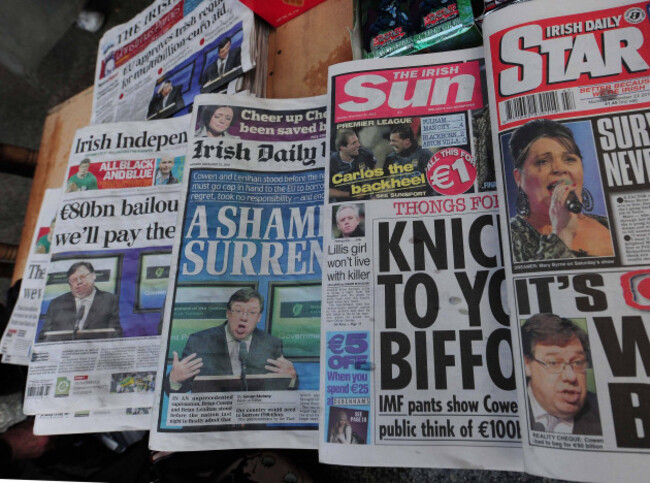
THE NEWS THAT Ireland is due to repay some of its debts from the EU-IMF bailout ahead of schedule is a reminder of an altogether more grim time in Irish life.
But we’ve heard so little about the bailout, and the lingering legacy debts it left us with, that for many readers it might be a bit of a jump scare to see it mentioned at all. For those with slightly firmer memories of that period (and I covered a lot of those events while working full-time for this website!) it might still be jarring to think there are debts we didn’t refinance along the way.
After all, Ireland made a very public gesture of repaying its IMF loans years ahead of schedule. The loans drawn down between 2010 and 2013 were only supposed to be fully repaid by the end of 2023, but such was the rebound in the Irish economy that we settled those debts in full by the end of 2017.
Ireland also received bilateral loans from the UK, Denmark and Sweden. Sweden’s €600 million and Denmark’s €400 million were repaid in late 2017, up to six years ahead of schedule. The UK, which lent us stg£3.2 billion (€3.82 billion) and didn’t expect repayment until 2021, would also have been repaid years early except that its loan deal included a penal ‘brake clause’ which meant it would cost more to repay the money early.
But how did we repay these loans early? Ireland was not exactly awash with cash in 2016 and 2017. Where did the money come from?
The answer – and the key to understanding why the bailout was needed, and why the government is now talking about settling more of our bailout debts – lies in the interest rates governments pay to borrow.
The reason Ireland needed help from the EU and IMF to keep the lights on in 2010 was that the country was running out of cash. In good times, a country will run a surplus, with tax revenues exceeding its costs. This is rarely the case, and governments often spend more than they can afford.
It is routine for governments to borrow to cover the difference. They do so by issuing ‘bonds’ – effectively giant, elaborate IOUs. Most of this money is never fully paid off: when a bond ‘matures’, a country will usually issue another and use the proceeds to repay the first, rolling over its debts in perpetuity.
To sweeten the deal, governments offer fixed annual payments as well as the return of the original sum at the end of the term. Countries auction their bonds to secure the cheapest possible rates. But not every country finds it easy to borrow. Bonds are attractive to investors seeking a safe haven rather than the risks of the stock market. A country that is no longer seen as a safe bet will face demands for much higher interest rates.
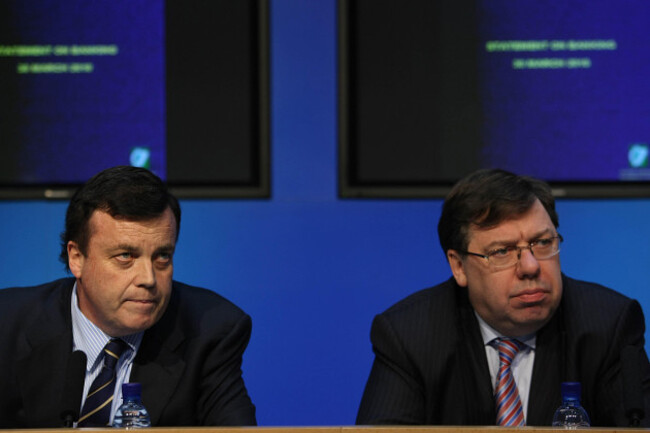
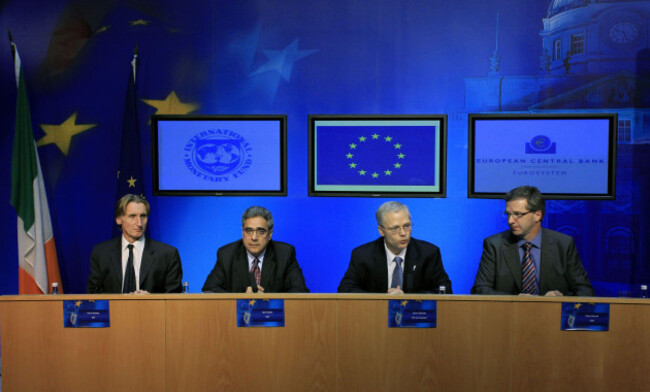
This is exactly what happened in Ireland in 2010: the interest rate on a benchmark 10-year bond rose as high as 9% because so few lenders trusted Ireland. With nobody else to pay the bills, and under immense international pressure, Ireland went cap in hand to Brussels and Frankfurt. As the costs of rescuing the banking sector became clearer, yields on bonds traded secondhand would surge to 14% by July 2011.
What happened next was something most rational analysts would not have expected: Ireland repaid all its debts in full. A country in the doldrums, weighed down by enormous debts – some self-generated, more adopted from the banking system – might have been expected to declare a form of bankruptcy and simply burn its bondholders.
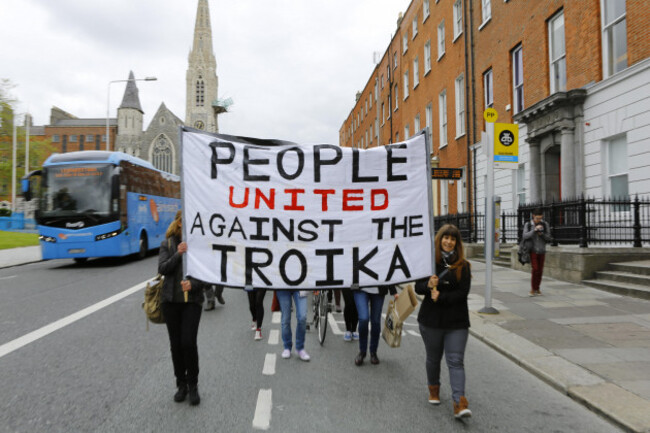
Fine Gael ran for office in 2011 promising to seek a ‘restructuring’ of Ireland’s debts. But Enda Kenny declared in the Dáil in January 2012 that Ireland would not “have the word ‘Defaulter’ written on our foreheads”. Instead, albeit at the cost of immense social pain, austerity was enforced, improving investors’ assessment of the country.
Fast-forward a couple of years, and the ECB’s programme of ‘quantitative easing’ – effectively creating more money in the hope of stimulating lending and reviving a moribund post-crisis economy – meant borrowing costs for governments across Europe fell to extraordinary lows. With credit easier to find and inflation remaining low, investors were willing to accept lower returns. By the summer of 2014, Ireland could issue a 10-year bond for just 1.74%.
That was the sweet spot. With a massive influx of cheap cash, Ireland could borrow on its own terms and use the proceeds to repay more expensive IMF and bilateral loans. The IMF was happy to take its money back: it cannot issue bonds to raise funds itself, so early repayment gave it money to use elsewhere.
That brings us to today, and the news that Ireland will do something similar with the remaining portions of its EU loans. About €33 billion is still owed to the EU’s two bailout mechanisms: one funded by member states for use by eurozone countries, the other by Brussels for use by all EU members.
Why not repay them earlier? There are two reasons. First, a general (‘pari passu’) rule required major creditors to be repaid in broadly equal proportion, preventing anyone from jumping the queue. Second, Ireland now finds itself on the opposite side of the financial forces that punished it in 2010.
The fallout from the war in Iran, and its effects on energy prices and inflation, has peeled the scab off a problem many major economies had been avoiding: their national debts are uncomfortably high. Lenders are increasingly concerned about getting their money back and demand higher interest rates.
Look at this international dashboard. The UK would now pay 5.29% for a 10-year bond; Germany, the eurozone’s safest haven, 3.35%; France, facing political gridlock, pays 4.91%. The United States, with its enormous capacity to borrow, is above 5%. The eurozone average is around 4%.
By comparison, little old Ireland – with its enormous corporate tax revenues and relative history of keeping itself lean – can borrow at 3.47%. That is higher than it has been for years, raising questions about how we refinance some of our cheaper debts, but it means Ireland can borrow more cheaply than the eurozone average. Suddenly Ireland is the beneficiary of ‘the spread’, the difference between its own borrowing cost and those of the major economies in our neighbourhood.
That matters because the eurozone average helps determine the interest rates on Ireland’s bailout loans. The European funds were established on a not-for-profit basis: member states lent their collective authority to bonds and passed on the proceeds without adding a margin. The EU could refinance the loans itself, but Ireland has not previously been able to borrow independently at a cheaper rate.
It would be no surprise if Simon Harris and the NTMA tried to do more of this in future, exploiting Ireland’s relative borrowing advantage to reduce the overall cost of the bailout. The manoeuvre announced this week will cut only €80-90 million from the cost of our national debt. But when servicing that debt is set to cost around €3 billion next year, every little helps.
As things stand, it will be 2042 before the last of our bailout loans are fully repaid to Europe. What we’re hearing this week may be the first step towards changing that trajectory – and regaining full control of our own affairs.
Gavan Reilly is the political correspondent for Virgin Media News and the host of Monday with Gavan Reilly, which airs every Monday at 10pm on Virgin Media Play and Virgin Media One.
To embed this post, copy the code below on your site













have your say