Sign in. It’s quick, free and it’s up to you.
An account is an optional way to support the work we do. Find out more.
Sign in. It’s quick, free and it’s up to you.
An account is an optional way to support the work we do. Find out more.
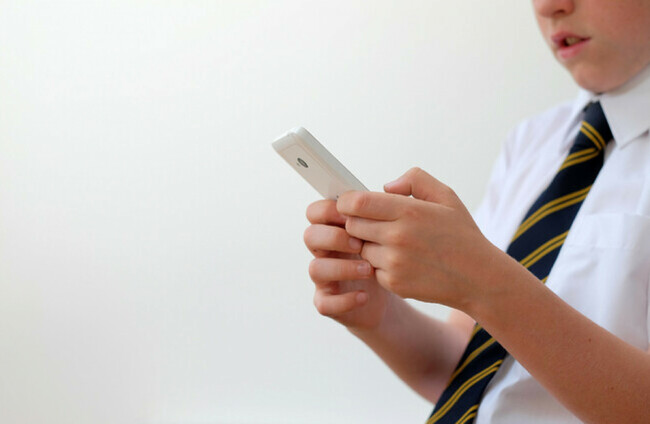
RESTRICTING PHONE USE at school does not improve grades or mental well-being in young people, a landmark study in the UK has found.
The University of Birmingham study found students’ sleep, exercise, academic record, and exercise did not differ between schools with and without phone bans in place.
Evidence also showed restrictive phone policies did not lower the overall time young people spent on their phones throughout the day.
The findings, which have since been peer-reviewed and published, compared 1,227 students and 30 different secondary schools.
“There is no evidence to support that restrictive school phone policies, in their current forms, have a beneficial effect on adolescents’ mental health and wellbeing or related outcomes,” it concluded.
However, increased screen time did impact the mental health, classroom behaviour, physical activity and sleep cycles of students overall.
Dr Victoria Goodyear, the study’s lead author, told the BBC that school phone bans were not an effective way to tackle the negative impacts of overusing phones.
“What we’re suggesting is that those bans in isolation are not enough to tackle the negative impacts,” she said.
“We need to do more than just ban phones in schools.”
The study called for a more “holistic” approach to lowering phone use among students.
“This approach does not necessarily preclude restrictive school mobile phone policies,” the study concluded.
“But these policies would be linked with a wider holistic approach to adolescent mobile phone and social media use.”
It comes days after the British Education Secretary rejected calls to bring in a new law to ban phones in classrooms, as she branded the Conservative party’s proposal a “headline-grabbing gimmick”.
Labours’ Bridget Phillipson said she agreed that mobile phones should not be in lessons, but added the opposition was wrong to say it could only be done by introducing legislation.
The Conservative party said last week that it would table an amendment to the Children’s Wellbeing and Schools Bill that would require the UK Government to ban phones in classrooms.
Here at home, a bid to ban mobile phones in post-primary schools moved a step closer after the Department of Education last month issued tender documentation for companies to compete for the estimated €9 million business for lockable phone pouches.
The planned spend was one of the most contentious measures announced in last October’s Budget 2025.
Explaining the background to the €9m spend, the invite to tender states that in Budget 2025, Minister for Education Norma Foley announced that new funding would be available to post-primary schools to support them in implementing a ‘no phone during the school day’ policy.
It further stated that this “ring-fenced funding will be used to help implement a ban on the use of personal mobile phones by students during the school day through the purchase of secure storage solutions for students’ phones”.
The department’s Schools Procurement Unit said the funding is “intended to support positive wellbeing among all pupils and students, helping them to disconnect, learn and make friends without the distractions that can arise from the use of mobile phones”.
-With additional reporting from Diarmuid Pepper

To embed this post, copy the code below on your site
















have your say