Sign in. It’s quick, free and it’s up to you.
An account is an optional way to support the work we do. Find out more.
Sign in. It’s quick, free and it’s up to you.
An account is an optional way to support the work we do. Find out more.
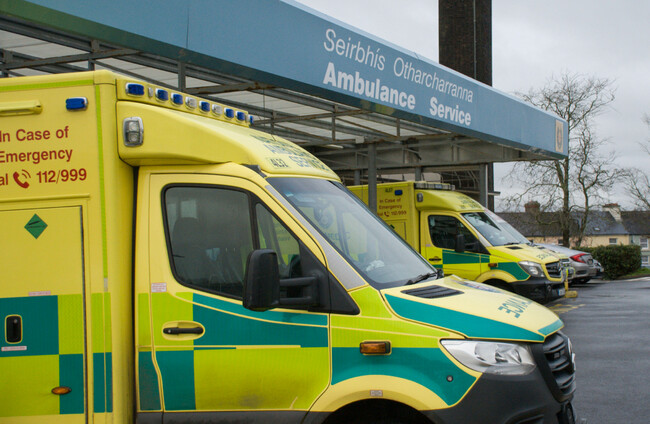
SIPTU HAS NOTIFIED the National Ambulance Service (NAS) of its intention to conduct strike action next month.
Last week, around 2,000 SIPTU members in the NAS, voted overwhelmingly for industrial action, up to and including strike action.
There will be a 24-hour stoppage on 12 May, followed by a 48-hour stoppage beginning 19 May and a 72-hour stoppage beginning 26 May. SIPTU said further strike action is planned for June.
SIPTU said the strikes relate to a dispute over the HSE’s failure to implement the recommendations of an independent report on updating staff salary scales to reflect changes in their responsibilities and workload over the past two decades.
The Independent Review of Roles and Responsibilities report, published in May 2020, was to address these changes, including updating salary scales. But SIPTU has said its recommendations have yet to be implemented.
The dispute involves SIPTU members working as Emergency Medical Technicians (EMT), Paramedics, Advanced Paramedics, Specialist Paramedics and Paramedic Supervisors.
SIPTU Ambulance Sector Organiser, John McCamley, said: “SIPTU members have been left with no other option but to issue notice for strike action due to this long-running dispute.”
“The overwhelming mandate from our members for industrial action up to and including strike action is an indication of the depth of feeling within the service that their sacrifice and commitment to the professionalisation and modernisation of the service have been forgotten about by the HSE.”
He said ambulance personnel carry out a higher degree of pre-hospital care and treatment than just patient transport.
“Operational practice guidelines for dealing with different incidents have increased dramatically over the years, including the need for additional training and qualifications. SIPTU members working in the NAS are highly trained and educated health professionals. They work in a largely autonomous and occasionally hazardous environment,” he said.
“Our members exercise clinical judgement, deliver complex and lifesaving care, including the administration of medications. For instance, EMT and Paramedic grades have increased their responsibility for administering various medications by 89% and 83%, respectively, since 2011. They perform lifesaving interventions and make complex decisions about specific care pathways. All we are asking is that, like other health professionals, their training qualifications are respected and recognised in an appropriate grading and pay structure.”
He called on the HSE to implement the recommendations of the independent report without preconditions and to introduce enhanced pay scales.

To embed this post, copy the code below on your site









have your say