Sign in. It’s quick, free and it’s up to you.
An account is an optional way to support the work we do. Find out more.
Sign in. It’s quick, free and it’s up to you.
An account is an optional way to support the work we do. Find out more.

IT’S A DAY of rest, and you may be in the mood for a quiet corner and a comfy chair.
We’ve hand-picked some of the week’s best reads for you to savour.

New York Times Magazine journalist David Marchese sat down with Bono and the Edge from U2 the day after their Dublin performances in September to celebrate the band’s 50th anniversary. He wanted to know: what’s the point of U2?
(The New York Times Magazine, approx. 25 mins reading time)
“I think of U2 as wanting to be the best and biggest band in the world. But it probably shouldn’t be the case that the best and biggest rock ’n’ roll band in the world is a band that’s been around for 50 years, comprising guys in their 60s.”

UK man Karl Bushby has spent the last 28 years walking 36,000 miles across the world, visiting 29 countries and making amazing, and sometimes terrifying, memories.
(The Guardian, approx. 20 mins reading time)
“En route, he broke other records (as part of the first teams to complete the crossing of the Bering Strait, from Alaska to Russia, on foot in modern times, and to swim the Caspian Sea, from Kazakhstan to Azerbaijan). He has also almost died, spent years stuck in Mexico because he lost his sponsor, been convicted of being a spy, been held in custody in Russia and sentenced to deportation, been threatened at gunpoint and faced the prospect of predation by a polar bear. To many he’s a hero. To some, he’s a reckless chancer.”
Depending on the person, intuition can be wholeheartedly trusted, or dismissed as illogical – but this essay argues that regardless of how you feel about it, you subconsciously rely on your intuition constantly.
(Aeon, approx. 20 mins reading time)
“Intuition saturates our ordinary reasoning. Whenever we see what follows from something, notice that something counts in favour of some action, or recognise something as a possible course of action, we are relying on intuition. These moments rarely announce themselves. They do not arrive with phenomenological fanfare. They are woven into the background of our deliberation, operating quietly whenever we take in a situation and immediately apprehend its normative or conceptual contours.”
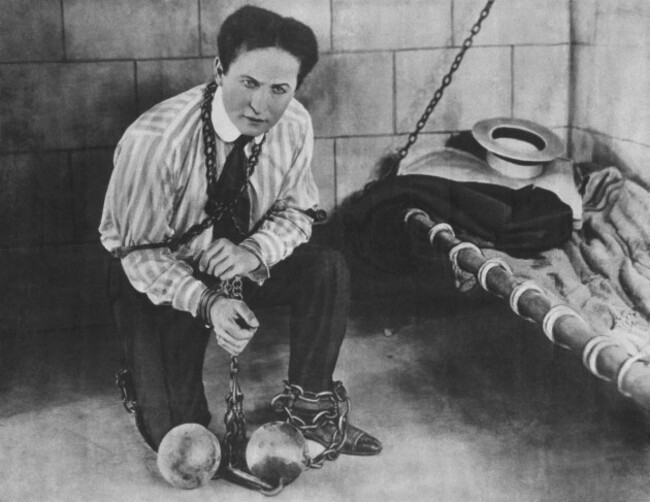
This Halloween will be 100 years since Hungarian-American escape artist Harry Houdini died at the age of 52. His largely accepted cause of death was swelling of the abdomen which may have been linked to appendicitis and recent blows to the stomach – but some question if there’s more to the story.
(The New York Times, approx. 22 mins reading time)
“When she reviewed Houdini’s city death certificate, she thought it seemed off. Information was scratched out. Names were inaccurate. It was signed by a physician who had not been present when Houdini died.”

The number of sheep, and the amount of sheep products being consumed, are decreasing in the UK. Why?
(BBC, approx. 10 mins reading time)
“In 1980 the average UK household purchased 128g of sheep meat (lamb and mutton) per person, per week. In 2024 that same measure was down to 23g per person, per week.”

Texas man Forrest Welborn was suspected of the Austin yoghurt shop murders for 30 years. The killings were solved last year, and Welborn was officially exonerated this year – but he says he still isn’t free.
(Texas Monthly, approx. 45 mins reading time)
“I’ve been pestering Forrest since 1999, after he and three other young men were arrested for allegedly taking part in one of the most notorious mass murders in Texas history—the 1991 slaughter of four teenage girls at an Austin yoghurt shop. He wouldn’t talk to me then, even once the charges against him were dropped nine months after they were brought. I wasn’t surprised. Forrest’s life was ruined by the accusations. Most people in Austin believed he was guilty. The police harassed him. The public hated him. Men pulled guns on him, and girlfriends dumped him when they found out about his past. He lost his business. He couldn’t find a job. He stopped trusting almost everyone. He became an outcast in his own city. He withdrew. He drank too much. This went on for decades.”
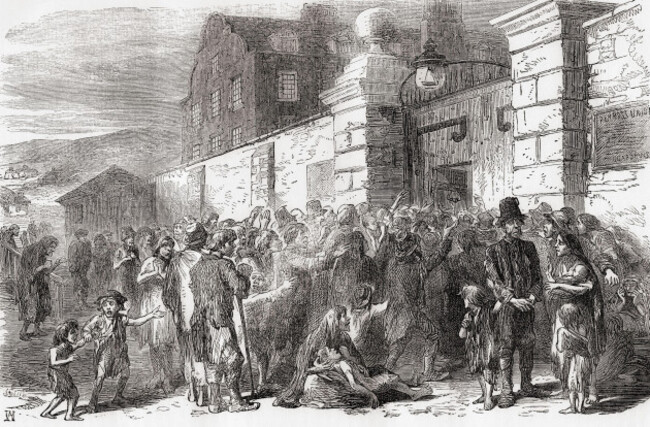
In this 2025 article from The New Yorker, Irish journalist Fintan O’Toole reviews historian Padraic X Scanlan’s book Rot: An Imperial History of the Irish Famine.
(The New Yorker, approx. 15 mins reading time)
“This arrant nonsense obscured the reality that the Irish had no particular love of potatoes. Their historically varied diet, based on oats, milk, and butter, had been reduced by economic oppression to one tuber. Nor were they reluctant to work for wages. Many travelled long distances to earn money as seasonal migrant labourers on farms in England and Scotland, and Irish immigrants were integrating themselves into the capitalist money economy in the mills of Massachusetts and the factories of New York.”

To embed this post, copy the code below on your site













have your say